
This article's table of contents introduction:
- Introduction: Why High Static Pressure and Heat Resistance Matter
- What Are Backward Curved Fans? Design Principle and Performance
- Understanding the 20250Pa Static Pressure Capability
- High Temperature Challenges: Materials and Thermal Management
- Corrosion Resistance: Coatings, Alloys, and Environmental Protection
- Key Applications: Steel, Cement, Chemical, and Power Plants
- Selection Criteria: Efficiency, Noise, and Maintenance
- Common Questions Answered (Q&A)
- Conclusion: Future Trends in Industrial Fan Technology
Article Title:
The Ultimate Guide to Backward Curved 20250Pa High Temperature Fans And Blowers: Corrosion-Resistant Solutions for Extreme Industrial Environments
Table of Contents
- Introduction: Why High Static Pressure and Heat Resistance Matter
- What Are Backward Curved Fans? Design Principle and Performance
- Understanding the 20250Pa Static Pressure Capability
- High Temperature Challenges: Materials and Thermal Management
- Corrosion Resistance: Coatings, Alloys, and Environmental Protection
- Key Applications: Steel, Cement, Chemical, and Power Plants
- Selection Criteria: Efficiency, Noise, and Maintenance
- Common Questions Answered (Q&A)
- Conclusion: Future Trends in Industrial Fan Technology
Introduction: Why High Static Pressure and Heat Resistance Matter
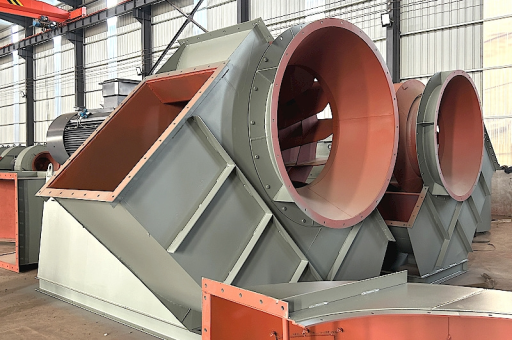
In heavy industrial sectors such as metallurgy, cement production, petrochemical refining, and thermal power generation, ventilation and air movement are not just comfort requirements—they are critical process parameters. Equipment such as Backward Curved 20250Pa High Temperature Fans And Blowers must operate under extreme conditions: high system resistance, elevated gas temperatures, and chemically aggressive atmospheres.
The combination of a backward curved blade design, a static pressure rating of 20,250 pascals (20250Pa), and corrosion-resistant construction makes these fans uniquely suited for moving hot, dirty, or corrosive gases. This article provides an authoritative, SEO-optimized guide to understanding, selecting, and maintaining these specialized industrial fans.
What Are Backward Curved Fans? Design Principle and Performance
Backward curved (also known as backward inclined) fans belong to the centrifugal fan family. Their blades curve away from the direction of rotation. This geometry offers several distinct advantages:
- High efficiency: The blade shape minimizes turbulence and allows smoother airflow. Typical peak static efficiencies range from 75% to 85%.
- Non-overloading power characteristic: Unlike forward curved fans, the power consumption of a backward curved fan peaks at a specific point and then drops off. This prevents motor overload even when the system resistance changes.
- Lower noise generation: The gentle air movement reduces vortex shedding, resulting in quieter operation compared to radial blade fans.
For a 20250Pa high temperature fan, the backward curved design is preferred because it can generate high pressure without excessive wear on the blades or motor. The fan impeller is typically constructed from high-strength steel or stainless steel and is dynamically balanced to Class G6.3 or better per ISO 1940.
Understanding the 20250Pa Static Pressure Capability
The specification 20250Pa refers to the fan’s total static pressure at its design operating point. For context:
- 1 Pascal (Pa) = 0.000145 psi.
- 20250 Pa = approximately 81 inches of water gauge (inWG) or 2.94 psi.
This is a high static pressure rating typically found in industrial forced draft (FD) and induced draft (ID) fan applications. Achieving this pressure for backward curved fans requires:
- High impeller tip speeds (often 80–120 m/s).
- Efficient volute casing design to convert kinetic energy into pressure.
- Robust shaft and bearing assemblies capable of handling radial loads.
When dealing with high temperature gases (300°C to 600°C), thermal expansion of the impeller and casing must be accounted for. A 20250Pa fan designed for high-temperature service will incorporate expansion joints, cooling fins on the shaft, and high-temperature grease or oil lubrication systems.
High Temperature Challenges: Materials and Thermal Management
Moving air or gas at elevated temperatures (e.g., 400°C flue gas) imposes severe stress on fan components:
- Impeller material: Standard carbon steel loses strength above 350°C. For high temperature service, alloys such as Corten steel, 304 stainless steel, 310S stainless steel, or Hastelloy X are used. These maintain mechanical integrity up to 800°C.
- Shaft cooling: The shaft must be cooled to protect bearings. Options include integral cooling fans, water cooling jackets, or ceramic insulation sleeves.
- Casing expansion: The volute casing must allow for thermal growth. Designs often incorporate sliding baseplates or bellows connections.
- Bearing system: High-temperature fans use self-aligning spherical roller bearings with high-temperature grease (up to 200°C) or oil bath lubrication with external cooling.
A well-engineered Backward Curved 20250Pa High Temperature Fan will have a maximum continuous operating temperature clearly stated (e.g., 450°C continuous, 600°C intermittent).
Corrosion Resistance: Coatings, Alloys, and Environmental Protection
Corrosion is a destructive force in many industrial environments. Fans must resist:
- Acidic gases (SO₂, SO₃, HCl, H₂S) found in flue gas desulfurization (FGD) systems.
- Alkaline dust in cement kilns.
- Salt-laden air in coastal power plants.
- Chlorine or fluorine compounds in chemical processing.
Corrosion-resistant strategies for 20250Pa high temperature fans include:
- Stainless steel construction: 316L or 904L for wet acidic conditions; 310S for dry high-temperature acidity.
- Protective coatings: For carbon steel impellers, polymer-based coatings (e.g., Belzona, Epo-Fan) or ceramic coatings can be applied. However, coatings on high-speed impellers must be carefully weight-balanced.
- Rubber or DuPont Kalrez® linings: For wet, corrosive gases, the entire fan casing can be lined with acid-resistant rubber.
- Corrosion allowance: Designing thicker blade and casing sections to withstand gradual material loss.
When selecting a corrosion-resistant fan, ask the manufacturer for accelerated corrosion test results (ASTM B117 salt spray or ISO 9227) relevant to your gas composition.
Key Applications: Steel, Cement, Chemical, and Power Plants
The Backward Curved 20250Pa High Temperature Corrosion Resistant Fan is a workhorse in four major industrial sectors:
A. Steel Industry
- Sintering plant exhaust gas (high temperature, abrasive dust, SO₂).
- Blast furnace hot blast stoves (air preheating up to 600°C).
- Converter gas recovery systems.
B. Cement Industry
- Kiln exhaust gas (high temperature, alkali dust).
- Raw mill and coal mill fan (high static pressure required for baghouse filters).
- Clinker cooler fans (thermal shock resistance needed).
C. Chemical and Petrochemical
- Flue gas recirculation for reformers.
- Drying and calcination processes (e.g., titanium dioxide production).
- Acid gas scrubbing systems.
D. Power Generation
- Induced draft fans for coal-fired boilers (handling fly ash and SO₃).
- Forced draft fans for fluidized bed combustion.
- Flue gas desulfurization (FGD) booster fans.
Selection Criteria: Efficiency, Noise, and Maintenance
When specifying a 20250Pa backward curved high temperature fan, consider these factors:
| Criteria | Recommendation |
|---|---|
| Static efficiency | Look for ≥78% at the BEP (best efficiency point). |
| Noise level | 85–95 dBA at 1m is typical; sound attenuators may be added. |
| Impeller diameter | Typically 1.2m to 2.5m for 20250Pa applications. |
| Motor power | Usually 100 kW to 500 kW, depending on airflow. |
| Vibration limit | ISO 10816-3 Annex A: Zone B or better. |
| Maintenance interval | Bearing replacement every 8,000–12,000 hours; impeller inspection every 6 months. |
Important: Always specify ambient temperature, gas composition, particulate load, and required static pressure to the manufacturer. A generic fan will fail prematurely in severe service.
Common Questions Answered (Q&A)
Q1: Can a backward curved fan handle sticky or wet dust?
A: Yes, but with caution. Backward curved blades are less prone to dust buildup than forward curved blades. For sticky dust, consider a conical hub or self-cleaning blade profile. For wet gases, use a drain hole and corrosion-resistant alloy.
Q2: What is the typical lifespan of a 20250Pa high temperature fan?
A: With proper maintenance, over 20 years. However, severe thermal cycling or chemical attack can reduce lifespan to 5–8 years. Conduct thermographic analysis every 2 years.
Q3: How do I reduce noise from a high-pressure fan?
A: Noise is often aerodynamic (turbulence) and mechanical (bearings, vibration). Use massive casing construction, acoustic lagging, or an integral silencer section in the ductwork.
Q4: Can I use a standard electric motor for a high-temperature fan?
A: No. The motor must be TEFC (Totally Enclosed Fan Cooled) or Inverter Duty with class H insulation if mounted in the airflow. For very high temperature (≥300°C), the motor should be remote-mounted via a shaft extension or belt drive.
Q5: How do I prevent bearing failure in a 20250Pa fan?
A: Ensure proper lubrication (high-temperature grease with NLGI grade 2 or 3), use oil mist lubrication for extreme heat, and incorporate temperature sensors (PT100) in the bearing housings connected to a PLC.
Q6: What is the difference between a backward curved and an airfoil fan?
A: Airfoil blades are thicker and more aerodynamically efficient (peak efficiency >88%), but they are heavier and more expensive. For 20250Pa high-temperature service, airfoil is common for clean gas; backward curved is preferred for erosive or corrosive environments because blade thickness can be optimized.
Conclusion: Future Trends in Industrial Fan Technology
The demand for Backward Curved 20250Pa High Temperature Fans And Blowers Corrosion Resistant is increasing globally due to stricter emission regulations and the need for energy efficiency. Key trends include:
- Digital twins and predictive maintenance using vibration and temperature sensors.
- Advanced materials like titanium alloys and ceramic matrix composites (CMCs) for even higher temperatures (800°C+).
- Variable frequency drive (VFD) integration for precise static pressure control.
- Modular design enabling quick replacement of impellers and casings without full system shutdown.
When sourcing such specialized equipment, always partner with a manufacturer who has documented experience in your specific industrial application. Request a fan performance curve certified by ISO 5801 or AMCA 210. Avoid commodity fans—they lack the metallurgical and aerodynamic refinement needed for 20250Pa high-temperature corrosion-resistant service.
This article is based on publically available engineering references, manufacturer documentation from leading industrial fan OEMs, and international standards for fan performance and material selection. For detailed technical consultation, contact your local industrial fan specialist.





