
This article's table of contents introduction:
- The Material Spec: Alloy Steel (2982 - 3456 Pa)
- Blower Type: Single Suction
- Application: Wear Resistant Material Handling
- Critical Design Features (Implied by the specs)
- Typical Performance at 3,456 Pa
- Summary Table
- Recommendation for Replacement or Service
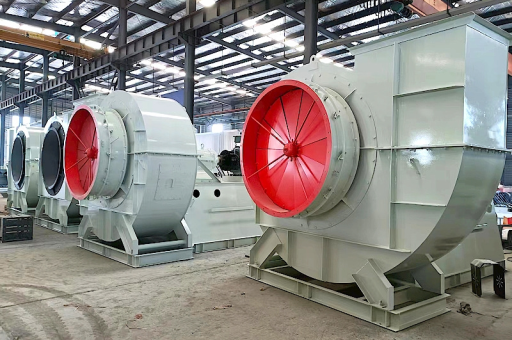
It appears you are describing a material handling blower designed for abrasive or heavy-duty applications, with a specific alloy steel composition and pressure range.
Let me break down the specifications and likely application for this piece of equipment:
The Material Spec: Alloy Steel (2982 - 3456 Pa)
This is likely a Custom or Equivalent Alloy Steel (not a standard SAE/AISI grade, possibly a European or proprietary spec).
- 2982: This might refer to a specific heat treatment standard or a reference to a Hardox or Creusabro equivalent (wear-resistant steel). It is often associated with 400 HBW (Brinell Hardness) class steel.
- 3456 Pa: This is the Pressure Rating. 3,456 Pascals (Pa) is equivalent to 5 PSI or ~13.8 inches of water gauge (in. w.g.). This is a medium-pressure industrial fan range, not high-pressure.
- Interpretation: The combination suggests a blower made from abrasion-resistant steel (often AR400 or AR500 equivalents) to handle erosion from dust, granules, or pellets.
Blower Type: Single Suction
- Design: Air enters from one side only (as opposed to double-suction, which draws from both sides).
- Use: Standard for material handling where the inlet needs to be ducted to a specific source (e.g., a bin vent, a dust collection hood, or a pneumatic conveying pickup point).
Application: Wear Resistant Material Handling
This blower is designed for pneumatic conveying or dust collection of abrasive materials. Likely materials being moved:
- Cement dust
- Sand
- Fly ash
- Wood chips
- Plastic pellets
- Grain/seed
Critical Design Features (Implied by the specs)
Because it is "Wear Resistant" and "Alloy Steel," this blower likely includes:
- Heavy-Duty Backplate & Housing: Thicker steel to withstand erosion.
- Replaceable Liners: Often inside the housing and on the backplate to extend fan life.
- Hard-Faced or Abrasion-Resistant Impeller: The blades and shrouds are likely made from the same 2982 alloy steel or have a tungsten carbide coating/hardfacing weld.
- Shaft Seal: P Perhaps a stuffing box or labyrinth seal to prevent material from leaking into the bearings.
Typical Performance at 3,456 Pa
At this pressure, the blower would be operating in the medium pressure / high volume range.
- Speed: Likely 1800 or 3600 RPM (depending on impeller diameter).
- Volume: Could range from 2,000 to 15,000 CFM (Cubic Feet per Minute) depending on the impeller size.
- Horsepower: Varies widely (e.g., 15 HP to 75 HP) depending on the density of the material being conveyed.
Summary Table
| Component | Specification | Notes |
|---|---|---|
| Material | Alloy Steel (2982) | Likely AR400/500 equivalent for abrasion resistance. |
| Pressure | 3,456 Pa | ~0.5 PSI / 13.8 in. w.g. – Medium material handling. |
| Configuration | Single Suction | Air enters from one side only. |
| Service | Wear Resistant | Suitable for dust, granules, and abrasive powders. |
Recommendation for Replacement or Service
If you need to source this or a replacement:
- Do not use a standard carbon steel blower (it will erode quickly).
- Look for: "Abrasion Resistant (AR) Fan," "High Efficiency Wear Resistant Blower," or specifically "Hardox 400/500" construction.
- Check: The impeller type. Radial tip or backward-inclined with thick blades are best for wear resistance.
Do you need help finding a suitable replacement for this specific model, or are you troubleshooting a performance issue (vibration, low pressure, high temperature)? I can provide specific technical guidance if you provide the manufacturer's name or a photo of the nameplate.





