
This article's table of contents introduction:
- The Role of the Fan in the Drying System
- How It Works in Materials Drying:
- Common Specifications for an AC Centrifugal Fan in a Dryer
- Common Problems & Troubleshooting
- Summary
- Professional Recommendation:
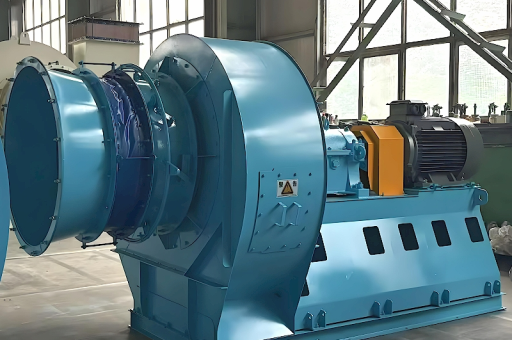
This appears to be a description of a specific industrial ventilation system, likely used in a flash dryer, fluid bed dryer, or a rotary dryer system. You are describing a Centrifugal Fan that is:
- Alternating Current (AC) powered (as opposed to DC).
- Used for Ventilation of a drying process.
- Connected to the Main Shaft of the drying equipment (or installed on the shaft of the dryer itself).
Here is a breakdown of what this component is, how it works in the context of "Materials Drying," and common technical specifications.
The Role of the Fan in the Drying System
In continuous drying systems (like rotary dryers for sand, minerals, biomass, or food products), the centrifugal fan is critical for pneumatic conveying and heat transfer.
- The "Main Shaft" Connection: The term "Main Shaft" usually refers to the central rotating shaft of the dryer (e.g., the drum of a rotary dryer, or the auger shaft in a screw conveyor dryer). However, fans are rarely mounted directly on the dryer's main shaft.
- More likely scenario: The fan's impeller is mounted on its own shaft, which is driven by an AC motor (via V-belt or direct coupling). This fan is then installed inline with the dryer's exhaust or inlet ductwork.
- Ducted Connection: The fan is placed on the Hot Air Inlet (forced draft) or Exhaust Outlet (induced draft). The "main shaft" of the dryer itself (the rotating drum or auger) agitates or transports the material, while the fan moves the air.
How It Works in Materials Drying:
- Centrifugal Force: The AC motor spins the fan impeller (a wheel with blades) at high speed.
- Air Movement: Air is drawn into the center of the impeller and thrown outward by centrifugal force, creating high pressure and high volume airflow.
- Drying Process:
- Forward Curved Blades: High airflow, lower pressure (good for gentle drying of light materials like powders or wood chips).
- Backward Curved Blades: Lower airflow, higher pressure (good for moving heavy, wet materials or overcoming duct resistance).
- Heat Transfer: The moving air carries hot air (from a burner or heat exchanger) directly into contact with the material on the main shaft. The moisture evaporates and is exhausted.
Common Specifications for an AC Centrifugal Fan in a Dryer
If you are looking to purchase, repair, or specify this fan, you will need the following parameters:
| Parameter | Typical Value (Example) | Description |
|---|---|---|
| Power | 5 kW – 75 kW (7.5 HP – 100 HP) | Dependent on drying capacity and duct length. |
| Voltage | 380V / 400V / 460V (3-Phase AC) | Standard for industrial motors. |
| Rotation Speed | 1450 RPM or 2900 RPM (4-pole or 2-pole motor) | Slower for high pressure; faster for high volume. |
| Airflow (CFM/m³/h) | 5,000 – 100,000 m³/h | Matches the drying capacity (e.g., 1 ton/hr of material). |
| Static Pressure | 1,500 – 4,000 Pa | Must overcome resistance of the dryer drum, ducts, and cyclone. |
| Temperature Rating | 150°C – 350°C (300°F – 660°F) | Critical: For drying, fans must handle hot, moist air. The shaft and bearings must be cooled (often via a cooling wheel on the shaft). |
| Material | Carbon Steel (standard) or Stainless Steel | Stainless steel is required for food, pharmaceuticals, or corrosive exhaust. |
Common Problems & Troubleshooting
If your "Materials Drying Main Shaft AC Centrifugal Ventilation Fan" is failing, consider these issues:
- Vibration:
- Cause: Material build-up on the impeller blades (wet dust), wearing of bearings, or imbalance.
- Fix: Clean the fan wheel regularly. Check shaft alignment.
- Bearing Failure:
- Cause: High exhaust temperature (over 120°C) cooking the grease, or moisture ingress.
- Fix: Use high-temperature grease (e.g., Mobil Polyrex EM) and ensure bearing cooling fins (on the shaft between the fan housing and the bearing) are intact.
- Motor Overheating:
- Cause: Damper closed too far (starving the fan), or incorrect voltage.
- Fix: Ensure the fan is running at its rated airflow. Do not operate a backward curved fan with a closed damper.
- Reduced Airflow:
- Cause: Material caking on the main shaft of the dryer blocking the outlet, or a dirty filter/clogged duct.
- Fix: Check the dryer's discharge chute and the fan inlet screen if present.
Summary
- It is a standard industrial centrifugal fan.
- Its primary job is to move hot air through the drying system.
- The "Main Shaft" likely refers to the fan's own drive shaft (from the AC motor) or is part of the larger dryer assembly.
- Critical factors are temperature resistance (high heat) and material abrasion (dust/wet material).
Professional Recommendation:
If you are experiencing a specific failure (e.g., "The fan on our rotary dryer keeps seizing after 3 months"), please provide:
- The type of material being dried (e.g., sand, starch, wood pellets).
- The location of the fan (Inlet or Exhaust).
- The failure mode (Vibration, noise, motor trip, smell).
With that, I can give you a targeted diagnostic.





