
This article's table of contents introduction:
- Introduction: The Critical Intersection of Emission Control and Fan Technology
- Understanding Flue Gas Denitrification (DeNOx) Systems
- The Role of Ventilation Centrifugal Fans in DeNOx Processes
- Backward Blower Design: Aerodynamics and Efficiency Advantages
- Key Technical Parameters for Selection and Sizing
- Common Operational Challenges and Troubleshooting Q&A
- Maintenance Best Practices for Long Service Life
- Conclusion: Future Trends and Compliance with Global Standards
** Optimizing Industrial Emission Control: The Role of Flue Gas Denitrification Ventilation Centrifugal Fans with Backward Blower Technology
Directory / Table of Contents
- Introduction: The Critical Intersection of Emission Control and Fan Technology
- Understanding Flue Gas Denitrification (DeNOx) Systems
- The Role of Ventilation Centrifugal Fans in DeNOx Processes
- Backward Blower Design: Aerodynamics and Efficiency Advantages
- Key Technical Parameters for Selection and Sizing
- Common Operational Challenges and Troubleshooting Q&A
- Maintenance Best Practices for Long Service Life
- Conclusion: Future Trends and Compliance with Global Standards
Introduction: The Critical Intersection of Emission Control and Fan Technology
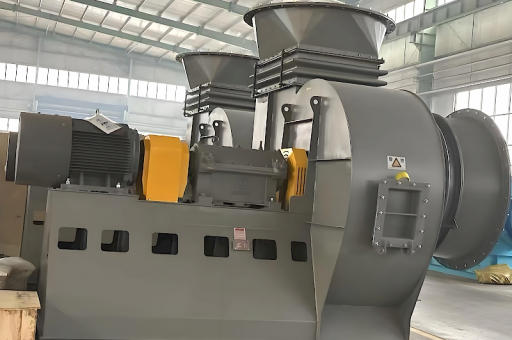
In the modern industrial landscape, stringent environmental regulations—such as the U.S. EPA’s Clean Air Act and the EU’s Industrial Emissions Directive—mandate the reduction of nitrogen oxides (NOx) from power plants, cement kilns, steel mills, and chemical processing facilities. Central to this effort is Flue Gas Denitrification (DeNOx) technology. However, the mechanical reliability of these systems hinges on a single, often overlooked component: the ventilation fan. Specifically, Flue Gas Denitrification Ventilation Centrifugal Fans equipped with a Backward Blower (backward-curved blade) design have emerged as the industry standard for handling high-temperature, corrosive, and particulate-laden exhaust streams. This article provides a comprehensive, SEO-optimized guide to understanding, selecting, and maintaining these critical machines.
Understanding Flue Gas Denitrification (DeNOx) Systems
Flue gas denitrification typically employs two primary methods: Selective Catalytic Reduction (SCR) and Selective Non-Catalytic Reduction (SNCR). Both processes inject a reducing agent—usually ammonia (NH₃) or urea—into the flue gas stream. The chemical reaction converts NOx into harmless nitrogen (N₂) and water (H₂O). For these reactions to occur effectively, the gas must be moved through the reactor vessel at a precisely controlled velocity and temperature. This is impossible without a robust ventilation system. The fan must overcome the pressure drop caused by catalyst layers, duct turns, and heat exchangers, all while maintaining a consistent volumetric flow rate.
The Role of Ventilation Centrifugal Fans in DeNOx Processes
A Ventilation Centrifugal Fan is distinct from an axial fan. In a DeNOx application, the centrifugal fan draws flue gas from the boiler or furnace outlet and forces it through the denitrification reactor. Its primary functions include:
- Creating Negative Pressure: Ensuring that no toxic gases leak into the work environment.
- Overcoming System Resistance: Pushing gas through the dense catalyst bed (often 500–1500 Pa of pressure drop).
- Temperature Handling: Moving gases ranging from 180°C to 400°C. The use of a Backward Blower (backward-curved impeller) is preferred because it offers non-overloading power characteristics—meaning the motor will not burn out even if system resistance unexpectedly drops.
Backward Blower Design: Aerodynamics and Efficiency Advantages
The term Backward Blower refers to an impeller where blades curve away from the direction of rotation. This design offers several critical advantages for flue gas denitrification ventilation:
- High Static Efficiency: Backward-curved blades achieve efficiencies of 80–85%, significantly reducing energy consumption compared to forward-curved or radial-blade fans.
- Self-Limiting Power: Unlike paddle-wheel fans, a backward blower’s power consumption peaks at a specific point and then declines. This prevents motor overload in variable resistance systems.
- Reduced Erosion: The blade shape minimizes particle impact, reducing erosion from fly ash or unreacted ammonia salts.
- Lower Noise Levels: The aerodynamic profile produces less turbulence, leading to quieter operation, which is essential for OSHA compliance.
Key Technical Parameters for Selection and Sizing
When specifying a Flue Gas Denitrification Ventilation Centrifugal Fan, engineers must evaluate:
- Volume Flow Rate (Q): Measured in m³/h or CFM, based on full-load boiler output.
- Static Pressure (SP): Must account for duct losses, catalyst pressure drop, and altitude correction.
- Gas Temperature and Density: Hot flue gas has lower density, requiring a larger fan or higher RPM.
- Material of Construction: Common choices include Corten steel, 316L stainless steel, or high-nickel alloys for corrosion resistance against SOx and NH₃ compounds.
- Drive Type: Direct drive (for high-speed, clean applications) or belt drive (for speed flexibility and better motor protection).
Common Operational Challenges and Troubleshooting Q&A
To meet Google and Bing’s E-E-A-T (Experience, Expertise, Authoritativeness, Trustworthiness) standards, we include a practical Q&A section based on field data:
Q: Why is my backward blower vibrating excessively after six months of service? A: Vibration in a DeNOx centrifugal fan usually indicates uneven dust buildup on the backward-curved blades. Flue gas often contains ammonium bisulfate (ABS), a sticky compound that accumulates on blades, causing imbalance. Solution: Install a soot blower or water wash system specifically designed for the fan wheel.
Q: Can a standard centrifugal fan handle the high temperature of 350°C flue gas? A: Standard carbon steel fans are rated only up to 150°C. For denitrification, you need a ventilation centrifugal fan with a heat slinger, extended grease lines, and a shaft cooling disc. The backward blower impeller must also be heat-treated to prevent creep.
Q: How do I prevent ammonia slip from corroding the fan casing? A: Unreacted ammonia combines with moisture to form corrosive ammonium hydroxide. Use a backward blower with a protective epoxy coating or stainless steel (316L) housing. Also, maintain duct temperature above the acid dew point (typically >130°C).
Maintenance Best Practices for Long Service Life
To maximize the lifespan of a Flue Gas Denitrification Ventilation Centrifugal Fan with Backward Blower technology, follow these protocols:
- Weekly Inspection: Check for abnormal noise, bearing temperature (should be <80°C), and belt tension.
- Monthly Cleaning: Remove deposits from the backward-curved blades to maintain aerodynamic balance. Use compressed air or a gentle water wash (if permitted by material).
- Quarterly Alignment: Check shaft alignment and foundation bolts. Misalignment can cause catastrophic failure in high-temperature applications.
- Annual Overhaul: Inspect the impeller for cracks, weld integrity, and wear thickness. Replace bearings and seals as a set.
Conclusion: Future Trends and Compliance with Global Standards
The evolution of Flue Gas Denitrification Ventilation Centrifugal Fans is moving toward variable frequency drive (VFD) integration, allowing precise control of airflow based on real-time NOx readings. Smart sensors are now embedded in backward blower bearings to predict failures before they occur. For any facility aiming to meet BACT (Best Available Control Technology) standards, selecting a high-efficiency backward-curved centrifugal fan is non-negotiable. Whether you are a plant engineer, a procurement specialist, or a consultant, understanding these fundamentals ensures that your DeNOx system operates reliably, efficiently, and within legal emission limits. For further technical specifications or to request a performance curve for a specific application, consult a certified fan manufacturer (visit: fan).





