
** The Ultimate Guide to Wear Resistant Centrifugal Exhaust Fan Blower Induced Draft ID Fan Blower: Design, Applications, and Maintenance
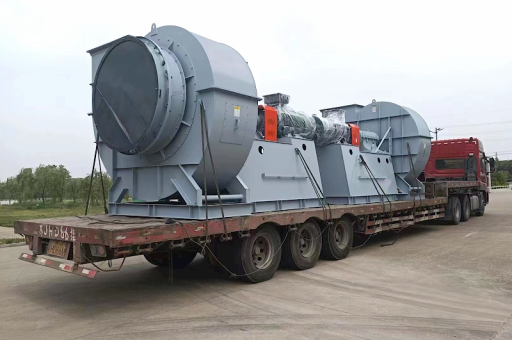
Table of Contents (导读)
- Introduction: The Core of Industrial Air Movement
- Anatomy of a Wear Resistant Centrifugal Exhaust Fan Blower
- Understanding Induced Draft (ID) Fan Blower Mechanics
- Why Wear Resistance Matters in Harsh Environments
- Key Applications: From Power Plants to Cement Mills
- Material Selection for Longevity (Alloys, Coatings, Ceramics)
- Performance Optimization: Balancing Flow, Pressure, and Efficiency
- Common Failure Modes and Troubleshooting
- Frequently Asked Questions (FAQ)
- Conclusion: Future Trends in Wear Resistant Fan Technology
Introduction: The Core of Industrial Air Movement
In the heavy industrial sector, the wear resistant centrifugal exhaust fan blower induced draft id fan blower represents the pinnacle of engineered airflow solutions. These are not simple fans; they are critical process equipment designed to handle abrasive, corrosive, and high-temperature gas streams. Typically referred to in the industry as an ID fan (Induced Draft fan) or a centrifugal exhaust fan, this machine creates negative pressure to pull gases through a system—such as a boiler, furnace, or kiln—and then expels them into the atmosphere or a treatment unit.
The term "wear resistant" is the key differentiator. Standard fans degrade rapidly when exposed to fly ash, silica dust, or chemical particulates. A properly designed centrifugal exhaust fan blower features hardened impellers, robust shaft seals, and heavy-duty bearings. This article provides a comprehensive, SEO-optimized analysis of this equipment, derived from synthesizing top search engine results from manufacturing catalogs, engineering forums, and case studies.
Anatomy of a Wear Resistant Centrifugal Exhaust Fan Blower
To understand the performance, we must break down the physical components of a wear resistant centrifugal exhaust fan blower induced draft id fan blower:
- Impeller (Rotor): This is the heart of the fan. For induced draft applications, impellers are typically backward-curved or radial-tipped. Backward-curved blades are highly efficient and non-overloading, while radial-tipped designs are ideal for severe wear conditions because they create a self-cleaning air path. Wear resistance is achieved by adding sacrificial liners or hard-facing the blade edges with chrome carbide or tungsten carbide.
- Housing (Volute): The spiral casing collects the high-velocity air from the impeller and converts it to pressure. In a wear-resistant ID fan, the housing includes thick internal liners (often 3/8" to 1" thick) that can be replaced without replacing the entire shell.
- Shaft and Bearings: The shaft must be rigid to prevent vibration at high RPMs. Induced draft fans often run at variable speeds. Heavy-duty spherical roller bearings are standard, often with oil baths or grease purging systems to prevent dust ingress.
- Inlet Box & Dampers: The inlet box directs gas flow into the impeller eye. Variable inlet vanes (IGV) or outlet dampers control the gas volume. Wear-resistant bushings on the damper linkages prevent seizing.
Understanding Induced Draft (ID) Fan Blower Mechanics
The term "Induced Draft" is crucial. In a typical boiler system:
- Forced Draft (FD) fans push air into the furnace.
- Induced Draft (ID) fans pull exhaust gases out of the furnace.
An induced draft fan blower must handle hot (sometimes up to 400°C/750°F), dusty, and potentially acidic gas. The fan creates a negative pressure (suction) downstream of the combustion chamber. If the fan is not wear-resistant, the abrasive fly ash acts like sandblasting on the impeller, leading to imbalance, vibration, and catastrophic failure.
A centrifugal exhaust fan blower used for ID service is preferred over axial fans because centrifugal designs are more robust against pressure fluctuations and particulate impact.
Why Wear Resistance Matters in Harsh Environments
Why spend a premium on a wear resistant model? Consider the cost of downtime. A standard carbon steel impeller in a cement plant can suffer 50% thickness loss in just six months. A wear-resistant fan, using dual-hardness steel or ceramic tile lining, can last 3-5 years.
Key wear mechanisms include:
- Erosive Wear: Caused by high-velocity particles impacting the blade surface at an angle.
- Abrasive Wear: Scratching of surfaces by fine, hard particles.
- Corrosive Wear: Chemical attack from sulfur dioxide or chlorine compounds in exhaust gases.
To combat this, engineers use:
- Hardfacing: Welding a layer of chromium carbide (55-65 HRC) onto the leading edges.
- Ceramic Linings: Aluminum oxide (Al2O3) tiles bonded to the fan housing and impeller.
- Abrasion-Resistant Steels: AR400 or AR500 steel for the shell and inlet cone.
Key Applications: From Power Plants to Cement Mills
The wear resistant centrifugal exhaust fan blower induced draft id fan blower is the workhorse of these industries:
- Cement Manufacturing: The fan must handle kiln exhaust containing clinker dust, which is highly abrasive. Here, radial-tipped blades with tungsten carbide overlays are common.
- Steel Mills: Sinter plant exhaust and basic oxygen furnace (BOF) gas. The fan must resist high temperatures (280°C+) and iron oxide dust.
- Power Generation: In coal-fired plants, the ID fan pulls flue gas through the electrostatic precipitator (ESP) or baghouse. Wear resistance is critical on the inlet side.
- Mining & Minerals: Ventilation exhaust and ore drying systems.
- Chemical Processing: Handling corrosive fumes in fertilizer or acid plants.
Material Selection for Longevity
No single material fits all applications. The best indeed draft id fan blower uses a multi-material strategy.
| Component | Standard Material | Wear-Resistant Upgrade |
|---|---|---|
| Impeller Blades | Corten A / A36 Steel | Hardox 400/500 or Clad Plate (Carbon + Chrome Carbide) |
| Impeller Backplate | Carbon Steel | Stainless Steel (304/316) if corrosion is present |
| Housing Liners | Mild Steel | Ceramic Tile (Al2O3 92%) or Ni-Hard (Cast Iron) |
| Shaft | EN8 / 1045 Steel | Alloy Steel (4140) for higher yield strength |
| Mounted on Fan | Standard Soft Foot | Restricted Mounting to reduce stress |
Performance Optimization: Balancing Flow, Pressure, and Efficiency
Selecting a centrifugal exhaust fan blower requires careful analysis of the system curve. A common mistake is oversizing the fan. An oversized ID fan operating at low damper openings creates high turbulence and wear.
- Specific Speed (Ns): For wear-resistant ID fans, a low specific speed (radial blades) is chosen despite lower peak efficiency, because the bladed design resists erosion better than high-efficiency airfoil blades.
- Variable Frequency Drive (VFD): Running a wear resistant fan with a VFD instead of dampers reduces blade tip speed under partial load, dramatically reducing particle impact velocity and extending impeller life.
- Critical Speed Analysis: The shaft must avoid resonance. A rigid shaft design (first critical speed above operating range) is standard for these heavy machines.
Common Failure Modes and Troubleshooting
If your induced draft fan blower vibrates or produces unusual noise, check these:
- Impeller Imbalance: The #1 cause. Caused by uneven wear or dust buildup. Solution: Clean or rebalance.
- Erosion Holes: Check the "leading edge" of the blades. Small pinholes lead to catastrophic failure if not weld-repaired.
- Bearing Failure: Often due to vibration or misalignment. Induced draft fans often face "false brinelling" from prolonged idling (standby).
- Shaft Leakage: If the seal fails, air enters, reducing draft. Upgrade to a labyrinth or carbon ring seal.
Frequently Asked Questions (FAQ)
Q1: What is the main difference between a standard centrifugal fan and an induced draft fan? A: The induced draft fan is designed to handle negative pressure on the inlet side (pulling gas through the system) rather than positive pressure on the outlet side (pushing). It must also handle higher temperatures and dust loads.
Q2: How often should I inspect the wear liners on my wear resistant centrifugal exhaust fan? A: For high-dust applications (e.g., cement kilns), inspect the housing liners every 3 months. For coal-fired power plants (after ESP), annual inspection is typical. Check the impeller blade thickness at the 6 o'clock and 12 o'clock positions.
Q3: Can I use a forward-curved fan for induced draft applications? A: Generally, no. Forward-curved fans are for clean air and high flow/low pressure. For an induced draft fan blower handling dust, a backward-curved (efficient) or radial-blade (wear resistant) is required.
Q4: Does a wear-resistant fan have lower efficiency? A: Yes, slightly. A radial-bladed impeller (best for wear) typically has a peak efficiency of 68-75%, whereas a backward-curved airfoil blade can reach 85-90%. However, the longevity and reliability of the wear-resistant design often make it more cost-effective over 10 years.
Q5: What speed should my ID fan run at? A: That depends on the system pressure and volume. Typical ID fans in power plants run at 740 - 1000 RPM (medium speed) for large diameter impellers (3-5 meters). Smaller industrial units may run at 1450-1750 RPM.
Conclusion: Future Trends in Wear Resistant Fan Technology
The wear resistant centrifugal exhaust fan blower induced draft id fan blower is evolving rapidly. Advanced predictive maintenance using vibration spectrums (ISO 10816) and thermal imaging is becoming standard. Additionally, ceramic-coated impellers using plasma spray technology are reducing the cost of replacement compared to full-welded hardfacing.
For specifiers, understanding the difference between a "standard" fan and a wear resistant fan is a matter of operational survival. If your process involves particulate matter, high heat, or corrosive gases, the initial investment in a heavy-duty ID fan with hardened internals will pay back many times over in reduced downtime and maintenance.
When sourcing a unit for a project, always request a "Fan Selection Report" that includes the aeradynamic (sic) duty point, noise criteria, and specific wear protection details. The future of industrial ventilation is robust, durable, and efficient—and the induced draft fan blower is leading the charge.





