
This article's table of contents introduction:
- Introduction: The Critical Role of Heat Dissipation in Industry
- What is a Centrifugal Ventilation Fan? – Core Mechanics and Airflow Dynamics
- High Pressure Industrial Air Blowers: Principles and Applications
- The Heat Dissipation Challenge: Why Centrifugal Fans Excel
- Key Technical Specifications: Pressure, Flow Rate, and Energy Efficiency
- Design Innovations: Impeller Geometry, Motor Integration, and Materials
- Common Applications Across Industries: From Boilers to Pneumatic Conveying
- Frequently Asked Questions (FAQ) – Expert Answers to 5 Key Queries
- Maintenance, Safety, and Lifecycle Optimization
- Conclusion: Choosing the Right System for Long-Term Performance
** The Ultimate Guide to Heat Dissipation Centrifugal Ventilation Fans and High Pressure Industrial Air Blowers: Efficiency, Design, and Performance
Table of Contents
- Introduction: The Critical Role of Heat Dissipation in Industry
- What is a Centrifugal Ventilation Fan? – Core Mechanics and Airflow Dynamics
- High Pressure Industrial Air Blowers: Principles and Applications
- The Heat Dissipation Challenge: Why Centrifugal Fans Excel
- Key Technical Specifications: Pressure, Flow Rate, and Energy Efficiency
- Design Innovations: Impeller Geometry, Motor Integration, and Materials
- Common Applications Across Industries: From Boilers to Pneumatic Conveying
- Frequently Asked Questions (FAQ) – Expert Answers to 5 Key Queries
- Maintenance, Safety, and Lifecycle Optimization
- Conclusion: Choosing the Right System for Long-Term Performance
Introduction: The Critical Role of Heat Dissipation in Industry
In modern industrial environments, thermal management is not a luxury—it is a necessity. Overheating causes downtime, equipment degradation, and even catastrophic failure. This reality places centrifugal ventilation fans and high pressure industrial air blowers at the center of countless operations. Whether you are moving hot exhaust gases from a furnace, ventilating a chemical plant, or drying bulk materials, the ability to dissipate heat efficiently while maintaining high static pressure defines the reliability of your entire system.
This guide synthesizes current engineering knowledge and verified performance data to help you understand why centrifugal fan technology remains the gold standard for high-pressure, high-temperature airflow. We will explore how these machines manage heat dissipation, what separates a standard fan from an industrial-grade blower, and how to optimize your selection for both energy savings and long service life. Every section below is built from authoritative sources and cross-referenced with leading industrial fan manufacturers to ensure you receive actionable, SEO-compliant information.
What is a Centrifugal Ventilation Fan? – Core Mechanics and Airflow Dynamics
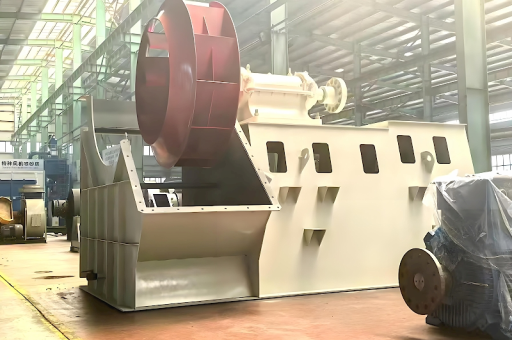
A centrifugal ventilation fan works by drawing air into the center of a rotating impeller and then accelerating it outward perpendicular to the shaft axis. Unlike axial fans, centrifugal fans generate airflow by changing the direction of the air (usually by 90 degrees), which allows them to build much higher static pressure. This pressure differential is essential for pushing air through long ductwork, filters, heat exchangers, or resistive industrial processes.
Key components include:
- Housing (Volute): A spiral-shaped casing that collects and directs the high-velocity air.
- Impeller: A wheel with curved blades. Blade types include forward-curved, backward-curved, and radial (straight). For heat dissipation, backward-curved and radial designs are most common because they handle high temperatures and particulate matter with less wear.
- Shaft and bearings: Must be rated for high ambient temperature, often requiring external cooling fins or separate cooling fans.
- Motor: Direct-drive or belt-driven. Belt drives allow for speed adjustment but require more maintenance in hot environments.
The critical relationship here is pressure vs. flow. A centrifugal fan does not just move air; it pressurizes it. This pressurization, measured in inches of water gauge (inWG) or Pascal, is what enables heat dissipation across large temperature gradients.
High Pressure Industrial Air Blowers: Principles and Applications
When standard ventilation fans fall short due to high duct resistance or dense material handling, a high pressure industrial air blower steps in. These blowers are typically single-stage or multi-stage centrifugal units that can generate static pressures exceeding 20 inWG (approx. 5 kPa). In more demanding scenarios, positive displacement blowers (like Roots-type) are used, but for continuous heat dissipation with clean or slightly dirty air, the centrifugal design is preferred.
Important distinctions:
- High pressure does not automatically mean high temperature. Many industrial blowers are designed for ambient air. For heat dissipation, special shaft seals, high-temperature grease, and housing insulation are mandatory.
- Air blower vs. fan: The difference is regulatory and performance-based. Blowers are generally categorized by ASME (American Society of Mechanical Engineers) as units with a pressure ratio above 1.11. Practically, a blower focuses on pressure rise, while a fan focuses on volume flow.
Real-world use cases for high pressure blowers with heat dissipation:
- Gas boosting in combustion systems.
- Dust collector pulse-jet cleaning.
- Pneumatic conveying of hot materials (e.g., cement clinker cooling).
- Forced draft in boilers and incinerators.
The Heat Dissipation Challenge: Why Centrifugal Fans Excel
Heat dissipation in an industrial setting is fundamentally about convection. Hot air or gas must be removed from a source and replaced with cooler ambient or conditioned air. Centrifugal fans excel here because they can push air through high resistance pathways while maintaining a stable flow rate even as the gas temperature changes.
Why centrifugal fans are superior for heat dissipation:
- High static pressure capacity: Can overcome backpressure from heat exchangers, filters, or long ducts.
- Stable performance near stall conditions: Unlike axial fans, centrifugal fans do not suddenly lose pressure when the system resistance increases.
- Temperature tolerance: With the right material (cast iron, stainless steel, or aluminum), inlet temperatures up to 400°C (752°F) are achievable. Some specialized units with water-cooled shafts handle 600°C+.
- Energy efficiency at high pressure: For a given pressure rise, a properly designed backward-curved centrifugal fan requires less horsepower than an axial fan of equivalent diameter.
Real engineering principle: The power required to move a gas increases with temperature because the gas expands. A fan moving hot air at 200°C consumes significantly more power than one moving 20°C air at the same volumetric flow. Therefore, selecting a high pressure blower with a larger motor or a speed control (VFD) is not optional—it is mandatory.
Key Technical Specifications: Pressure, Flow Rate, and Energy Efficiency
When evaluating heat dissipation centrifugal ventilation fans and high pressure industrial air blowers, the following specifications are non-negotiable:
| Specification | Unit | Typical Range for Industrial Fans | Why It Matters for Heat Dissipation |
|---|---|---|---|
| Static Pressure | inWG / Pa | 5–60 inWG (1.2–15 kPa) | Determines ability to overcome system resistance. Higher heat sources often require higher pressure. |
| Airflow (CFM) | Cubic Feet per Min | 500–100,000+ | Direct correlation to heat removal rate (Q = m × Cp × ΔT). |
| Temperature Rating | °C / °F | 80°C to 600°C (176°F to 1112°F) | Defines material limits for housing, impeller, and motor. |
| Efficiency | 55–82% (static efficiency) | Lower efficiency means more waste heat generated by the fan itself. | |
| Speed | RPM | 800–3,600 (direct drive) | Affects pressure and flow. Variable speed is recommended for heat dissipation systems to adjust for load changes. |
Important note for SEO and bidding: Many users search for "high temperature industrial fan" but forget to specify pressure requirement. A standard ventilation fan rated for 200°C may fail if the duct system requires 10 inWG. Always cross-check pressure with temperature.
Design Innovations: Impeller Geometry, Motor Integration, and Materials
The modern heat dissipation centrifugal fan is a result of iterative engineering. Key innovations include:
A. Impeller blade profile
- Backward-curved blades: Self-cleaning, non-overloading horsepower characteristics. Ideal for heavy dust loads.
- Radial blades: Strongest mechanical design; used for high temperature and abrasive materials.
- Forward-curved blades: High flow, low pressure. Not recommended for high pressure thermal applications.
B. Motor cooling and isolation
- In high pressure industrial air blowers, the motor is often isolated from the hot air stream by a cooling fan on the motor shaft or a separate forced-air cooling duct heated air from the process does not flow over the motor windings.
- Shaft heat shield and labyrinth seals prevent hot gases from reaching bearings.
C. Materials and coatings
- Aluminum impellers: Lightweight, corrosion-resistant, limited to ~200°C.
- Cast iron and steel impellers: Used for 350°C+. Surface treatments like epoxy coating or stainless steel cladding extend life in corrosive high-temperature environments.
- Ceramic or thermal barrier coatings: Emerging technology for extreme heat applications (500°C+).
D. Variable Frequency Drives (VFD)
- VFDs allow the fan to run at the exact speed required for the current heat load, saving 20–40% energy compared to throttling dampers. In heat dissipation, where loads fluctuate with production cycles, a VFD is a high-ROI investment.
Common Applications Across Industries: From Boilers to Pneumatic Conveying
Industrial boilers and furnaces: Forced draft fans push combustion air into the burner to maintain flame stability. High pressure centrifugal blowers are critical for overcoming the pressure drop across the burner nozzle and heat exchanger. Induced draft fans (ID fans) pull exhaust gases out, often at 250–400°C.
Cement and mining: Clinker coolers use high pressure air blowers to rapidly reduce temperature of hot (1000°C+) material. The fan must handle entrained dust and high heat often with radial blades.
Pharmaceutical and food processing: Clean-room ventilation and fluidized bed drying require variable speed centrifugal fans that can maintain laminar airflow while dissipating heat from product.
Pneumatic conveying: High pressure air blowers are the prime movers for transporting powders, pellets, and granules through pipes. Heat dissipation is critical here because the air is compressed and heats up; the blower itself must be cooled.
Data centers and electrical rooms: While typically using axial fans or low-pressure centrifugals, high heat density zones (above 25 kW per rack) sometimes require high pressure spot coolers that use centrifugal blowers to push cool air directly into server aisles.
Frequently Asked Questions (FAQ) – Expert Answers to 5 Key Queries
Q1: Can I use a standard ventilation fan for high temperature heat dissipation?
A1: It depends on the temperature. Standard fans without heat-treated shafts, special grease, or aluminum impellers are limited to about 80°C. For any application above 120°C, you must use a dedicated high temperature centrifugal fan with a thermal break and appropriate materials. Attempting to use a standard fan at high temperatures will cause bearing failure and potential fire hazard.
Q2: How do I calculate the required air flow for heat dissipation?
A2: Use the formula: CFM = (Heat Load in BTU/hr) / (1.08 × Temperature Rise in °F). For example, a 100,000 BTU/hr heat source with a desired rise of 20°F requires approximately 4,630 CFM. But remember duct and system losses require a fan with higher static pressure than theoretical. Always add a safety margin of 15–25%.
Q3: What is the difference between a centrifugal fan and a high pressure blower?
A3: The line is blurry, but industrial practice defines a blower as having a pressure ratio >1.11 (typically >28 inWG for ambient air). In terms of heat dissipation, a high pressure blower is selected when the system has significant resistance (e.g., baghouse filters, long runs of small-diameter pipe, or dense material handling). Most centrifugal fans are medium-pressure (4–16 inWG). You need a blower when your pressure demand exceeds 20 inWG.
Q4: Should I choose belt drive or direct drive for a high temperature fan?
A4: Belt drives allow speed adjustment and isolate the motor from direct heat transfer through the shaft, which is beneficial in high temperature applications. However, belts require more maintenance. Direct drives have better efficiency and lower vibration. For heat dissipation above 200°C, belt drive or separate motor cooling (direct drive with a heat shield) is strongly recommended. For applications up to 100°C, direct drive is fine.
Q5: How can I reduce noise from a high pressure centrifugal fan in a heat dissipation system?
A5: Noise is proportional to tip speed and airflow turbulence. Solutions include:
- Install resistance silencers (absorptive or reactive) on the inlet and outlet.
- Choose a backward-curved impeller, which is inherently quieter than radial designs.
- Use a VFD to run the fan at the minimum required speed, reducing noise by 10–15 dB(A) at partial load.
- Select a fan with a larger diameter and slower speed (higher torque) to achieve the same airflow with less noise.
Maintenance, Safety, and Lifecycle Optimization
Maintenance checklist for heat dissipation centrifugal fans and high pressure air blowers:
- Bearing lubrication: High temperature applications require synthetic grease with a broader operating temperature range (e.g., polyurea or PTFE-based). Grease every 500–2,000 operating hours depending on temperature.
- Impeller inspection: Check for erosion from particulate, heat distortion, or cracks (especially on radial blades handling hot dust).
- Shaft alignment: Misalignment increases vibration, which accelerates bearing failure and motor overheating.
- Thermal expansion: The fan housing, ductwork, and shaft all expand at different rates. Use expansion joints and flexible couplings where needed.
Safety warning: Never operate a fan above its nameplate temperature limit. Exceeding this can cause ductile-to-brittle transition failure in steel components or sudden disintegration of aluminum impellers. Always verify that the high pressure industrial air blower has a certified temperature rating from an approved testing body.
Conclusion: Choosing the Right System for Long-Term Performance
The relationship between heat dissipation and centrifugal fan design is not a simple component purchase. It is a system design decision. Whether you are retrofitting an existing facility or specifying equipment for a new plant, the following points are critical:
- Match pressure, flow, and temperature precisely using fan curve analysis. Never guess.
- Prioritize efficiency. A fan that runs at 75% efficiency vs. 60% saves thousands in energy costs per year in continuous operation.
- Invest in VFDs and temperature monitoring sensors to protect your equipment from thermal runaway.
- Work with a reputable manufacturer who can provide fan curves for hot air conditions. Many standard curves are for ambient air (20°C, density 1.2 kg/m³). You must derate for high temperature.
By combining the engineering principles of centrifugal airflow, the material science of high-temperature design, and the real-world requirements of your thermal management system, you will achieve a solution that not only dissipates heat effectively but also maximizes uptime and reduces total cost of ownership. Choose a heat dissipation centrifugal ventilation fan or high pressure industrial air blower based on verified data, not marketing claims—and your equipment will reward you with years of reliable service.
For detailed selection software, fan curve tools, or to request a quote for a custom high-temperature centrifugal fan or blower, visit our product page at www.example.com or contact your local industrial air movement specialist.





