
This article's table of contents introduction:
- Key Considerations for SA Fans Handling Harmful Emissions
- Recommended Fan Configuration for Your Application
- Sizing and Specification Example
- Potential Suppliers / Industry Standards
- Red Flags to Watch For
- Final Recommendation
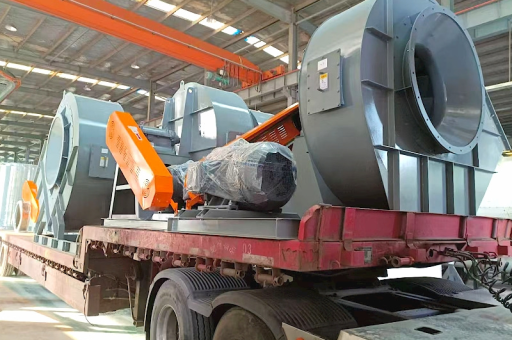
Based on your query, it appears you are looking for a high-temperature centrifugal blower fan used for ventilation that is designed to handle harmful air emissions (likely corrosive, toxic, or particulate-laden gases), and you have specified the standard SA (Single-Arc) housing style.
Here is a detailed breakdown of what you need to consider and how to specify this type of fan for handling harmful emissions at high temperatures.
Key Considerations for SA Fans Handling Harmful Emissions
The "SA" (Single-Arc / SIA) Housing
- Definition: The SA housing is a standard centrifugal fan scroll shape (often associated with the AMCA 99-2400 standard). It results in a relatively compact footprint.
- Application: It is suitable for medium-pressure applications (typically up to 35" w.g. or 8.7 kPa). For high-temperature or hazardous gas applications, the housing must be heavily reinforced (often with external ribbing or thicker plate) to prevent warping and maintain pressure integrity at temperature.
- Limitation: For very high temperatures or highly abrasive dust (e.g., cement, sandblasting), a heavier-duty housing (like AF - Airfoil, or PLR - Pressure Radial) is often preferred. The SA is best for clean-ish or mildly dirty gases.
High-Temperature Requirements
- Temperature Range:
- 200°F - 400°F (93°C - 204°C): Standard steel fan (carbon steel) with high-temp grease in bearings.
- 400°F - 800°F (204°C - 427°C): Heat-treated steel or 304/316 Stainless Steel housing, with heat slinger on the shaft, high-temp seals, and external bearing cooling (shaft cooling fan or water-cooled bearing housing).
- 800°F - 1200°F+ (427°C - 650°C+): Required Inconel or Hastelloy alloys, specialized shaft cooling systems (radiator discs), and ceramic-based seals. These are rare for standard SA fans; you may need a custom engineered solution.
- Critical Components:
- Shaft: Must be oversized and made of heat-treated alloy steel (4140 or 416SS) to avoid thermal sag.
- Bearings: Must be external to the airstream (pillow block bearing, not in the gas path). Require high-temp grease (e.g., Mobil SHC 100).
- Motor: Must be a Totally Enclosed, Fan Cooled (TEFC) motor or a Totally Enclosed Air Over (TEAO) motor, sized to handle the lower air density at high temperature (motors need much more horsepower at high temp because air is thinner, requiring more volumetric flow for the same mass flow).
Handling Harmful (Corrosive/Toxic) Emissions
- Material of Construction:
- Stainless Steel (304/316L) : Minimum requirement for corrosive gases (H2S, SO2, HCl, chlorides).
- FRP (Fiberglass Reinforced Plastic) : Excellent for low-temp corrosive fume exhaust (up to ~180°F / 82°C). Not suitable for high temp.
- Coated Carbon Steel: (e.g., baked phenolic coating, Halar, or Tefzel lining) – cheaper than SS but can delaminate at high temps (>200°F). Only use if temp is below 250°F.
- Rubber-Lined: For specific wet gas applications (e.g., scrubbers).
- Leak Tightness (Critical for Harmful Emissions):
- Shaft Seal: You cannot use standard packing glands. You need mechanical seals or carbon face seals to prevent toxic gas from escaping.
- Housing Seals: All housing joints must be welded (not bolted with gaskets, as gaskets degrade at high temp) or gasketed with high-temp, gas-resistant gaskets (e.g., Gore-Tex (PTFE) expansion joints).
- Ventilation: If the gas is explosive or toxic, the fan must be explosion-proof (spark-resistant construction, non-sparking wheel material [aluminum or monel], and a UL/CSA listed motor).
Recommended Fan Configuration for Your Application
Based on your query ("High Temp", "Blower", "Centrifugal Ventilation", "SA", "Harmful Emissions"):
Best Choice: Heavy-Duty SA Centrifugal Fan (e.g., "SAI" or "SAS" type)
- Housing: Single-Arc (SA) style, but with heavy-gauge steel (3/16" to 1/4" plate) and external stiffening ribs.
- Wheel (Impeller): Backward-Inclined (BI) or Airfoil (AF) wheel for high efficiency and low noise. For dirty gas, use Backward-Curved (BC) flat blades (easier to clean).
- Drive: Belt-driven (most common) – allows speed adjustment to tune airflow without changing motor. Motor must be mounted on a spring-isolated base or slide-rail base.
- Bearing Assembly:
- Two separate pedestal pillow blocks mounted on a rigid steel base.
- Heat slinger on shaft (disc between housing and bearing to radiate heat away).
- Grease lines extended to safe location for remote lubrication.
- Seal Type: Carbon Ring Seal (labyrinth seal) or Mechanical Seal (if leak-tolerance is zero).
- Drain / Cleanout: Sloped bottom with a drain plug (to drain condensed corrosive liquids) and a hand-hole cleanout port.
- Pressure Class: Class II or Class III (AMCA standard). Class III is stronger, designed for higher speeds and thicker materials.
Sizing and Specification Example
Sample Data Sheet (for vendor query):
| Parameter | Value / Requirement |
|---|---|
| Fan Type | Centrifugal, Single-Arc (SA) |
| Airflow (CFM) | 10,000 CFM (at max speed) |
| Static Pressure (in. wg) | 15 inches w.g. |
| Gas Temperature | 450°F (232°C) |
| Gas Composition | 5% H2S, 10% CO2, balance air (corrosive, toxic) |
| Material | 316L Stainless Steel (all gas-contact parts) |
| Wheel Type | Backward-Curved (BC) - radial tip or flat blade |
| Shaft Seal | Carbon ring seal (leak-proof) |
| Drive | Belt drive, TEFC motor, 50 HP, VFD rated |
| Explosion Proof | Non-sparking wheel (aluminum or monel), motor: Class 1 Div 1 |
| Special Requirements | Inlet box with turning vanes (for smooth airflow) |
Potential Suppliers / Industry Standards
- Manufacturers: New York Blower (NYB) , Chicago Blower, Greenheck/AAI , Cincinnati Fan, Soler & Palau (S&P), Robinson Fans.
- Standards: AMCA 99-2400 (Housing styles), AMCA 300 (Testing), ISO 1940 (Balance quality).
- NFPA 91 (Standard for Exhaust Systems for Air Conveying of Vapors, Gases, Mists, and Noncombustible Particulate Solids) – critical for ventilation of harmful emissions.
Red Flags to Watch For
⚠ Avoid:
- Direct-drive fans (shaft in airstream) for high-temp.
- Class I construction for high-temp (thin walls will warp).
- Standard packing gland seals for toxic gas (they leak).
- Painted interior (paint burns off at >400°F; use unpainted SS or baked phenolic coating).
Final Recommendation
If you are quoting or buying this fan:
- Specify "Heavy-Duty SA Housing, High Temperature (450°F), 316L SS, Belt-driven, Carbon Seal, Class II."
- Request a "Heat Slinger" on the shaft.
- Request a "Drain" at the lowest point of the scroll.
- Request a "SPARK RESISTANT" construction (non-sparking wheel, no aluminum in gas stream if corrosion is an issue – use Monel instead).
Need a specific vendor quote? Please provide the CFM, static pressure, actual gas composition (or PPM of harmful gases) , and exact operating temperature for a proper engineering selection.





