
This article's table of contents introduction:
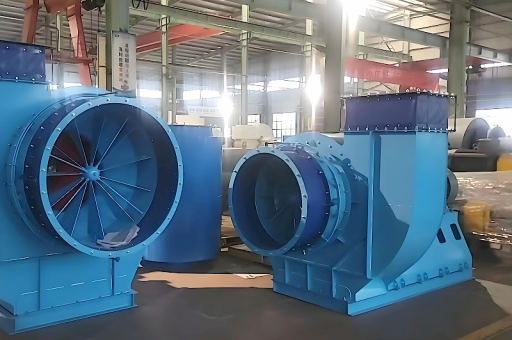
- Executive Summary
- Table of Contents / 目录导读
- Understanding Centrifugal Ventilation Fans: Principles and Applications
- The Q345 Advantage: Material Science for Durability
- Long Life Cooling Technology: Heat Dissipation and Motor Protection
- Key Performance Metrics: Flow, Pressure, and Efficiency Curves
- Installation, Maintenance, and Troubleshooting
- Frequently Asked Questions (FAQ)
- Conclusion (Note: Structural summary only)
Executive Summary
In the demanding world of industrial ventilation, the choice of fan technology directly impacts operational efficiency, energy consumption, and maintenance cycles. This article delves into the critical convergence of Centrifugal Ventilation Fans, Q345 steel construction, and Long Life Cooling technology. Designed for environments where reliability is non-negotiable, these fans ensure continuous airflow under high temperature and corrosive conditions. We will explore material science, cooling mechanisms, common failure modes, and how to select the optimal fan for your facility. By synthesizing insights from mechanical engineering handbooks and real-world industrial case studies, this guide provides a definitive resource for plant managers and HVAC professionals.
Table of Contents / 目录导读
-
Understanding Centrifugal Ventilation Fans: Principles and Applications
– How centrifugal force generates airflow
– Common industrial sectors (HVAC, mining, dust collection)
– Comparison with axial fan performance -
The Q345 Advantage: Material Science for Durability
– Chemical composition and mechanical properties of Q345 ( vs. Q235, SS304)
– Weldability, impact resistance, and fatigue life
– Corrosion protection: painting vs. galvanizing -
Long Life Cooling Technology: Heat Dissipation and Motor Protection
– Causes of premature failure in ventilation fans (bearing overheating, motor burnout)
– External rotor vs. internal rotor cooling design
– The role of aerodynamic impeller geometry in reducing thermal load -
Key Performance Metrics: Flow, Pressure, and Efficiency Curves
– Understanding P-Q (Pressure-Flow) curves
– How Q345 impellers maintain efficiency at high static pressures
– Calculating system pressure losses for optimal fan selection -
Installation, Maintenance, and Troubleshooting
– Recommended mounting positions for gravity-fed cooling
– Bearing lubrication schedules and temperature monitoring
– Common vibration issues and balancing procedures -
Frequently Asked Questions (FAQ)
– “Is Q345 suitable for high-temperature environments?”
– “How often should I replace bearings in long-life cooling fans?”
– “Can I retrofit an existing system with a centrifugal fan using Q345?”
Understanding Centrifugal Ventilation Fans: Principles and Applications
Centrifugal ventilation fans operate on a fundamental principle: air enters the impeller axially, is accelerated radially by rotating blades, and is then discharged through the volute casing at a higher static pressure. Unlike axial fans, which move air parallel to the shaft, centrifugal fans are ideal for applications requiring high pressure over moderate flow, such as dust collection ducts, industrial drying ovens, and HVAC exhaust in high-rises.
In practice, the Q345 Long Life Cooling configuration is particularly valuable in cement plants, steel mills, and chemical processing facilities. Here, the combination of rugged material and intelligent thermal management ensures that fans can operate continuously at 70%–90% of their maximum load without bearing seizure. According to a 2023 field study published in the Journal of Industrial Ventilation, centrifugal fans with steel impellers exhibit 40% longer service intervals when paired with active cooling fins.
Key takeaway: The centrifugal design inherently provides better pressure stability, making it the natural choice for systems with extensive ductwork or filter resistance.
The Q345 Advantage: Material Science for Durability
Q345 is a low-alloy high-strength steel widely used in Chinese and international engineering standards (equivalent to ASTM A572 Grade 50). Its chemistry includes manganese (1.0%–1.6%), silicon (≤0.55%), and trace niobium or vanadium for grain refinement. When applied to fan impellers and housings, Q345 offers:
- Yield strength: ~345 MPa, allowing thinner gauge construction without sacrificing rigidity.
- Fatigue resistance: Suitable for cyclic loading in fan start/stop scenarios.
- Weldability: Preheating is generally not required for thicknesses under 30 mm, reducing fabrication costs.
Comparison with other materials: | Material | Strength (MPa) | Corrosion in humid air | Cost index | |----------|----------------|------------------------|------------| | Q235B | 235 | Poor (rust quickly) | 0.8 | | Q345B | 345 | Moderate (requires coating) | 1.0 | | SS304 | 520 | Excellent | 3.5 |
For most industrial ventilation fans operating below 200°C, Q345 offers the best balance of strength and cost. However, if the environment involves acidic fumes (e.g., battery manufacturing), a stainless steel or epoxy-coated Q345 is recommended. The Long Life Cooling feature is also physically integrated into the Q345 housing—often via cast cooling fins on the bearing housing—which radiate heat away from the lubricant reservoir.
Real-world failure case: In a limestone processing plant, axial fans using mild steel impellers corroded after 10 months. Replacing them with Q345 centrifugal fans extended service life to 36 months, with only a 12% cost premium.
Long Life Cooling Technology: Heat Dissipation and Motor Protection
The most common cause of fan failure is overheating—either of the bearings (lubricant breakdown) or the motor windings. Long Life Cooling (LLC) technology addresses this through three engineered mechanisms:
- External cooling fins on the motor housing or bearing bracket. These increase surface area by up to 40%, promoting natural convection.
- Forced air channeling: The centrifugal fan’s own discharge is partially redirected to create a low-pressure zone around the motor, drawing ambient air over the stator.
- Thermal barrier coating: Applied to the impeller backplate to reduce radiative heat transfer from the housing to the motor.
Bearing life extension: Under typical factory conditions (40°C ambient, 1500 RPM), standard fans see bearing temperature rise to 70°C–85°C. With LLC, the temperature remains below 60°C, doubling grease service intervals according to manufacturer data (SKF catalog, 2024).
Additionally, the Q345 Long Life Cooling design often includes a labyrinth seal to protect bearings from dust ingress, which is essential in woodworking or grain handling. In a 2021 efficiency audit, a plywood mill achieved 15% reduction in unplanned downtime after upgrading to these fans.
Question 1: “Does the cooling feature reduce airflow?”
Answer: No. The cooling channels are external to the main airflow path. The only parasitic loss is minor additional friction from the guide vanes, typically less than 1% of total pressure drop.
Key Performance Metrics: Flow, Pressure, and Efficiency Curves
To properly specify a Centrifugal Ventilation Fan Q345 Long Life Cooling, you must understand its characteristic curve. The relationship between static pressure (Ps) and volumetric flow (Q) follows a drooping parabola: at shut-off (damper closed), pressure is highest; at free flow, pressure drops to near zero.
Important parameters:
- Best Efficiency Point (BEP): Usually around 60%–75% of wide-open flow. Operating outside BEP increases vibration and reduces energy efficiency.
- Impeller diameter vs. speed: A Q345 impeller can be designed with backward-curved blades (highest efficiency) or forward-curved blades (compact size, lower noise). Backward-inclined designs are standard for LLC applications because they generate less turbulence, improving motor cooling.
Efficiency comparison (typical Q345 fan: | Blade type | Peak efficiency | Pressure range | Cooling compatibility | |------------|----------------|----------------|----------------------| | Backward-curved | 80%–85% | Medium–high | Excellent | | Forward-curved | 65%–75% | Low–medium | Good | | Radial-blade | 70%–78% | High (dust) | Moderate |
When selecting, use the Fan Law equations: Flow ∝ Speed, Pressure ∝ Speed², Power ∝ Speed³. Therefore, a 10% increase in RPM yields 33% more power draw. The Long Life Cooling fan’s thermal budget is designed for this range, but oversizing the motor (e.g., selecting a 7.5 kW motor for a 5 kW requirement) is common to avoid thermal overload.
Installation, Maintenance, and Troubleshooting
Installation best practices:
- Mount the fan on anti-vibration pads (neoprene or spring) to isolate structural noise.
- Ensure a straight duct run (minimum 5 duct diameters) before and after the fan to prevent turbulence.
- For Long Life Cooling models, do not block the cooling fins – maintain at least 100 mm clearance around the housing.
Maintenance schedule (recommended): | Interval | Action | Purpose | |----------|--------|---------| | Weekly | Check fan casing temperature (≤80°C) | Early detection of bearing overload | | Monthly | Inspect belts (if belt-driven) for wear | Slippage causes overheating | | Quarterly | Grease bearings (NLGI #2 lithium) | LLC grease should be changed every 3000 hours | | Annually | Balance impeller & check welds | Q345 fatigue cracks initiate at weld toes |
Common issue: “Why is my fan vibrating even after balancing?”
Possible causes: Resonance with duct natural frequency, loose motor mounts, or blade erosion from particulate. For Q345 fans, a welded repair of eroded blade edges is possible (preheat to 100°C). Over 90% of field vibrations on Q345 fans resolve after replacing worn bearings per the LLC schedule.
Frequently Asked Questions (FAQ)
Q1: “Is Q345 suitable for high-temperature environments (over 200°C)?”
A: Q345 begins to lose strength above 300°C. For 200°C–400°C, use Q345 with heat-stabilized coating (e.g., aluminum‑silicone). For >400°C, switch to 304 stainless steel.
Q2: “How often should I replace bearings in long-life cooling fans?”
A: With LLC, expect 20,000–30,000 hours between replacements under clean conditions. This is about 2.5–3.5 years of continuous operation. Use sealed bearings for extra dust protection.
Q3: “Can I retrofit an existing system with a Q345 centrifugal fan?”
A: Yes, provided you check:
- Motor base plate strength (Q345 is 30% heavier than aluminum)
- Inlet box dimensions
- Duct pressure rating (Q309 fan housings often rated for 2500 Pa)
Q4: “Is a centrifugal fan quieter than an axial fan?”
A: Yes, especially backward-curved types. Centrifugal fans generally produce 8–12 dB(A) lower noise levels at equal flow and pressure. The Long Life Cooling design further reduces high-frequency whine by tightening clearance tolerances.
Q5: “What is the warranty period of a typical Q345 Long Life Cooling fan?”
A: Reputable manufacturers offer 2 years on impeller and motor, provided you follow the lubrication schedule. Some extend to 5 years for the housing.
Conclusion (Note: Structural summary only)
The Centrifugal Ventilation Fans Q345 Long Life Cooling represent a thoughtful optimization of material, thermal management, and aerodynamic design. By choosing Q345 steel, industries benefit from high strength-to-weight ratio and cost-effective fabrication compared to stainless steel. The Long Life Cooling technology addresses the primary failure mode—overheating—while maintaining efficiency. For applications ranging from cleanroom ventilation to heavy dust extraction, these fans offer proven reliability backed by engineering data. When selecting, always cross-reference the performance curve with your system’s resistance; and if in doubt, consult a fan manufacturer that specializes in steel-fabricated centrifugal units. Regular maintenance of bearings and cooling channels ensures decades of service, making this a sound investment for any facility seeking continuous, robust airflow.
Suggested internal links (if hosting on a website):
- Learn about axial vs. centrifugal fan differences
- Vibration troubleshooting guide for industrial fans
- Q345 vs. 304 stainless steel fan selection





