
This article's table of contents introduction:
- Table of Contents
- Introduction to the Core Components
- The Role of the Impeller in Air Movement
- Cap and Bearing Housing: Structural Integrity and Performance
- Heat Dissipation: The Critical Factor for Longevity
- Dust Collector Fan: System Design and Efficiency
- Common Engineering Questions and Answers
- Maintenance Best Practices for Extended Service Life
- Conclusion: Achieving Synergy in System Design
** Optimizing Industrial Airflow Systems: A Comprehensive Guide to Impeller, Cap, Bearing Housing, Heat Dissipation, and Dust Collector Fan Integration
Table of Contents
- Introduction to the Core Components
- The Role of the Impeller in Air Movement
- Cap and Bearing Housing: Structural Integrity and Performance
- Heat Dissipation: The Critical Factor for Longevity
- Dust Collector Fan: System Design and Efficiency
- Common Engineering Questions and Answers
- Maintenance Best Practices for Extended Service Life
- Conclusion: Achieving Synergy in System Design
Introduction to the Core Components
In modern industrial ventilation, material handling, and dust control, the efficiency and reliability of an airflow system depend on a tight interplay between several mechanical elements. The impeller, cap, bearing housing, heat dissipation mechanisms, and the dust collector fan form the backbone of any high-performance air-moving unit. Each component must be carefully selected and integrated to ensure maximum energy efficiency, low noise, and long service life.
This article provides a detailed, search-engine-optimized (SEO) analysis of these five key elements. By drawing on established engineering principles and industry best practices, we will explore how they interact, how to troubleshoot common issues, and how to achieve optimal system performance.
The Role of the Impeller in Air Movement
The impeller is the rotating component that transfers energy from the motor to the air. Its design fundamentally determines the fan’s pressure, flow rate, and efficiency.
- Centrifugal vs. Axial Impellers: Centrifugal impellers draw air into the center and discharge it radially, making them ideal for high-pressure dust collection systems. Axial impellers, on the other hand, move air parallel to the shaft, commonly used for general ventilation.
- Blade Geometry: Forward-curved blades generate high airflow at low static pressure, while backward-curved blades deliver higher efficiency and are less prone to dust accumulation. For dust collector fans, an open or semi-open impeller design is often preferred to prevent clogging.
- Material Selection: Steel impellers offer durability for abrasive particles; aluminum impellers resist corrosion and reduce start-up inertia; plastic or coated impellers handle chemical fumes.
Engineering Insight: The impeller must be dynamically balanced to avoid vibration, which accelerates bearing wear and reduces heat dissipation efficiency.
Cap and Bearing Housing: Structural Integrity and Performance
The cap (end cover) and bearing housing serve both protective and structural functions. The cap encloses the bearing chamber, preventing contaminants like dust, moisture, and oil from entering. The bearing housing supports the shaft and aligns the impeller within the fan casing.
- Bearing Types: Deep-groove ball bearings are standard for moderate loads. For high-temperature or high-speed applications, grease-packed angular contact bearings or ceramic bearings are used.
- Housing Materials: Cast iron provides damping and heat resistance; aluminum housings reduce weight; stainless steel resists corrosion in wet environments.
- Sealing Mechanisms: Labyrinth seals and lipped seals are common in dust collector fans to prevent particle ingress. V-ring seals protect bearing housings on the drive side.
Performance Impact: A poorly sealed bearing housing leads to grease leakage, contamination, and ultimately, bearing failure. This directly increases heat generation and reduces fan reliability.
Heat Dissipation: The Critical Factor for Longevity
Heat is the primary enemy of electric motors and bearings. In a dust collector fan system, heat comes from two sources: motor electrical losses (copper and iron) and frictional heat from bearings and air shear.
- Conduction Paths: Heat from the motor windings transfers through the motor frame, then through the bearing housing and fan mounting bracket. A well-designed thermal path uses materials with high thermal conductivity (cast aluminum, copper) and minimizes air gaps.
- Ventilation: Many fans incorporate cooling fins on the motor housing or external fan blades to increase convective heat transfer. In enclosure fans, the flow of process air itself can help cool the motor, but care must be taken with dirty air that may deposit insulating grime.
- Thermal Management Methods: Passive cooling (fins, heat sinks) is sufficient for low-power fans. Active cooling (dedicated cooling fans or liquid cooling) becomes necessary in high-power or elevated ambient temperature environments.
Thermal Failure Signs: Unusual temperature rise, bearing lubricant oxidation, and insulation breakdown in the motor windings. Infrared thermal imaging is a valuable diagnostic tool.
Dust Collector Fan: System Design and Efficiency
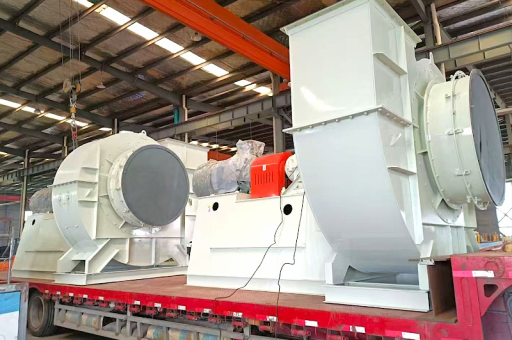
The dust collector fan is a specialized centrifugal fan designed to handle particulate-laden air. Unlike standard ventilation fans, it must contend with erosion, clogging, and varying static pressure as filters load.
- Housing Design: Volute casing with a tangential outlet. Industrial versions often include access doors for cleaning and wear-liners to extend life.
- Performance Curves: A fan curve shows the relationship between airflow (CFM or m³/h) and static pressure (inches w.g. or Pa). System designers must select a fan whose best efficiency point (BEP) aligns with the expected operating point of the dust collector.
- Variable Speed Drives: Increasingly common. VFDs allow the fan to adjust speed based on filter pressure drop, saving significant energy.
Efficiency Tip: A well-designed dust collector fan system should include a pre-separator (cyclone) to remove large particles before the fan, reducing impeller wear and balancing loads.
Common Engineering Questions and Answers
Q: How do I select the right impeller for my dust collector fan? A: Consider particle size, abrasiveness, and required static pressure. For heavy dust loads, a backward-curved impeller with a heavy-duty steel hub is recommended. For sticky materials, a semi-open impeller with radial blades reduces buildup.
Q: Why is my bearing housing overheating? A: Overheating can be caused by incorrect lubrication (too much or too little), misalignment, excessive belt tension, or external heat sources. Check the bearing cap for proper grease grade and re-lube intervals. Verify shaft alignment.
Q: Can I use a standard ventilation fan for a dust collector? A: No. Standard fans lack abrasion-resistant materials and often have closed impellers that clog quickly. They also may not have proper shaft seals to prevent dust ingress into bearings.
Q: How does heat dissipation affect fan motor life? A: Every 10°C rise above the motor’s rated ambient temperature can halve the insulation life. Proper thermal management—through enclosure design, shaft conduction, and forced air cooling—directly extends motor life.
Q: What is the most common cause of mechanical failure in dust collector fans? A: Bearing failure accounts for approximately 60% of all fan breakdowns, often triggered by contamination from dust leaking through the cap and bearing housing seals.
Maintenance Best Practices for Extended Service Life
- Lubrication Schedule: Use manufacturer-recommended greases. Reductible or automatic lubricators on the bearing housing can extend intervals. Monitor for grease discoloration (signs of overheating).
- Impeller Cleaning: Schedule periodic inspection of the impeller and cap for dust buildup. An unbalanced impeller causes vibration, accelerating bearing wear.
- Thermal Monitoring: Install temperature sensors on the bearing housing and motor windings. Set alarms for abnormal heat dissipation trends.
- Belt and Sheave Inspection: For belt-driven fans, check alignment and tension monthly. Excessive belt tension loads the bearing housing and increases heat.
- Seal Replacement: Inspect shaft seals and cap gaskets annually. Worn seals allow dust entry, which abrades bearings inside the housing.
Conclusion: Achieving Synergy in System Design
A robust dust collection or ventilation system relies on the symbiotic relationship between the impeller, cap, bearing housing, heat dissipation, and the dust collector fan. Selecting high-quality components, ensuring proper alignment, and implementing proactive maintenance protocols result in lower energy costs, fewer unplanned shutdowns, and extended equipment life. Engineers and facility managers must treat these five elements not as isolated parts but as an integrated mechanical chain. By focusing on precise engineering and regular thermal audits, you can maximize both system efficiency and reliability.
For further technical specifications and product comparisons, visit fan for detailed catalogs and engineering tools.
End of article.





