
This article's table of contents introduction:
- Breakdown of the Specification
- Typical Applications for this Fan
- Key Technical Parameters You Must Define (Missing Info)
- Fan Wheel Design (Crucial Choice)
- Next Steps for You
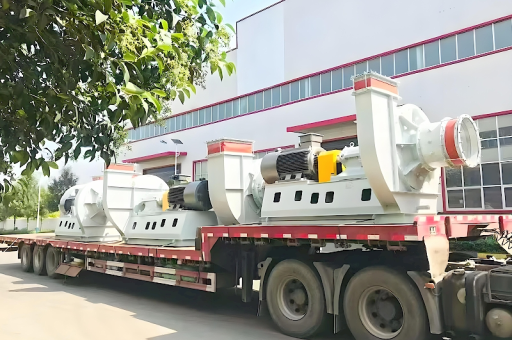
It appears you are asking about a Stainless Steel, 16985 M³/H (Cubic Meters per Hour), ID (Induced Draft), Single Inlet Centrifugal Fan.
This is a specific industrial fan specification. Here is a breakdown of what this means, its typical applications, and key considerations for selection.
Breakdown of the Specification
- Material: Stainless Steel
- Why? Corrosion resistance. This is critical for handling wet, acidic, or abrasive gases. Common grades are SS304 (general corrosion resistance) or SS316/L (superior resistance to chlorides and acids).
- Flow Rate: 16,985 M³/H (≈ 10,000 CFM)
- Meaning: The fan moves 16,985 cubic meters of air (or gas) per hour. This is a medium-to-large industrial flow rate.
- Type: ID (Induced Draft)
- Function: The fan is located at the end of the system (after the process). It pulls gases through the system, creating a negative pressure (vacuum) inside the ductwork or process vessel. This prevents dust, fumes, or heat from escaping into the work area.
- Configuration: Single Inlet
- Design: Air enters the fan from only one side. This is more common for higher pressure applications (like ID fans) compared to double inlet fans which are for very high volume, low pressure.
Typical Applications for this Fan
Given the combination of materials (SS) and configuration (ID), this fan is almost certainly for a harsh environment where the gas stream is contaminated. Common applications include:
- Fume Extraction: In chemical plants, semiconductor manufacturing, or battery production (e.g., hydrogen, acid fumes).
- Flue Gas Desulfurization (FGD) / Scrubbing: Pulling exhaust gases through a scrubber system.
- Wastewater Treatment: Aeration and odor control (pulling air through biofilters or carbon filters).
- Boiler / Incinerator Systems: Pulling combustion exhaust from a boiler, furnace, or incinerator.
- Dust Collection (Wet / Hygroscopic Dust): Where standard carbon steel would corrode (e.g., fertilizer, paper mills).
Key Technical Parameters You Must Define (Missing Info)
The flow rate (16,985 M³/H) is only half the story. To correctly size and select this fan, you must provide:
A. Pressure (Static Pressure)
- What is the total resistance of the system? (Measured in Pascals (Pa) , mmH₂O, or inches w.g. ).
- Example: 2,000 Pa | 200 mmH₂O | 8 in w.g.
B. Gas Characteristics
- Temperature: Is the gas hot (e.g., 150°C from a dryer) or ambient? Temperature affects fan motor power and impeller material strength.
- Humidity: Is the gas saturated? Wet gas drastically increases corrosion.
- Particulate: Does the gas contain dust (e.g., 50 mg/Nm³)? If yes, you need a radial paddle wheel impeller (not backward curved).
- Chemical Composition: Is the gas explosive (ATEX zone) or highly acidic?
C. Environmental Conditions
- Location: Indoors or outdoors?
- Motor: Standard (IP55) or Explosion-proof (Ex d)? Variable Speed Drive (VFD) required?
Fan Wheel Design (Crucial Choice)
For ID fans with SS construction, the impeller design is critical:
-
Backward Curved (BC):
- Best for: Clean or slightly dusty gas. High efficiency.
- SS Use: Very common for fume extraction.
-
Radial / Paddle Wheel (RW):
- Best for: Heavily dusty or sticky gases (self-cleaning).
- SS Use: Common in incinerators and scrubbers.
-
Airfoil (AF):
- Best for: High efficiency, very clean gas.
Next Steps for You
To get a proper quotation or engineering design, you should contact a fan manufacturer (e.g., Greenheck, New York Blower, Chicago Blower, Howden, Ventilatorenfabrik Oelde, Soler & Palau, or a regional European/Asian manufacturer) with the following:
Request for Quote:
- Type: Centrifugal, Single Inlet, Induced Draft
- Flow: 16,985 M³/H
- Static Pressure: [MUST SPECIFY]
- Gas: [e.g., Air + 5% HCl vapor, 60°C, 90% RH]
- Material: Stainless Steel (Specify grade: SS304, SS316L, or Duplex).
- Motor: [Power in kW, Voltage, Frequency, Explosion-proof?]
- Accessories: Inlet box, vibration dampers, isolation dampers, silencer.
In summary: You have a mid-sized, corrosion-resistant draft fan. The missing critical piece is pressure . Without knowing the pressure drop your system demands, you cannot select the correct motor power (kW) or impeller diameter.





