
*The Engineering Edge: Backward Curved High Temperature Q345 ID Fan Blower – Design, Performance, and Application Guide*
Article Content
Table of Contents
- Introduction to the Backward Curved High Temperature Q345 ID Fan Blower
- Core Design Philosophy: Why Backward Curved Blades?
- Material Science: The Role of Q345 Steel in High Temperature Environments
- Thermal Management: How ID Fans Handle Extreme Heat
- Performance Characteristics: Efficiency, Pressure, and Flow
- Practical Applications: Where This Fan Blower Excels
- Installation, Maintenance, and Troubleshooting
- Frequently Asked Questions (FAQ)
- Conclusion: Why This Fan Blower is a Smart Investment
Introduction to the Backward Curved High Temperature Q345 ID Fan Blower
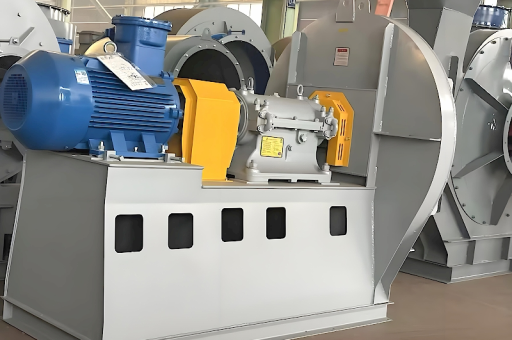
In the world of industrial ventilation and exhaust systems, few components are as critical as the Backward Curved High Temperature Q345 ID Fan Blower. This specialized fan is designed for Induced Draft (ID) applications, where it pulls hot, often corrosive gases through a system—typically in power plants, cement kilns, steel mills, and chemical processing facilities.
The term "backward curved" refers to the blade geometry, where the blades curve away from the direction of rotation. Combined with the use of Q345 high-strength low-alloy steel, this fan can operate at temperatures exceeding 250°C (482°F) while maintaining structural integrity and aerodynamic efficiency.
Why does this matter? Traditional fans often fail under high thermal loads due to blade fatigue, material creep, or imbalance. The Q345 ID fan blower mitigates these risks, offering longer service life and lower operational costs.
Core Design Philosophy: Why Backward Curved Blades?
The backward curved blade design is not arbitrary—it is the result of decades of aerodynamic and mechanical optimization.
Key advantages of backward curved blades:
- High Efficiency: The blade exit angle reduces flow separation, minimizing turbulence and energy loss. These fans can achieve static efficiencies of 75–85%.
- Self-Limiting Power Characteristic: Unlike forward curved blades, backward curved fans have a non-overloading power curve. This means the motor is less likely to burn out if system resistance drops unexpectedly.
- Low Noise and Vibration: The gradual airflow path reduces eddies and pressure pulsations.
- Better Performance at High Static Pressure: Ideal for ID applications where draft must overcome duct resistance and filter loading.
How it works in practice: Imagine a closed combustion system. The ID fan must pull flue gases through a scrubber, baghouse, or electrostatic precipitator. The backward curved design ensures the fan can handle the required pressure differential without surging or stalling.
Material Science: The Role of Q345 Steel in High Temperature Environments
Q345 (also known as Q345B, Q345C, or Q345D under GB/T 1591) is a low-alloy high-strength steel widely used in China and increasingly in global industrial equipment. It is chemically similar to ASTM A572 Grade 50 or S355JR under EN standards.
Why Q345 for ID fan blowers?
- High Yield Strength: Minimum yield strength of 345 MPa (50 ksi), allowing thinner gauge construction without sacrificing rigidity.
- Thermal Stability: Q345 retains a significant portion of its strength up to 400°C. At 250°C, the allowable stress is still about 80–85% of room temperature values.
- Weldability and Formability: Q34 can be welded using standard arc welding processes without preheat in thin sections.
- Cost-Effectiveness: Compared to stainless steel (e.g., 310S), Q345 offers a good balance of performance and price for applications where corrosion is mild to moderate.
Important note: For extreme corrosive or highly abrasive gas streams (e.g., SOx in coal plants), you may require stainless steel or ceramic liners. But for general hot air, flue gas, and dust-laden exhaust, Q345 is the sweet spot.
Thermal Management: How ID Fans Handle Extreme Heat
The "High Temperature" designation in this fan blower refers to its ability to handle continuous gas temperatures between 150°C and 350°C (sometimes up to 400°C with optional radial cooling or shaft cooling discs).
Heat management strategies include:
- Radiator or Cooling Discs on the shaft, especially at the drive end, to prevent bearing overheating.
- Thermal Expansion Provisions: The housing and impeller use sliding joints or compensators (bellows) to allow metal expansion without binding.
- Bearing Selection: High-temperature grease or oil-lubricated bearings housed in cast iron or steel plummer blocks, often with cooling fins.
- Insulation or Shrouding on the housing near the inlet to protect surrounding equipment.
Failure to manage heat can cause thermal runaway: blades warp, bearings seize, and the impeller strikes the housing. A well-designed Q345 ID fan built by a reputable manufacturer (such as a works-certified fan OEM) passes thermal cycling tests even in demanding conditions.
Performance Characteristics: Efficiency, Pressure, and Flow
This fan blower is known for its high-pressure, moderate-to-high-flow capability.
| Parameter | Typical Value (for a 50 kW ID Fan) |
|---|---|
| Flow Rate | 20,000 – 100,000 m³/h |
| Static Pressure | 2,000 – 6,000 Pa |
| Temperature | 150 – 350 °C |
| Impeller Diameter | 800 – 2,500 mm |
| Rotation Speed | 590 – 1,450 rpm (depending on need) |
| Efficiency | 78 – 85% (at design point) |
Performance curve tip: The highest efficiency point (BEP) is typically at 70–80% of wide-open flow. Running the fan too far left (low flow) or right (high flow) reduces efficiency and may cause vibration.
Practical Applications: Where This Fan Blower Excels
- Power Plant Boilers – Pulling combustion gases through the air preheater, ESP, and FGD system.
- Cement Rotary Kilns – Induced draft for the preheater tower and bypass gas.
- Steel Reheat Furnaces – Venting hot exhaust from combustion chambers.
- Biomass / Waste-to-Energy Plants – Handling hot, corrosive, and ash-laden gas.
- Chemical Processing – Exhausting acid vapors (with coated or lined versions).
- Paper & Pulp Boilers – Black liquor recovery boilers require ID fans with high reliability.
In each case, the backward curved Q345 fan is chosen for its ability to maintain draft under variable gas volume and temperature.
Installation, Maintenance, and Troubleshooting
Installation best practices:
- Place fan on a rigid, level foundation with vibration isolators.
- Ensure the inlet duct is straight (at least 3 diameters) to avoid turbulence.
- Use flexible connections at both inlet and outlet to prevent duct forces on the housing.
- Install a variable frequency drive (VFD) for precise flow control and soft start.
Maintenance schedule (for 24/7 operation):
- Weekly: Check bearing temperature (max 90°C), listen for unusual noise, inspect shaft seal.
- Monthly: Check vibration levels (ISO 14694 standards), clean impeller blades if buildup exists.
- Quarterly: Lubricate bearings (if grease-type), inspect coupling alignment.
- Annually: Full teardown inspection: check blade thickness, casing wear, and welds.
Common troubleshooting:
- High vibration: Check impeller balance or erosion/wear. Rebalance after running 6–12 months.
- Overheating bearings: Check cooling disc or shaft seal; may indicate hot gas leaks.
- Reduced flow: Check for damper blockage, dirty filter, or speed loss (VFD or belt slip).
Frequently Asked Questions (FAQ)
Q1: Can I use a backward curved Q345 ID fan for ambient air supply? A: Yes, but it is overkill. For supply air, forward curved or airfoil fans are more cost-effective. The backward curved fan shines in high-pressure and hot gas handling.
Q2: What is the maximum temperature for Q345 in continuous service? A: Generally 350°C in continuous, with occasional spikes to 400°C. Beyond that, creep becomes a concern. For higher temperatures, use alloy steels like Q345R (purpose) or stainless 310S.
Q3: How does Q345 compare to mild steel for high temperature fans? A: Mild steel (Q235) loses strength rapidly above 300°C. Q345 retains higher strength at 300–400°C, plus it has better weld toughness. For a 20-ton fan handling flue gas at 300°C, Q345 is a must.
Q4: What’s the typical lifespan of this fan? A: With regular maintenance, 5–10 years, depending on gas cleanliness and temperature stability. In corrosive environments (e.g., chemical exhaust), a coating may extend life to 8+ years.
Q5: Can I retrofit an existing ID fan with a backward curved impeller? A: Possibly, if the housing and motor power match. However, best to consult the fan OEM. The best performance gain usually comes from replacing the entire assembly.
Conclusion: Why This Fan Blower is a Smart Investment
The Backward Curved High Temperature Q345 ID Fan Blower represents the ideal balance of aerodynamic efficiency, material durability, and cost efficiency. Whether you are retrofitting a 20-year-old boiler or designing a new waste-heat recovery system, choosing a backward curved ID fan made from Q345 steel ensures years of reliable operation under the most demanding thermal conditions.
Its ability to maintain stable performance at high static pressure, combined with the non-overloading power characteristic of backward curved blades, makes it the preferred solution for induced draft in heavy industries. If you search for OEM recommendations or performance curves, always ensure that the manufacturing partner shares real test data—a well-engineered fan from a reputable supplier is worth the investment.
Share this guide with your engineering team or plant maintenance crew. For more information, consult the technical documentation from your fan supplier or the manufacturer’s catalog.





