
This article's table of contents introduction:
- Understanding the Components
- The Key Challenge: Q235 vs. Wear Resistance
- How to Achieve "High Wear Resistance" on a Q235 Fan
- Critical Considerations for Your Application
- Summary Recommendation
- Final Verdict
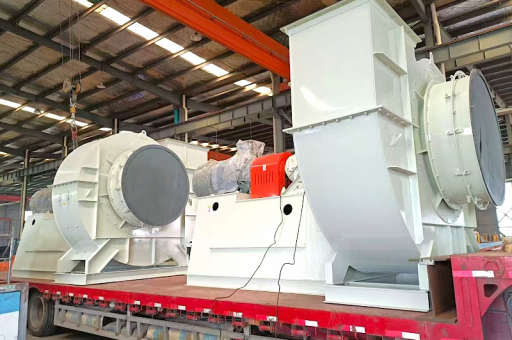
It sounds like you are looking for information on a High Pressure Centrifugal Fan (specifically an ID Fan or Induced Draft Fan) made from Q235 steel with a focus on high wear resistance.
Here is a breakdown of what this specification typically means, the challenges involved, and how to ensure high wear resistance in such a fan.
Understanding the Components
- High Pressure Centrifugal Fan: These fans generate high static pressure to move air or gas through systems with high resistance (e.g., long ductwork, baghouses, scrubbers). They typically have backward-curved or radial-blade impellers.
- ID Fan (Induced Draft Fan): This is an application-specific fan. It is placed at the end of a system (e.g., boiler, kiln, furnace) to pull (induce) exhaust gases through the system. ID fans handle hot, often dirty, and abrasive gas streams.
- Q235 Steel: This is a Chinese standard carbon structural steel (similar to ASTM A36 or S235JR). It is cheap, weldable, and has moderate strength. Crucially, Q235 has very poor wear resistance.
- High Wear Resistance: This is the critical requirement. In an ID fan application (handling fly ash, dust, sand, or mineral particles), a plain Q235 fan will erode very quickly (often within weeks or months).
The Key Challenge: Q235 vs. Wear Resistance
Q235 steel is not inherently wear-resistant. If a manufacturer claims a "Q235 ID Fan Blower" with "High Wear Resistance," they are almost certainly using a surface treatment or lining on the Q235 base material.
You cannot rely on the Q235 itself for wear resistance. You must look for additional protection.
How to Achieve "High Wear Resistance" on a Q235 Fan
If you are specifying or ordering this fan, ask the manufacturer for one of the following treatments. This is where the "high wear resistance" comes from:
A. Tungsten Carbide / Ceramic Lining (Best for Severe Abrasion)
- Method: The leading edges of the blades and the inside of the casing (volute) are lined with ceramic tiles or tungsten carbide plates.
- Application: For extremely abrasive fly ash, coal dust, or mineral processing.
- Drawback: Heavy, expensive, and can be prone to cracking if the fan vibrates.
B. Hardfacing / Weld Overlay (Very Good)
- Method: A layer of hard, wear-resistant metal (e.g., Stellite, chromium carbide) is welded onto the leading edges of the impeller blades and the cut-off plate.
- Application: Standard for ID fans in power plants and cement plants.
- Benefit: Good balance of cost and durability.
C. Thermal Spray Coating (Good)
- Method: A layer of ceramic or metal (e.g., WC-Co, Al2O3) is sprayed onto the fan surfaces.
- Application: Moderate abrasion.
- Caution: The coating must be thick enough; thin coatings peel off quickly.
D. Rubber Lining (For Wet/Slurry Applications)
- Method: The inside of the Q235 casing is lined with abrasion-resistant rubber.
- Application: If the gas stream is humid or contains sticky particles (e.g., FGD systems).
- Not suitable for high temperatures (above 100°C / 212°F).
E. Weld Build-Up with Extra Thickness (Minimal Protection)
- Method: The blades are made thicker (e.g., 12mm or 16mm Q235 plate) to allow for sacrificial wear.
- Result: This is the lowest form of "high wear resistance." It will last longer than a thin fan, but it is not a true solution for abrasive duty.
Critical Considerations for Your Application
Before purchasing, you must confirm these 5 points with the supplier:
- What is the exact wear protection method? (Do not accept "Q235 is strong" as an answer. Ask for "Hardfacing over Q235" or "Ceramic lining.")
- What is the gas temperature? Q235 strength drops significantly above 350°C (662°F) . For higher temperatures, you need alloy steel (e.g., 16Mn, 15CrMo).
- What is the particle concentration & size? This determines the required thickness of the wear lining.
- Is the leading edge of the blade replaceable Many heavy-duty ID fans have bolted-on wear plates on the blade leading edges.
- What is the balance specification? After welding hardfacing or installing ceramics, the fan must be re-balanced to prevent vibration failure.
Summary Recommendation
| Component | Material Recommendation | Wear Resistance Strategy |
|---|---|---|
| Casing (Housing) | Q235 | Thick wall (6-10mm) + Replaceable wear liners or ceramic tiles at the cut-off and scroll area. |
| Impeller (Blades) | Q235 Base | Do not use bare Q235. |
| Option A: Hardfacing (Weld overlay) of Stellite or Chromium Carbide on blade leading edges. (Best for 200-400°C gas). | ||
| Option B: Bolt-on replaceable wear plates (made of Hardox 400 or similar) on the blade faces. | ||
| Option C: Ceramic tile lining (for cold, extremely abrasive gas). | ||
| Shaft | 45# Steel or 40Cr | Standard. Wear resistance is not required on the shaft. |
| Bearings | Standard | Must have dust-proof seals and grease relief paths. |
Final Verdict
A High Pressure Centrifugal Fan made of Q235 is a cost-effective base structure, but it will not be "High Wear Resistant" without a secondary treatment (hardfacing, ceramic lining, or replaceable wear plates).
Do not buy a bare Q235 ID fan for abrasive duty. It will fail quickly. Insist on a specific wear protection method suitable for your gas temperature and particle type.





