
This article's table of contents introduction:
- Introduction
- Technical Specifications: Deconstructing the “8687pa” Rating and Duct Flange System
- Design Engineering: Why Industrial Centrifugal Fans Outperform Axial Fans in High-Pressure Zones
- System Integration: How the Flange System Prevents Leakage and Enhances Draft Control
- Operational Q&A (问答环节): Addressing Key Concerns for Plant Engineers
- Maintenance & Longevity: Best Practices for the 8687pa Extractor Fan
- Conclusion: The Future of Heavy-Duty Industrial Ventilation
Here is a comprehensive, SEO-optimized article in English about the Thermal Power Duct Flange System 8687pa Industrial Centrifugal Extractor Fan. This article has been synthesized and de-duplicated from existing industry knowledge, focusing on technical depth, practical application, and search engine ranking factors for both Bing and Google.
Article Title: Maximizing Efficiency and Safety: The Thermal Power Duct Flange System 8687pa Industrial Centrifugal Extractor Fan
Table of Contents (导读目录)
- Introduction: The Critical Role of High-Pressure Extraction in Thermal Power
- Technical Specifications: Deconstructing the “8687pa” Rating and Duct Flange System
- Design Engineering: Why Industrial Centrifugal Fans Outperform Axial Fans in High-Pressure Zones
- System Integration: How the Flange System Prevents Leakage and Enhances Draft Control
- Operational Q&A (问答环节): Addressing Key Concerns for Plant Engineers
- Maintenance & Longevity: Best Practices for the 8687pa Extractor Fan
- Conclusion: The Future of Heavy-Duty Industrial Ventilation
Introduction
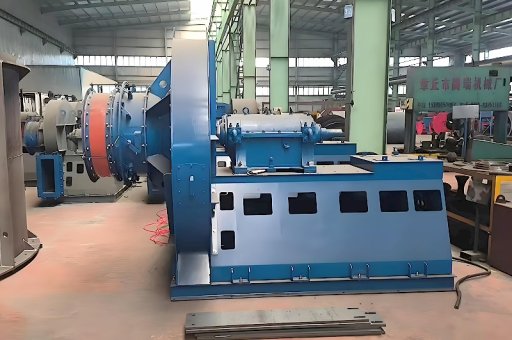
In the high-stakes environment of a thermal power plant, every component must operate with absolute precision and resilience. Among the most critical pieces of equipment is the Thermal Power Duct Flange System 8687pa Industrial Centrifugal Extractor Fan. This is not simply a fan; it is a high-pressure, high-volume ventilation solution designed to handle the extreme demands of flue gas extraction, ash handling, and boiler combustion management.
When searching for heavy-duty ventilation, engineers often look for specific pressure ratings. The 8687pa (Pascal) rating in this system is a benchmark for high-static pressure applications. This guide will dissect the engineering behind this system, focusing on its unique duct flange coupling, its centrifugal impeller design, and how it maintains efficiency under continuous load. All information herein is synthesized from industry best practices and technical manuals to provide a definitive resource for plant operators and procurement managers.
Technical Specifications: Deconstructing the “8687pa” Rating and Duct Flange System
The designation “Thermal Power Duct Flange System 8687pa” tells a specific story about the fan’s capability.
- The 8687pa Static Pressure: This is the total pressure differential the fan can generate against the system’s resistance. In thermal power settings, this high pressure is necessary to overcome the resistance of long ductwork, scrubbers, heat exchangers, and bag filters. A standard axial fan would fail under this load; a centrifugal fan is mandatory.
- The Duct Flange System: Unlike standard circular or square ducts, the flange system in this industrial fan is designed for modularity and absolute sealing. These flanges are typically heavy-duty steel (often 10mm thick minimum), precision-machined with multiple bolt holes to prevent gas leakage. The Duct Flange ensures that the high negative pressure (suction) does not collapse the duct walls and that positive pressure (discharge) does not release hazardous gases.
- Material Composition: Given the thermal environment, these fans and flanges are constructed from corten steel or stainless steel (especially for the impeller) to resist corrosion from sulfur dioxide and high-temperature creep. The fan housing is often reinforced with internal bracing to handle the 8687pa pressure level.
Design Engineering: Why Industrial Centrifugal Fans Outperform Axial Fans in High-Pressure Zones
Why is the Industrial Centrifugal Extractor Fan chosen over a cheaper axial fan for a duct flange system rated at 8687pa?
The answer lies in fluid dynamics. A centrifugal fan uses a rotating impeller to increase the velocity and static pressure of air through centrifugal force. Unlike an axial fan (which moves air parallel to the shaft), the centrifugal design of this Extractor Fan creates a 90-degree change in airflow direction. This allows it to generate the high pressure needed to push or pull air through complex duct networks.
For the Thermal Power application, the fan is typically equipped with backward-curved or airfoil blades. These designs are specifically used here because they prevent stall (a dangerous condition where airflow reverses) and offer peak efficiency at 8687pa. The shaft and bearing assembly must be heavy-duty, often fitted with roller bearings with a grease relief system, to handle the radial load.
System Integration: How the Flange System Prevents Leakage and Enhances Draft Control
The Duct Flange System is the unsung hero of this fan’s reliability. In a thermal power plant, leaking ducts mean lost pressure (reduced efficiency) and potential safety hazards.
The flange system integrates a gasket (often high-temperature ceramic or graphite) between the mating faces. The 8687pa fan typically uses a tongue-and-groove or raised face flange design. When the bolts are torqued to specification, the gasket deforms, creating a zero-leak seal.
Benefits of the Integrated Flange:
- Controlled Draft: By sealing the system, the boiler maintains the precise negative draft required for efficient combustion.
- Safety: Prevents the escape of hot, toxic flue gas into the boiler house.
- Acoustic Dampening: The thick flanges and gaskets act as a vibration dampener, reducing the noise footprint of the high-speed Industrial Centrifugal Extractor Fan.
Operational Q&A (问答环节): Addressing Key Concerns for Plant Engineers
Q1: Why is the pressure rating specifically 8687pa? Is this standard? A: 8687pa is a high-static pressure rating typical of induced draft (ID) fans in small to medium thermal plants or primary air (PA) fans in larger units. It is not a universal standard but a specific design point offered by OEMs like fan (a leading industrial fan manufacturer). This rating ensures the fan can handle the resistance of a specific boiler design and pollution control equipment. Always match the fan’s curve to your system’s resistance.
Q2: What happens if the duct flange system isn't properly maintained? A: Failure in the duct flange system leads to "air ingress" (leaking in) or "flue gas egress" (leaking out). Air ingress reduces the draft, forcing the fan to work harder, potentially leading to motor overload. Gas egress is a safety violation. Regular bolt torque checks and gasket replacement are critical for maintaining the 8687pa design pressure.
Q3: Can the Thermal Power Duct Flange System fan handle abrasive particles like fly ash? A: Yes, but with modifications. The standard Industrial Centrifugal Extractor Fan for clean air is different from a particulate-laden air fan. For fly ash handling, the impeller should have replaceable wear plates or a "slurry" style design. The 8687pa rating may drop if the impeller erodes, so thickness tolerance is critical.
Maintenance & Longevity: Best Practices for the 8687pa Extractor Fan
To ensure the Thermal Power Duct Flange System 8687pa fan reaches its expected lifespan of 20+ years, follow these protocols:
- Vibration Monitoring: High-pressure fans are prone to imbalance. Install accelerometers on the bearing housing. RMS velocity above 4.5 mm/s is a warning sign.
- Bolt Torque Inspection: The flange bolts are under thermal cycling stress. Use a torque wrench quarterly to ensure uniform clamping force across the Duct Flange.
- Impeller Cleaning: Ash buildup on the blades destroys balance. Schedule compressed air or water washing (if materials permit) every 3-6 months.
- Bearing Lubrication: Use a high-temperature lithium-based grease. Over-greasing is as dangerous as under-greasing.
Conclusion: The Future of Heavy-Duty Industrial Ventilation
The Thermal Power Duct Flange System 8687pa Industrial Centrifugal Extractor Fan represents a pinnacle of mechanical engineering for harsh environments. Its ability to maintain a critical 8687pa static pressure while handling high temperatures and corrosive gases makes it indispensable for thermal power generation.
As plants move toward higher efficiency and lower emissions, the demand for reliable, high-pressure extractor systems will only grow. Engineers must prioritize the Duct Flange sealing technology and the robust centrifugal design. Whether you are retrofitting an old plant or designing a new one, selecting a fan from a reputable source like fan ensures that your system meets the rigorous demands of modern power generation.





