
This article's table of contents introduction:
- Breakdown of the Fan Type
- Key Specifications to Define
- Potential Suppliers (Examples)
- Common Pitfalls to Avoid
- Summary
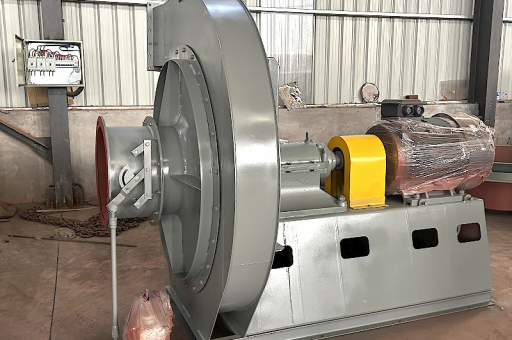
It appears you are looking for a Stainless Steel, Forward-Curved (Forward), Anti-Explosion, Industrial Kiln Dust Collector Fan.
This is a highly specific piece of industrial equipment designed for extreme environments. Here is a breakdown of what this description means, the typical applications, and key specifications you should look for.
Breakdown of the Fan Type
-
Stainless Steel (SS304 or SS316):
- Why: Kiln exhaust often contains corrosive gases, moisture, and acidic compounds (e.g., sulfur, chlorine). Stainless steel resists rust and chemical attack far better than carbon steel.
- Grade: SS304 is common. SS316 is required if chlorides or high-temperature acidic condensates are present.
-
Forward Curved (Forward):
- Design: The blades curve in the direction of rotation.
- Characteristics: High volume (CFM), low to medium pressure (static pressure). They are quieter than backward-curved fans for the same duty.
- Drawback: "Non-overloading" power curve – motor can burn up if the system pressure drops unexpectedly. Requires careful motor selection (often with a safety factor).
- Alternative: For high-pressure kiln systems, you might need a Backward Inclined or Airfoil blade. Forward curved is good for high volume, moderate resistance ductwork.
-
Anti-Explosion (ATEX / IECEx / UL / CSA):
- Why: Kiln dust (especially from cement, lime, or chemical kilns) can be combustible. Sparks from friction or static electricity can cause an explosion.
- Features:
- Spark-Resistant Construction: Often meets AMCA Type A (all metallic) or Type B (non-ferrous impeller).
- Motor: Must be TEFC (Totally Enclosed Fan Cooled) and rated for the hazardous location (e.g., Class II, Division 1 or 2 for combustible dust; Class I for gases if present).
- Earthing / Grounding: Static conductive belt (if belt-driven) and shaft grounding rings.
- Temperature Rating: Motor and fan must be rated below the dust's auto-ignition temperature.
-
Industrial Kilns Dust Collector:
- Application: This fan pulls exhaust or process air through a baghouse, cartridge collector, or wet scrubber.
- Challenge: The air is hot (often 200°C - 400°C+ / 400°F - 750°F+). The fan must handle thermal expansion.
- Design Features for Kilns:
- High-Temperature Bearings: Grease or oil-lubricated, possibly with cooling fins or a cooling wheel.
- Shaft Seal: High-temp packing or labyrinth seals to prevent hot gas leakage.
- Expansion Joint: On the inlet/outlet to handle thermal growth.
- Motor: Often mounted on a slide base with V-belt drive to allow speed adjustment.
Key Specifications to Define
When ordering or specifying this fan, you must provide these values:
| Parameter | Unit | Typical Value / Range for Kilns | Why It Matters |
|---|---|---|---|
| Air Volume (Flow) | CFM or m³/h | 5,000 - 150,000+ CFM | Core capacity requirement. |
| Static Pressure | in. w.g. or Pa | 10" - 30" w.g. (2,500 - 7,500 Pa) | Overcomes resistance of ducts and filter bags. |
| Gas Temperature | °F or °C | 200°F - 600°F (93°C - 316°C) | Determines material grade (SS vs. Inconel) and bearing cooling method. |
| Gas Composition | % | O₂, CO, SO₂, H₂O, HCl | Determines SS grade (304 vs 316) and corrosion allowance. |
| Altitude / Ambient | ft / m | (Varies) | Affects air density and motor power. |
| Hazardous Area | Class/Div | Class II, Div 1 or 2 | Determines motor and spark proofing level. |
| Motor Power | HP or kW | 15 HP - 500+ HP | Calculated from CFM, SP, and efficiency. |
| Drive Type | Direct vs Belt | Belt most common | Allows speed adjustment to tune flow. |
Potential Suppliers (Examples)
You would contact these companies with the specifications above:
- Greenheck (Industrial Division)
- New York Blower Company
- Howden / Roots
- Cincinnati Fan
- Chicago Blower
- Robinson Fans (specialize in high-temp, heavy industrial)
- Abfans (global industrial fans)
Common Pitfalls to Avoid
- Using a standard "dust collector" fan: Standard fans lack the thermal expansion features (cooling wheel, insulated bearings) necessary for continuous kiln duty.
- Incorrect explosion rating: Ensure the fan is rated for specific dust (e.g., cement dust vs. carbon black). Let the manufacturer know.
- Under-sizing: Forward-curved fans have a higher peak power draw at low pressure. The motor must be sized to handle this without tripping.
- Material erosion: If the dust is abrasive (e.g., fly ash, silica), request a wear plate or thicker impeller blade (often 10 gauge or 1/4" SS).
Summary
A Stainless Steel Forward Anti-Explosion Industrial Kiln Dust Collector Fan is a high-temperature, corrosion-resistant, spark-proof centrifugal fan used to pull hot, potentially explosive dust-laden air from a kiln through a filtration system.
Your next step: Provide the 6 parameters in the table above to a manufacturer like Robinson Fans or New York Blower to get a proper selection and quotation. Let them know it is for a continuous duty kiln application.





