
This article's table of contents introduction:
- Understanding the Terms
- The Ideal Product (What to look for)
- Why this combination is challenging (and expensive)
- Top Manufacturers (Look for their "ID Fan" or "Industrial Fan" lines)
- Critical Questions to ask a supplier before buying
- Summary
It sounds like you're looking for a specific type of industrial fan, likely for a boiler system or a hazardous environment.
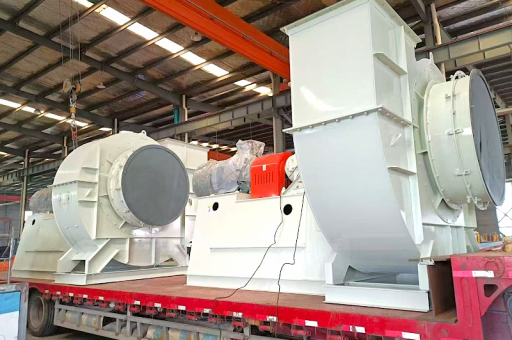
The phrase "Heavy Duty Efficient Energy Saving Explosionproof ID Boiler Fan" combines several critical specifications. Let's break down what that means and what you would typically be looking for:
Understanding the Terms
- ID (Induced Draft) Fan: This is the specific application. In a boiler system, the ID fan is located after the boiler (downstream of the heat exchangers, scrubbers, and dust collectors). Its job is to pull (induce) hot, dirty flue gas through the boiler, creating a slight negative pressure in the furnace. This is crucial for safety (preventing blowback) and for controlling combustion air flow (working in tandem with the FD - Forced Draft fan).
- Explosionproof: This is the most critical safety feature. Since ID fans handle hot flue gases, unburned fuel, and potentially explosive dust, the fan must prevent sparks or hot surfaces from igniting the atmosphere.
- Key features: Non-sparking construction (often aluminum or bronze impellers in the gas stream), TEFC (Totally Enclosed Fan Cooled) motor with Explosionproof certification, proper grounding, and special conduit seals.
- Certifications: Look for ATEX (Europe), IECEx (International), or UL/CSA (North America) for specific gas/dust groups (e.g., Group IIB, Group D).
- Heavy Duty: Indicates robust construction (typically heavy gauge steel or Corten steel), reinforced shaft, heavy-duty bearings (often pillow block with spherical roller bearings), and a design to handle high temperatures, vibration, and particulate erosion.
- Efficient & Energy Saving: This refers to the aerodynamic design.
- Aerodynamic Profile: Modern backward-curved or airfoil blades are significantly more efficient than older radial or forward-curved designs, converting more motor energy into airflow with less turbulence.
- Variable Frequency Drive (VFD): The real energy saving comes from controlling the fan speed with a VFD. Instead of using dampers or inlet vanes (which waste energy by creating resistance), a VFD adjusts the motor speed to match the exact demand, saving 30-50% energy at partial loads.
- Boiler Fan: Confirms it's for a boiler system, meaning it must handle high temperatures (often 350°F/175°C to over 800°F/425°C for ID fans) and potentially corrosive or abrasive flue gases.
The Ideal Product (What to look for)
A fan matching all these descriptions would be a Centrifugal Fan (specifically an ID fan) with the following characteristics:
| Feature | Specification |
|---|---|
| Type | Centrifugal, Backward-Inclined (BC) or Airfoil (AF) blade design |
| Drive | Direct Drive (preferred for speed control) or Belt Drive with guard |
| Construction | Heavy gauge steel housing (often Corten for corrosion resistance), reinforced baseplate, split housing for easy maintenance |
| Impeller | Non-sparking (aluminum, bronze, or coated steel) with reinforced blades for high-speed operation and erosion resistance |
| Bearings | Heavy-duty, spherical roller bearings, often with temperature sensors & vibration probes included |
| Temperature | Designed for continuous flue gas temperatures of 350°F - 450°F (or higher with cooling wheels/insulated shaft) |
| Sealing | Shaft seals to prevent hot gas leakage |
| Motor | Explosionproof (e.g., Class I, Div 1, Groups C & D for gas; or Class II, Div 1, Groups E, F, G for dust). High-efficiency (IE3/IE4 or NEMA Premium). |
| Accessories | VFD ready package, Vibration sensors, Temperature probes, Flow measuring device, Inlet box with vanes (optional). |
Why this combination is challenging (and expensive)
- Efficiency vs. Explosionproof: High-efficiency designs (like thin airfoil blades) can be less robust and harder to make non-sparking. The manufacturer must carefully balance aerodynamic performance with safety.
- Temperature & Erosion: ID fans often handle fly ash and sulfur compounds. The impeller requires special coatings, hard-facing, or replaceable wear liners. High temperatures also limit the use of aluminum for non-sparking parts (aluminum loses strength above 400°F).
- Vibration: An ID fan is a large, heavy machine running at high speed. Any imbalance due to erosion or thermal growth is dangerous. Heavy-duty construction and precise balancing are mandatory.
Top Manufacturers (Look for their "ID Fan" or "Industrial Fan" lines)
- US/Global: New York Blower, Robinson Fans, Howden, Gardner Denver.
- European: Korfmann (EBM-Papst), FlaktGroup, ZIEHL-Abegg.
- Specialists: AirPro Fan & Blower, Twin City Fan, Cincinnati Fan (for smaller/precision models).
Critical Questions to ask a supplier before buying
- "What is the maximum continuous operating temperature, and how do you handle thermal expansion? "
- "What is the exact ATEX/IECEx/UL certification rating (Gas Group, Temperature Class)? "
- "Is the impeller made of non-sparking material, and is that material suitable for 24/7 operation at the stated temperature? "
- "What is the bearing type and what condition monitoring (vibration, temperature) is included as standard? "
- "Can this fan be directly driven by a VFD without a gearbox or belt slip? " (For best efficiency).
Summary
If you are sourcing this fan, you are not looking for an "off-the-shelf" product. You need a custom-engineered centrifugal ID fan from a heavy-industrial manufacturer. The price will be 2-3x a standard fan due to the explosionproof requirements, temperature tolerance, and heavy-duty construction.
Next Step: Contact a manufacturer (e.g., New York Blower or Robinson) with your exact CFM (air volume) , Static Pressure (SP) , Flue gas temperature, Gas composition (density, corrosives) , and Explosionproof class (e.g., Class I, Div 1, Group D). They will design a fan to your specifications.





