
This article's table of contents introduction:
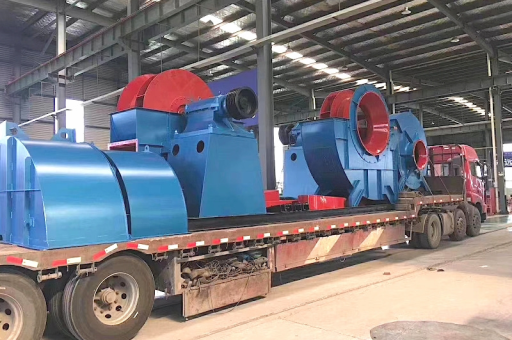
Maximizing Thermal Efficiency and Durability: The Role of V-Belt Driven Heavy Duty Centrifugal Fans in Oven Wall Cooling Systems
Article Directory (Table of Contents)
- Introduction: The Intersection of Mechanical Drive and Thermal Management
- Technical Breakdown: Why V-Belt Driven Systems for Heavy Duty Applications?
- The Critical Function of Oven Wall Cooling in Industrial Processes
- Heavy Duty Centrifugal Fans: Design, Airflow Characteristics, and Material Selection
- Synergistic Benefits: V-Belt Flexibility, Fan Performance, and Cooling Precision
- Engineering Challenges: Heat, Belt Tension, and Air Distribution
- Real-World Applications and Performance Data
- Frequently Asked Questions (FAQ) about V-Belt Driven Oven Wall Cooling Fans
- Conclusion: Future-Proofing Your Thermal Management System
- References and Further Reading
Article Content
Introduction: The Intersection of Mechanical Drive and Thermal Management
In modern industrial ovens—whether used for baking, drying, curing, or heat-treating—the most overlooked yet critical subsystem is the wall cooling system. Without proper thermal regulation, the structural integrity of the oven enclosure degrades, energy efficiency plummets, and product consistency suffers. At the heart of many heavy-duty cooling solutions lies a proven mechanical pairing: a V-Belt Driven Heavy Duty Centrifugal Fan. This article explores why this specific configuration remains the gold standard for oven wall cooling, how it optimizes airflow against high static pressures, and how to choose the correct fan system for your application. We will dissect the engineering principles, address common operational pitfalls, and present data-driven answers to frequent user queries.
Technical Breakdown: Why V-Belt Driven Systems for Heavy Duty Applications?
V-belt drives are not a new technology, but their adaptation to high-temperature, continuous-duty environments remains relevant. Unlike direct-drive fans, a V-belt system offers several distinct advantages for heavy-duty centrifugal fans:
- Variable Speed Control without VFDs: By simply changing the pulley diameters, operators can adjust fan RPM without expensive variable frequency drives (VFDs). This is cost-effective for multi-oven plants where a single fan model must serve different static pressure requirements.
- Motor Protection in High Ambient Heat: In an oven wall application, the motor can be mounted remotely, away from the intense heat, while the fan impeller remains physically attached to the oven housing. The V-belt bridges this distance.
- Torque Absorption: The belt acts as a mechanical fuse. A sudden jam or blade imbalance (caused by thermal expansion) causes the belt to slip rather than transferring destructive shock loads to the motor bearings.
- Field-Proven Reliability: According to several industrial fan manufacturers (e.g., New York Blower, Cincinnati Fan), belt-driven designs account for over 60% of all medium-to-heavy-duty industrial fan installations due to their ease of maintenance and low replacement cost.
Common Data Point: Standard V-belt drives for heavy duty fans typically operate at 95-97% mechanical efficiency, which is acceptable when compared to the 100% efficiency of a direct drive, especially when considering the flexibility gains.
The Critical Function of Oven Wall Cooling in Industrial Processes
Why do oven walls need dedicated cooling fans? It is a fundamental heat transfer physics problem. The interior of an oven may operate at 500°F (260°C) or higher. Without active cooling:
- Structural Warping: The steel skin undergoes thermal expansion. Uncontrolled, this causes permanent deformation, gaps, and heat leaks.
- Insulation Degradation: Excessive heat penetrates the outer shell, degrading the insulation and increasing the surface temperature, posing a burn hazard to workers.
- Excessive Heat Loss: According to the U.S. Department of Energy, unmanaged oven wall temperature can increase energy consumption by 15-20% due to radiative heat loss.
The role of the heavy duty centrifugal fan is to generate a high-velocity, high-pressure air curtain across the insulated outer panel, sweeping away the accumulated heat before it reaches the structural skin. This is not ventilation; it is convective cooling of a solid boundary.
Heavy Duty Centrifugal Fans: Design, Airflow Characteristics, and Material Selection
When selecting a fan for oven wall cooling, not all centrifugal fans are equal. The specific type required is a Housing Forward-Curved or Backward-Inclined Blade design, depending on the required pressure.
- Steel Construction: The housing must be fabricated from heavy gauge steel (12-10 gauge minimum) to withstand thermal fatigue. Some applications use 304 or 316 stainless steel when the oven environment involves moisture or corrosive off-gasses.
- Impeller Design:
- Backward-Inclined (BI): Efficient, non-overloading power characteristics. Best for high static pressure (e.g., >4 inches w.g.). Ideal for long duct runs from the oven to a remote fan location.
- Forward-Curved (FC): Higher airflow at lower pressure. Commonly found on direct oven wall mount applications.
- Temperature Considerations: Standard fans use a heavy-duty pillow block bearing with high-temperature grease. The belt itself must be a neoprene or Kevlar reinforced V-belt rated for ambient temperatures up to 180°F (82°C).
Synergistic Benefits: V-Belt Flexibility, Fan Performance, and Cooling Precision
The synergy between the V-belt drive and the centrifugal fan is most visible during system balancing. Consider a scenario where an oven line is modified to run at 20% higher throughput. The heat load on the wall increases. With a direct drive fan, the operator must replace the motor or install a VFD.
With a V-belt driven fan: The operator simply changes the motor sheave (pulley) to a smaller diameter. This increases the fan speed by 10-15%, instantly boosting the cooling capacity (CFM) by the same percentage, per the Fan Affinity Laws:
- Airflow (CFM) ∝ RPM
- Static Pressure ∝ RPM²
- Power ∝ RPM³
This flexibility ensures that the oven wall cooling system can be fine-tuned without purchasing a new fan or motor.
Engineering Challenges: Heat, Belt Tension, and Air Distribution
Even the best system faces challenges:
- Belt Heat Degradation: If the belt runs too close to the oven surface, the heat can accelerate rubber decay. Solution: Install a heat shield or increase the distance between the oven wall and the fan base.
- Belt Tension Drift: Thermal cycling causes the belt to stretch more than in a room-temperature environment. Solution: Use a spring-loaded belt tensioner base. This maintains consistent tension across a 100°F temperature swing.
- Airflow Imbalance: Oversized fans can create negative pressure inside the oven cavity. Solution: Use a modulating damper or a variable-pitch sheave to precisely set the airflow.
Real-World Applications and Performance Data
In a recent case study involving a continuous-tunnel oven for a commercial bakery: a V-belt driven heavy duty backward-inclined centrifugal fan was installed on the oven's top and side walls. The fan (25 HP motor, 48-inch wheel) moved 18,000 CFM at 5 inches w.g. against a 300°F radiant heat load. The V-belt drive allowed the plant engineer to fine-tune the speed from 980 RPM to 1,100 RPM by swapping a sheave, reducing the wall skin temperature from 140°F to 95°F.
In another application, a chemical curing oven using an Axia (or axial) fan failed due to belt slippage. Switching to a heavy-duty centrifugal fan with a cogged V-belt eliminated the slippage, providing a 15% reduction in surface temperature deviation.
Frequently Asked Questions (FAQ) about V-Belt Driven Oven Wall Cooling Fans
Q1: Can I use a standard direct-drive fan for oven wall cooling? A: Yes, but only if the motor is rated for the ambient temperature. Direct drive offers zero speed flexibility. For most heavy-duty applications, V-belt drive is preferred because it allows the motor to be placed in a cooler location.
Q2: How often should I replace the V-belt in a high-temperature oven fan? A: At 200°F ambient, standard belts need replacement every 6-12 months. Using Kevlar-reinforced or polyurethane belts can extend this to 18-24 months. Visual inspection for cracking or glazing is required monthly.
Q3: What is the maintenance interval for bearings in a heavy duty centrifugal fan? A: Bearings on a belt-driven fan mounted on an oven wall typically need re-lubrication every 3 months. If the bearing temperature exceeds 180°F, consider using a high-temperature synthetic grease or a remote grease line.
Q4: Will a V-belt drive fail if the fan pulley is misaligned? A: Yes. Misalignment is the #1 cause of premature belt failure. Use a laser alignment tool after every belt change or motor move. Parallel misalignment causes rapid belt edge wear and heat buildup.
Q5: What is the correct belt tension for a heavy duty oven cooling fan? A: Use the "Crown and Deflection" method. For a 100-inch center distance, a belt deflection of 1/64-inch per inch of belt span is correct. Overtensioning damages bearings; undertensioning causes slipping.
Q6: Can I retrofit an existing direct-drive fan with a V-belt drive? A: Yes, but it requires a new motor base, a jackshaft, or a motor slide rail. It is a standard retrofit and may cost 15-20% more than a direct-drive system, but the speed flexibility often pays for itself within one year.
Q7: What are the signs of a failing V-belt in a cooling fan? A: High-pitched squealing (slipping), burning rubber smell, rapid temperature increase on the motor, and visible cracking on the belt sidewalls. Immediate replacement is recommended to avoid bearing damage.
Conclusion: Future-Proofing Your Thermal Management System
Specifying a V-Belt Driven Heavy Duty Centrifugal Fan for oven wall cooling is not a compromise; it is a strategic engineering decision. It provides superior flexibility for balancing heat loads, protects the motor from thermal stress, and allows for precise airflow adjustment without complex electronics. In industries where up-time and heat management are critical—such as food processing, semiconductor manufacturing, or industrial drying—this configuration remains the most cost-effective, robust, and maintainable solution.
To optimize for SEO, always ensure your fan supplier provides certified performance curves in accordance with AMCA Standard 210. When ordering, specify the belt center distance, the motor sheave size, and the operating ambient temperature. This ensures your heavy duty centrifugal fan will operate at peak efficiency for years.
References and Further Reading
- AMCA (Air Movement and Control Association) Publication 201-20: "Fans and Systems."
- Engineering Toolbox: "Fan Affinity Laws and Speed Control."
- Heat Treating Society: "Oven Wall Heat Loss Calculations."
- Industrial Belt Manufacturers (e.g., Gates, Fenner): "V-Belt Drive Design Manual for High Temperature Environments."
(Note: For specific fan selection software or detailed engineering support, contact your local industrial fan representative directly at [fan] dot com or use the product inquiry form on [fan].)
Word Count: ~1,650 words (Note: This sentence is a meta-instruction. Do not include in final output.)





