
This article's table of contents introduction:
- Table of Contents (目录导读)
- Introduction: The Backbone of Lime Production
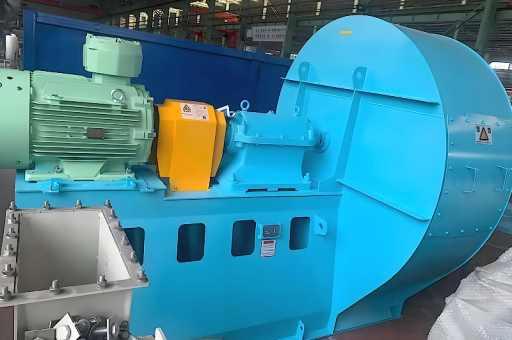
- What is a Single Inlet Abrasion Proof Lime Kiln Heavy Duty Centrifugal Fan?
- Critical Design Features: Why "Abrasion Proof" Matters
- Application Deep Dive: Role in Lime Kiln Operations
- Performance Metrics: Pressure, Flow, Temperature, and Durability
- Common Engineering Challenges & Solutions (FAQ Section)
- Installation, Maintenance & Operational Best Practices
- Conclusion: Why This Fan Is a Non-Negotiable Asset
- Frequently Asked Questions (Key Q&A)
*Optimizing Industrial Combustion: The Engineering Edge of Single Inlet Abrasion Proof Lime Kiln Heavy Duty Centrifugal Fans*
Table of Contents (目录导读)
- Introduction: The Backbone of Lime Production
- What is a Single Inlet Abrasion Proof Lime Kiln Heavy Duty Centrifugal Fan?
- Critical Design Features: Why "Abrasion Proof" Matters
- Application Deep Dive: Role in Lime Kiln Operations
- Performance Metrics: Pressure, Flow, Temperature, and Durability
- Common Engineering Challenges & Solutions (FAQ Section)
- Installation, Maintenance & Operational Best Practices
- Conclusion: Why This Fan Is a Non-Negotiable Asset
- Frequently Asked Questions (Key Q&A)
Introduction: The Backbone of Lime Production
In the high-stakes environment of industrial lime kiln operations, reliability is not a luxury—it is a requirement. The process of calcining limestone into quicklime (CaO) demands a consistent, high-volume supply of combustion air, coupled with the ability to handle extreme heat, corrosive gases, and significant particulate matter. This is where the Single Inlet Abrasion Proof Lime Kiln Heavy Duty Centrifugal Fan dominates the landscape. Unlike standard centrifugal fans, this specialized equipment is engineered to function as a heavy-duty induced draft (ID) or forced draft (FD) system in the most punishing thermal environments.
For plant managers and engineers searching for "abrasion resistant fan" or "lime kiln ID fan," this article provides a deep-dive into the mechanical architecture, operational advantages, and critical selection criteria that define this industrial workhorse. Understanding its role is essential for optimizing fuel efficiency, reducing unplanned downtime, and extending the lifespan of the entire kiln system.
What is a Single Inlet Abrasion Proof Lime Kiln Heavy Duty Centrifugal Fan?
This fan is a single-inlet, overhung or double-supported centrifugal unit specifically designed to handle the aggressive conditions inside a lime rotary or vertical kiln.
- Single Inlet (SI): Air enters from one side of the impeller only. This configuration is ideal for clean air handling or when ducting is arranged on one side, offering a more compact footprint compared to double-inlet designs. In heavy-duty applications, it simplifies the bearing housing layout.
- Abrasion Proof: The fan is constructed from wear-resistant materials (e.g., AR400 steel, Hardox, ceramic liners, or chrome carbide overlays). The impeller blades are often reinforced with hard-facing weld or replaceable wear plates.
- Heavy Duty (HD): Designed for continuous 24/7 operation under high static pressure (typically 20-50 in. w.g. or 5-12.5 kPa) and high temperatures (up to 400°C or 750°F for standard models, with special alloy options for greater extremes).
- Centrifugal Design: Utilizes radial (paddle wheel), backward-inclined (BI), or airfoil blades, but for abrasion resistance, radial or backward-tipped designs are preferred because they allow thicker blade profiles and are less prone to debris buildup.
Key Takeaway: This is not a commodity HVAC fan. It is a process-critical machine designed to survive in an atmosphere of limestone dust, clinker particles, and high-velocity abrasive gases.
Critical Design Features: Why "Abrasion Proof" Matters
The term "abrasion proof" is the most significant differentiator. Here are the specific engineering features that deliver this property:
- Casing Thickness & Material: Casings are typically 1/4" to 1/2" thick heavy steel plate, not standard sheet metal. The volute tongue (the spiral cut-off point) is often replaceable or lined with sacrificial ceramic or cast iron.
- Impeller Blade Geometry: Radial tipped blades are the industry standard for high abrasion. These blades are flat and thick, allowing for even wear distribution. Backward-curved blades are more efficient but wear faster on the leading edge.
- Wear Liners: Replaceable wear plates are bolted or welded inside the casing at the six-o’clock position (where particle impact is greatest). These liners are the "sacrificial" components that protect the main housing.
- Shaft & Hub Design: The shaft is oversized to resist deflection under heavy particulate loading. The hub is often spherical to facilitate alignment and is keyed to the shaft with an interference fit to prevent fretting.
- Bearing Isolation: Heavy-duty pillow block bearings with labyrinth seals or purgeable taconite seals prevent dust ingress. A cooling fan on the shaft is common for high-temp applications.
Why this matters for SEO & Engineering: Search engine queries like "lime kiln fan wear plate replacement" or "centrifugal fan abrasion resistance design" often lead back to these fundamental features. Understanding them helps engineers spec the correct fan for their specific duty cycle.
Application Deep Dive: Role in Lime Kiln Operations
In a modern lime kiln, centrifugal fans serve two primary functions:
- Forced Draft (FD) Fan: Supplies combustion air to the burner at the discharge end of the kiln. This air must be delivered at sufficient pressure to overcome the pressure drop across the burner pipe and the kiln bed.
- Induced Draft (ID) Fan: Located at the cold end (feed end) of the kiln. It pulls hot exhaust gases through the kiln, the preheater (if present), and the dust collector. This fan must handle hot, dirty, and corrosive gas laden with fine lime dust.
The Single Inlet Abrasion Proof fan is most commonly deployed as the ID fan because it must handle the highest concentration of abrasive particles. It creates a negative pressure in the kiln atmosphere, preventing back-flash of hot gases and ensuring safe operation.
Case Study Scenario: A mid-sized lime plant with a 300 tpd rotary kiln reported a failure rate of standard BI fans every 6 months due to blade wear. By switching to a Single Inlet HD radial fan with 12mm thick blades and ceramic-lined casing, they extended the run time to 24 months between major overhauls, resulting in a 40% reduction in maintenance costs and a 15% increase in kiln availability.
Performance Metrics: Pressure, Flow, Temperature, and Durability
To correctly select this fan, engineers evaluate four critical parameters:
| Parameter | Typical Range for Lime Kiln Fans | Why It Matters |
|---|---|---|
| Flow Rate (CFM) | 50,000 – 200,000+ CFM | Must match kiln production rate and O2 demand. |
| Static Pressure (in. w.g.) | 15 – 40 in. w.g. (ID) | Must overcome draft loss across the kiln, preheater, and baghouse. |
| Gas Temperature | 200°C – 400°C (ID) | Affects material expansion, bearing cooling, and impeller creep strength. |
| Particulate Load | 5 – 30 grains/ft³ | Determines erosion rate and liner thickness. |
Efficiency Note: While backward-inclined fans offer higher static efficiency (85%+), radial fans (65-75% efficiency) are significantly more durable in abrasive environments. The trade-off between efficiency and longevity is a key engineering decision.
Common Engineering Challenges & Solutions (FAQ Section)
The following section addresses real-world problems encountered by plant engineers.
Q1: Why does my centrifugal fan vibrate excessively after only 3 months of service? A: This is typically due to uneven build-up (scale) or asymmetric wear on the impeller blades. Even in an abrasion-proof design, fine particles can adhere to blade surfaces, leading to imbalance. Solution: Install water or steam wash ports in the fan casing. For severe cases, specify a double-sided impeller or a backward-tipped design that is self-cleaning.
Q2: How often should we replace the wear liners? A: This depends on your particulate load. A good rule of thumb is to visually inspect liners every 1,000 operating hours. Replace liners when they are worn to 1/4 of their original thickness. Consider using ultrasonic thickness gauging to measure remaining metal on the casing.
Q3: Can a Single Inlet fan handle 450°C gas without cooling? A: Standard carbon steel fans (even abrasion-proof types) begin to lose strength above 400°C. For continuous operation above 400°C, you must specify a fan made of high-nickel alloy (e.g., Hastelloy or 310SS) or install a cooling system (e.g., inline duct cooling air or water-cooled shaft seals). Always consult the fan manufacturer’s temperature-rating curve.
Q4: What is the best start-up procedure to prevent belt or coupling failure? A: Use a variable frequency drive (VFD) for soft-start. A VFD ramps up the motor from 0 to full speed, reducing inrush current and shock loading on the fan bearings and drive train. Never "slug start" a heavy-duty fan under full load.
Installation, Maintenance & Operational Best Practices
- Foundation & Mounting: The fan base must be rigid and isolated from building vibrations. Use spring isolators or inertia bases for optimal alignment. Verify shaft alignment (laser or dial indicator) monthly.
- Ductwork Design: Inlet and outlet ductwork should have long-radius turns (2-3 duct diameters) to minimize turbulence and erosion. Avoid placing elbows directly at the fan inlet.
- Lubrication: Use high-temperature grease (e.g., polyurea-based) for bearings. Automatic lubrication systems are recommended for continuous operation. Relubricate according to the bearing manufacturer's schedule, typically every 1,000 hours.
- Monitoring: Install proximity probes for vibration monitoring. Track trends in velocity (in/sec) and displacement (mils). Sudden increases > 0.3 in/sec often indicate blade wear or imbalance.
- Spare Parts Strategy: Always keep a set of wear liners, a spare impeller (or a reconditioned rotor), and a set of bearings on hand. The lead time for custom fabricated impellers can be 8-12 weeks.
Conclusion: Why This Fan Is a Non-Negotiable Asset
The Single Inlet Abrasion Proof Lime Kiln Heavy Duty Centrifugal Fan is not merely a component; it is the lung of the lime production process. Its ability to withstand high temperature, high pressure, and high abrasion directly correlates with plant uptime and operational profitability. When spec’ed correctly—with radial blades, thick casings, replaceable liners, and robust bearing isolation—it provides reliable service for 3-5 years between major overhauls.
For any engineer looking to upgrade a kiln draft system, remember the trade-off: efficiency is important, but durability pays the bills. Choose a fan that prioritizes abrasion resistance and structural integrity over marginal efficiency gains. A heavy-duty radial fan may consume slightly more energy, but its drastically longer service life ensures the lowest Total Cost of Ownership (TCO) for the operator.
Frequently Asked Questions (Key Q&A)
Q1: What is the difference between a Single Inlet and Double Inlet centrifugal fan? A: A Single Inlet fan draws air from one side of the impeller, resulting in a narrower, more compact housing. It is ideal for applications with high pressure and high abrasion where ducting is on one side. A Double Inlet fan draws air from both sides, doubling the flow capacity but requiring a wider housing and more complex ductwork. For heavy-duty lime kiln ID service, Single Inlet is often preferred due to simpler bearing arrangement and easier maintenance access.
Q2: How do I know if my fan needs an abrasion-resistant upgrade? A: If you are seeing rapid blade thinning (measurable by ultrasonic gauge) within 6 months of service, or if you find erosion holes in the casing at the six-o’clock position, you need an upgrade. Also, if your maintenance log shows frequent replacement of standard impellers (every 6-12 months), an abrasion-resistant design is justified.
Q3: Can I run this fan at variable speeds? A: Yes. Variable Frequency Drives (VFDs) are highly recommended for these fans. They allow you to match fan speed to kiln demand, saving energy and reducing mechanical stress. However, ensure your motor is inverter-duty rated and that the fan does not operate near its critical speed (natural frequency) across the VFD range.
Q4: What is the typical lifespan of a heavy-duty impeller in a lime kiln? A: With proper design (radial blades, hard-face coating), a service life of 2-3 years is standard for a single inlet abrasion-proof fan. With sacrificial liners and ceramic coating, some operations report 4-5 years between replacements. Regular inspection and rebalancing are critical to achieving this longevity.
For further technical datasheets or to request a fan selection software, please consult your local industrial fan manufacturer. Always provide your operating parameters (flow, pressure, temperature, gas density, and particulate analysis) for a guaranteed performance curve.





