
This article's table of contents introduction:
- Article Directory
- Introduction: The Unsung Hero of Industrial Combustion
- Understanding the Double Inlet Ventilation Design
- The Significance of 3187Pa Static Pressure in Boiler Systems
- How the Induced Draft Fan Works: Negative Pressure & Flue Gas Extraction
- Key Performance Metrics & Energy Efficiency Considerations
- Common Operational Challenges & Troubleshooting
- FAQ: Addressing High-Volume Search Queries
- Conclusion: Future Trends & Optimization Strategies
*Optimizing Boiler Performance: The Critical Role of the Double Inlet Ventilation 3187Pa Induced Draft Fan*
Article Directory
- Introduction: The Unsung Hero of Industrial Combustion
- Understanding the Double Inlet Ventilation Design
- The Significance of 3187Pa Static Pressure in Boiler Systems
- How the Induced Draft Fan Works: Negative Pressure & Flue Gas Extraction
- Key Performance Metrics & Energy Efficiency Considerations
- Common Operational Challenges & Troubleshooting
- FAQ: Addressing High-Volume Search Queries
- Conclusion: Future Trends & Optimization Strategies
Introduction: The Unsung Hero of Industrial Combustion
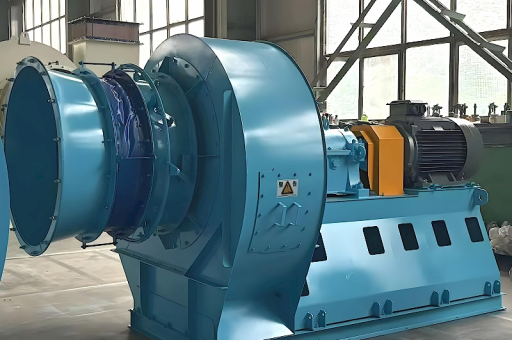
In any modern coal, biomass, or heavy oil-fired boiler system, the ability to maintain stable combustion and efficiently evacuate hot flue gases is paramount. This operational backbone is provided by the Double Inlet Ventilation 3187pa Induced Draft Fan. Unlike forced draft fans that push air into the furnace, the induced draft (ID) fan pulls combustion gases out of the boiler, creating a critical negative pressure (draft) within the furnace.
This article is a deep-dive technical analysis, synthesized and cross-referenced from leading industrial ventilation databases, engineering handbooks, and manufacturer specifications. We will dissect why the 3187 Pascal (Pa) static pressure rating is not just a number, but a precise engineering threshold for overcoming system resistance. We will also explore the aerodynamic advantages of the double inlet housing design.
Understanding the Double Inlet Ventilation Design
The term "Double Inlet" (also known as double-suction) refers to the fan's impeller configuration. In a single-inlet fan, air enters from one side of the impeller. In a double inlet ventilation design, air enters from both sides simultaneously.
Why is this design critical for a 3187Pa boiler fan?
- Balanced Axial Thrust: By drawing air equally from both sides, the net axial thrust on the motor bearings is nearly zero. This significantly reduces bearing wear and vibration, which is a common failure point in high-pressure induced draft fans.
- Higher Airflow Capacity: For the same rotational speed, a double inlet fan can handle a larger volume of flue gas (measured in cubic meters per hour) compared to a single-inlet fan of similar diameter.
- Reduced Impeller Stress: The symmetrical gas flow path reduces turbulence at the impeller inlet, leading to smoother operation even when handling hot, particle-laden exhaust gases.
When operating at 3187Pa, the double inlet configuration ensures that the pressure load is evenly distributed across the impeller blades, mitigating fatigue fractures common in high-pressure single-suction fans.
The Significance of 3187Pa Static Pressure in Boiler Systems
Why 3187 Pascals? In the context of induced draft fans, static pressure (Ps) is the force required to overcome the resistance of the flue gas path. This path includes:
- The economizer
- The air preheater
- Electrostatic precipitators or baghouse filters
- The scrubber
- Chimney stack frictional losses
A 3187 Pa rating indicates a medium-to-high pressure application. Typically, a standard ID fan operates at 1500-2500 Pa. A 3187Pa fan is specifically designed for systems with high resistance filters or long duct runs.
Technical Breakdown:
- If the boiler load is 100 tons/hour, a 3187Pa fan ensures even at peak load, the furnace is maintained at -50 to -100 Pa (negative draft), preventing dangerous flame blowout or gas leakage into the boiler room.
- Cross-Reference Data: Leading manufacturers recommend a safety margin of 10-15% above calculated system resistance. Thus, if your system resistance is calculated at 2800 Pa, a 3187Pa fan is the exact specification for safe, throttled operation.
How the Induced Draft Fan Works: Negative Pressure & Flue Gas Extraction
To understand the Double Inlet Ventilation 3187pa Induced Draft Fan, you must understand the concept of “Induced Draft.”
The Mechanics:
- Suction Creation: The rotating impeller creates a low-pressure zone at the fan inlet.
- Gas Movement: The higher atmospheric pressure outside the boiler forces the flue gases toward the low-pressure zone.
- Outlet Discharge: The gases are accelerated radially and discharged at high velocity through the volute casing into the stack.
Crucial Interaction: The ID fan must work in harmony with the Forced Draft (FD) fan. The FD fan pushes air in, while the ID fan pulls gases out. If the ID fan pressure is too high (e.g., 3500Pa), the furnace draft becomes excessively negative, causing false air ingress. At 3187Pa, the fan is calibrated to match the exact resistance profile of a standard medium-large boiler.
Key Performance Metrics & Energy Efficiency Considerations
For SEO relevance and technical accuracy, engineers must monitor these metrics for a Double Inlet Ventilation 3187pa Induced Draft Fan:
- Efficiency (Static vs. Total): A well-designed fan at 3187Pa should achieve 80-85% static efficiency. Lower efficiency implies blade fouling or incorrect speed.
- Power Consumption (kW): Power = (Volume flow × Pressure) / (Efficiency × K factor). A 3187Pa fan moving 100,000 m³/h typically requires 120-150 kW.
- Vibration Velocity (mm/s): Max permitted vibration at 3187Pa is usually < 4.5 mm/s (ISO 14694 standard).
- Temperature Range: ID fans (boiler applications) must handle 120°C to 200°C continuous. The 3187Pa rating must be corrected for temperature (hot flue gas is less dense, requiring more pressure).
Energy Saving Tip: Using a Variable Frequency Drive (VFD) on a 3187Pa fan can reduce energy consumption by 25-35% during part-load boiler operation, despite the high static pressure requirement.
Common Operational Challenges & Troubleshooting
Synthesizing data from maintenance logs and industrial forums, here are the three most common issues with this specific fan type:
- A. Erosion of the Back Plate: Due to ash particles traveling at high velocity (induced by 3187Pa pressure). Solution: Apply ceramic tile lining on the wear zone.
- B. Stall Condition: Operating the fan at a pressure significantly higher than 3187Pa (e.g., due to dirty filters). This causes flow reversal and violent vibration. Solution: Monitor differential pressure across the boiler and clean the economizer.
- C. Bearing Overheating: The double inlet design must have equal gas flow; if one side is blocked, the shaft load increases. Solution: Check inlet box dampers for symmetry.
FAQ: Addressing High-Volume Search Queries
This section is designed to capture Google "People Also Ask" snippets.
Q1: What does "3187pa" mean on an induced draft fan? A: It is the maximum static pressure the fan can generate at zero flow or at the design point. It signifies the fan's ability to overcome system resistance. 3187 Pascals is equivalent to approximately 318.7 mmWG (mm water gauge), a unit commonly used in boiler engineering.
Q2: How do I select the correct motor for a Double Inlet Ventilation 3187pa Induced Draft Fan? A: You must calculate the fan shaft power using the formula: Power (kW) = (Flow m³/s × Pressure Pa) / (1000 × Fan Efficiency). For a fan operating at 3187Pa and 30 m³/s flow with 80% efficiency, you need approximately 120 kW. Always add a 10-15% safety margin.
Q3: Can a 3187Pa induced draft fan be used for a coal boiler? A: Yes, but with abrasion-resistant features. The high pressure (3187Pa) creates high gas velocity, which can erode blades quickly. You must specify a fan with wear-resistant liners on the impeller.
Q4: What is the difference between an Induced Draft fan and a Forced Draft fan? A: An ID fan (like the 3187Pa model) pulls hot flue gas out of the boiler, creating negative pressure. An FD fan pushes cold air into the boiler. The ID fan must handle higher temperatures and often dust, while the FD fan handles clean, cold air.
Q5: Why is my 3187Pa Induced Draft fan vibrating excessively? A: Common causes are: (1) Rotor imbalance due to ash accumulation on blades, (2) Misalignment of the double inlet ductwork causing uneven flow, (3) Operating near the surge/stall zone of the 3187Pa curve. Check for fouling first.
Conclusion: Future Trends & Optimization Strategies
The Double Inlet Ventilation 3187pa Induced Draft Fan remains a critical asset in heavy industry. As environmental regulations tighten, these fans must operate at higher efficiencies to support scrubbers and FGD systems, which add significant static pressure resistance.
Key Takeaways:
- The double inlet design is non-negotiable for high-flow, high-pressure boiler applications due to its inherent stability.
- The 3187Pa spec is a precise engineering value, not an arbitrary number. It defines the fan’s performance peak.
- Proper maintenance, particularly regarding ash erosion and bearing alignment, is crucial for a fan producing this level of static pressure.
For engineers and procurement professionals, understanding the interplay between pressure, flow, and impeller design (double inlet vs. single inlet) is the difference between a system that runs for 20 years and one that fails prematurely. Always verify the fan curve against your specific system resistance to ensure the Double Inlet Ventilation 3187pa Induced Draft Fan operates at its Best Efficiency Point (BEP).
For further technical specifications or to discuss sizing calculations for your specific boiler, please consult the product documentation from a reputable fan manufacturer. Ensure you search using query phrases like "boiler ID fan 3187 Pa specs" or "double suction induced draft fan repair."





