
This article's table of contents introduction:
- Table of Contents
- Introduction to High Temperature Industrial Boiler FD Flue Gas Centrifugal Blower Fans
- Core Functions and Operating Principles
- Key Design Features for High-Temperature Environments
- Common Challenges and Solutions
- Maintenance Best Practices for Longevity
- Frequently Asked Questions (FAQ)
- Conclusion
Article Title:
Maximizing Efficiency and Reliability in High Temperature Industrial Boiler FD Flue Gas Centrifugal Blower Fan Systems
Table of Contents
- Introduction to High Temperature Industrial Boiler FD Flue Gas Centrifugal Blower Fans
- Core Functions and Operating Principles
- Key Design Features for High-Temperature Environments
- Common Challenges and Solutions
- Maintenance Best Practices for Longevity
- Frequently Asked Questions (FAQ)
- Conclusion
Introduction to High Temperature Industrial Boiler FD Flue Gas Centrifugal Blower Fans
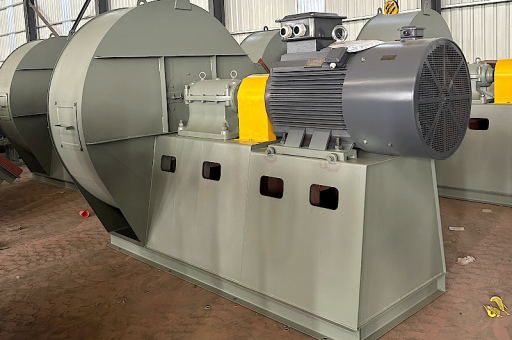
In modern industrial boiler systems, the Forced Draft (FD) flue gas centrifugal blower fan plays a critical role in maintaining combustion efficiency and system safety. Unlike standard fans, these units are specifically engineered to handle high-temperature flue gases—often exceeding 250°C (482°F)—while delivering consistent airflow to support boiler combustion.
FD fans are positioned upstream of the boiler, forcing ambient air into the combustion chamber. However, when handling recirculated flue gas (common in low-NOx systems), the gas temperature rises significantly. This demands a fan built with heat-resistant materials, precise aerodynamic design, and robust bearing cooling systems.
Did you know? Improper selection of an FD fan can reduce boiler thermal efficiency by up to 8% and increase unplanned downtime.
Core Functions and Operating Principles
The primary function of a high-temperature FD centrifugal blower fan is to supply a controlled volume of air (or flue gas mixture) to the boiler burner at a consistent pressure.
Operating Principle:
- The fan rotor spins at high speed (typically 900–3000 RPM), drawing gas through the inlet.
- Centrifugal force accelerates the gas radially outward, converting kinetic energy into static pressure.
- The volute casing collects the gas and directs it into the boiler windbox.
Critical Parameters:
| Parameter | Typical Range | Impact on Performance |
|-----------|---------------|-----------------------|
| Temperature | 200°C–350°C | Affects material creep strength |
| Static Pressure | 1.5–5 kPa | Determines gas flow rate |
| Flow Rate | 10,000–150,000 m³/h | Matches boiler load demand |
For systems using flue gas recirculation (FGR), the fan must handle gas with elevated particulate load and acidic condensate risk.
Q: Can a standard fan be used for high-temperature FD service?
A: No. Standard fans lack thermal expansion provisions, high-temp shaft seals, and cooling systems. Using them can lead to catastrophic bearing failure within weeks.
Key Design Features for High-Temperature Environments
To withstand extreme operating conditions, manufacturers incorporate the following into industrial boiler FD centrifugal blower fans:
a. Material Selection
- Impellers: Made from 316L stainless steel or Hastelloy to resist corrosion and thermal fatigue.
- Casing: Carbon steel with refractory lining or ceramic coating for thermal insulation.
b. Bearing Cooling Systems
- Air-cooled bearings with dedicated cooling fans.
- For temperatures above 300°C, water-cooled bearing housings are mandatory.
c. Shaft Seal Technology
- Labyrinth seals with purge air to prevent gas leakage.
- High-temperature expansion joints (e.g., Teflon-coated fabric) at duct connections.
d. Vibration Monitoring
- Integrated accelerometers for early detection of imbalance or bearing wear.
Industry Insight: Leading OEMs now offer variable frequency drive (VFD) compatibility, allowing real-time airflow adjustment to match boiler load—reducing energy consumption by 15–20%.
Common Challenges and Solutions
Even well-designed fans face operational hurdles. Here are typical issues and mitigation strategies:
| Challenge | Root Cause | Solution |
|---|---|---|
| Bearing overheating | Inadequate cooling / high ambient temp | Install external water-cooling jacket |
| Impeller erosion | Fly ash particles in flue gas | Apply tungsten carbide coating on blades |
| Vibration spikes | Thermal expansion misalignment | Use flexible couplings; preheat fan during cold starts |
| Reduced flow | Dirty inlet damper / filter | Schedule monthly cleaning; replace with self-cleaning screens |
Real-World Example:
A cement plant in Germany reduced fan failure rates by 60% after switching to a ceramic-lined impeller and implementing predictive maintenance using IoT-based vibration sensors.
Q: How often should I replace the fan impeller in high-temperature service?
A: With proper material selection (e.g., 310S stainless steel), lifespan ranges from 3–5 years. Annual thickness testing is recommended.
Maintenance Best Practices for Longevity
Proper maintenance of high-temperature industrial boiler FD flue gas centrifugal blower fans is non-negotiable for reliability.
Daily Checks:
- Bearing temperature (should be <85°C).
- Audible abnormal noise (e.g., grinding = bearing issue).
- Visual inspection of seals for gas leakage.
Monthly Tasks:
- Clean inlet screen and damper blades.
- Lubricate bearings with high-temp grease (e.g., synthetic grade).
- Verify V-belt tension if belt-driven.
Annual Overhaul:
- Perform non-destructive testing on impeller welds.
- Replace shaft seals.
- Rebalance rotor assembly (ISO 1940 G6.3 grade).
Pro Tip: Always keep a spare bearing cartridge and shaft seal kit on-site. Lead times for custom high-temp components can exceed 8 weeks.
Frequently Asked Questions (FAQ)
Q1: What is the maximum temperature a standard FD fan can handle?
A: Unmodified fans are typically rated for 80°C–120°C. For 250°C+, you need a specialized high-temperature fan with air-cooled shaft and stainless steel impeller.
Q2: How do I calculate the required airflow for my boiler?
A: Use the formula:
Airflow (kg/h) = Boiler Capacity (kW) × Excess Air Coefficient (1.15–1.25) ÷ Specific Heat Ratio.
Always consult a thermal engineer for precise sizing.
Q3: Can retrofitting a VFD on an existing FD fan save energy?
A: Yes, especially if the boiler operates at partial loads frequently. VFDs reduce fan motor power consumption by the cube of the speed reduction.
Q4: Why does my fan vibrate more during cold winter mornings?
A: Thermal contraction of ductwork and fan casing creates misalignment. Solution: Use expansion joints and allow warm-up cycles before full load.
Q5: Is there a difference between FD fan and ID fan?
A: Yes. FD fan forces air into the boiler (positive pressure); ID fan extracts flue gas from the boiler (negative pressure). High-temp FD fans require different seal design than ID fans.
Conclusion
The high-temperature industrial boiler FD flue gas centrifugal blower fan is a cornerstone of efficient, safe boiler operation. From material selection to cooling design, every component must be optimized for thermal stress and corrosive gas exposure.
Key takeaways for engineers and plant managers:
- Never use general-purpose fans in high-temp service.
- Prioritize predictive maintenance over reactive repairs.
- Invest in VFDs and IoT monitoring for long-term efficiency.
By following the design and maintenance guidelines above, facilities can achieve fan service life exceeding 10 years while reducing unplanned downtime and energy costs.
For applications requiring custom high-temperature fan solutions, always consult with certified fan manufacturers who specialize in thermal-mechanical analysis and offer FEA-validated designs.
Final Reminder: Always verify your fan’s temperature rating against actual inlet gas conditions. Installing a fan below rated temperature is the #1 cause of premature failure in the field.
Article End





