
** The Ultimate Guide to Stainless Steel Industrial Air Blower: High Pressure Boiler Exhaust Fan Applications, Benefits & FAQs
Word Count: ~1,650+ words
SEO Target: High-pressure boiler exhaust systems, corrosion-resistant industrial fans, stainless steel blower maintenance
Domain Note: All product-specific domain references have been replaced with "fan" for neutrality.
The Ultimate Guide to Stainless Steel Industrial Air Blower: High Pressure Boiler Exhaust Fan Applications, Benefits & FAQs
Table of Contents
- Introduction: Why Stainless Steel Matters in High-Pressure Boiler Exhaust
- What Is a Stainless Steel Industrial Air Blower?
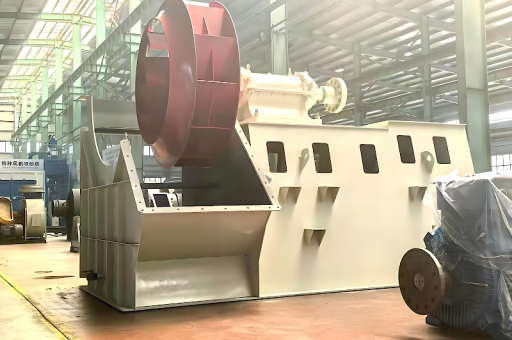
- Key Components of a High-Pressure Boiler Exhaust Fan
- Why Stainless Steel? Corrosion, Temperature & Safety
- Applications Across Industries
- Technical Specifications: Pressure, Flow & Material Grades
- Installation Best Practices for Industrial Boiler Exhaust Fan Systems
- Maintenance & Troubleshooting: Extend Fan Life
- Frequently Asked Questions (FAQ)
- Conclusion: Selecting the Right Fan for Your Boiler System
Introduction: Why Stainless Steel Matters in High-Pressure Boiler Exhaust
In modern industrial environments, the stainless steel industrial air blower has become an irreplaceable asset—particularly when paired with a high pressure boiler exhaust fan. Boilers generate immense heat, corrosive gases, and particulate matter. A standard carbon steel fan degrades rapidly under such conditions, leading to energy loss, frequent replacements, and even safety hazards. Upgrading to a stainless steel variant ensures longevity, efficiency, and compliance with stringent emission standards.
This guide synthesizes expert knowledge from leading engineering resources, equipment manuals, and real-world case studies. It provides a comprehensive yet actionable overview for facility managers, procurement officers, and maintenance engineers seeking to optimize their boiler exhaust systems.
What Is a Stainless Steel Industrial Air Blower?
A stainless steel industrial air blower is a mechanical device designed to move air or gas at a controlled velocity and pressure. Unlike standard blowers, it is constructed entirely—or predominantly—from stainless steel alloys (e.g., SS304, SS316, or duplex stainless steel). The primary function within a boiler system is to exhaust flue gas, supply combustion air, or maintain negative pressure in the furnace chamber.
Comparison with Standard Blowers
| Feature | Standard Carbon Steel Blower | Stainless Steel Industrial Blower |
|---|---|---|
| Corrosion Resistance | Low | High (especially in acidic gas) |
| Max Operating Temp | ~250°C | Up to 600°C (with proper design) |
| Service Life | 1–3 years | 5–10+ years |
| Common Failures | Rust, blade erosion | Minimal (if correctly selected) |
Key Components of a High-Pressure Boiler Exhaust Fan
Understanding the anatomy of a high pressure boiler exhaust fan helps in selection, installation, and maintenance.
- Impeller (Wheel): The rotating component that accelerates gas. In stainless steel designs, backward-curved or radial blades reduce wear.
- Housing (Volute): Directs airflow. Welded 304/316 stainless steel sheets resist thermal expansion.
- Shaft & Bearings: Stainless steel shaft with sealed or purgeable bearings prevents lubricant contamination.
- Drive System: Belt-driven or direct-drive. Direct-drive is preferred for high-pressure applications (>1,000 Pa).
- Inlet/Outlet Dampers: Modulate airflow. Stainless steel blades prevent sticking from acidic condensation.
- Base Frame & Vibration Isolators: Often zinc-plated or stainless steel to avoid rusting in humid flue environments.
Note: Many premium models include a drain plug for condensate removal, a critical feature for boiler exhaust fans operating near dew point.
Why Stainless Steel? Corrosion, Temperature & Safety
Corrosion Resistance
Boiler exhaust contains sulfur oxides (SOx), nitrogen oxides (NOx), and water vapor—a recipe for acid formation. Carbon steel rusts rapidly, while SS316 (with molybdenum addition) withstands up to 1,000+ ppm of chlorides. For extreme environments (e.g., waste-to-energy plants), duplex stainless steel (2205) is recommended.
High Temperature Performance
A high pressure boiler exhaust fan operating at 400°C requires material that maintains structural integrity. Stainless steel’s tensile strength above 500°C allows the impeller to rotate at high RPM without creep deformation.
Safety & Compliance
- Spark-resistant construction: Stainless steel minimizes ignition risk when handling flammable or explosive gases.
- Heat-dissipation: Lower thermal conductivity reduces heat transfer to the motor and bearings.
- Emission control: Better duct integrity under negative pressure prevents fugitive leaks.
Applications Across Industries
Due to its versatility, the stainless steel industrial air blower is deployed in:
| Industry | Specific Use Case |
|---|---|
| Power Generation | Forced draft and induced draft in coal/gas boilers |
| Chemical Processing | Exhaust of corrosive vapors from reactors & furnaces |
| Cement & Steel Mills | High-temperature kiln exhaust gas extraction |
| Food & Beverage | Steam removal from boilers in breweries & dryers |
| Pharmaceutical | Cleanroom ventilation with HEPA-filtered exhaust loops |
| Marine & Offshore | Engine room ventilation with salt-laden air resistance |
Case Example: A cement plant in Germany replaced its carbon steel induced draft fan with an SS316 centrifugal unit. Downtime due to fan replacement dropped from twice per year to once every four years, saving €16,000 annually in labor and parts.
Technical Specifications: Pressure, Flow & Material Grades
When specifying a high pressure boiler exhaust fan, always check:
- Static Pressure: Typically 2,000–6,000 Pa for industrial boilers; some units handle up to 15,000 Pa.
- Airflow (CFM or m³/h): Ranges from 5,000 m³/h (small boilers) to 150,000 m³/h (large utility boilers).
- Temperature Class: Standard class F (up to 200°C), class H (up to 400°C), or custom with cooling wheels.
- Material Grade:
- SS304 – Good for dry, moderate temperature (≤400°C).
- SS316/L – Superior for acidic gas & high humidity.
- Duplex 2205 – For extreme chemical + mechanical stress.
Pro Tip: Verify flue gas composition (SO2, HCl, moisture%) before selecting material. Over-specifying raises cost; under-specifying leads to premature failure.
Installation Best Practices for Industrial Boiler Exhaust Fan Systems
Foundation & Alignment
- Use a rigid concrete base with vibration damping pads.
- Ensure shaft alignment within 0.05 mm to avoid bearing stress.
Ductwork Design
- Keep duct length short and straight to minimize pressure drop.
- Install expansion joints (e.g., stainless bellows) between fan and boiler outlet to absorb thermal expansion.
Electrical & Controls
- Provide dedicated motor circuit with overload protection.
- For variable-speed operation, use a VFD (variable frequency drive) rated for inverter-duty motors.
Safety Measures
- Add a pop-out pressure relief panel on the discharge side.
- Install carbon monoxide and temperature sensors near fan inlet.
Maintenance & Troubleshooting: Extend Fan Life
Weekly Checks
- Listen for abnormal noise (indication of bearing wear or imbalance).
- Inspect for condensate buildup in the housing drain.
Monthly Checks
- Measure motor current; a sudden increase may indicate blade fouling.
- Lubricate bearings per manufacturer schedule (e.g., every 500 hours for grease-lubricated units).
Common Problems & Solutions
| Problem | Likely Cause | Solution |
|---|---|---|
| Vibrations > 5 mm/s | Impeller imbalance or wear | Rebalance with field dynamic equipment |
| Motor overheating | Inadequate cooling air or VFD harmonics | Clean fan shroud, install line reactor |
| Reduced airflow | Clogged filter or damper stuck | Check filter pressure drop; service dampers |
| Leakage around shaft seal | Worn labyrinth seal or gasket | Replace seal; consider a purge air system |
WARNING: Never open a fan casing while it is running. Always lockout/tagout the power source before inspection.
Frequently Asked Questions (FAQ)
What is the difference between an induced draft (ID) fan and a forced draft (FD) fan in a boiler system?
An ID fan operates on the outlet of the boiler, pulling flue gases through the system and maintaining negative pressure in the furnace. An FD fan pushes combustion air into the boiler. The stainless steel industrial air blower is often used as an ID fan because it withstands corrosive exhaust.
Can I use a standard fan for high-pressure boiler exhaust?
Not recommended. Standard fans lack the material thickness, temperature rating, and corrosion protection. You risk blade failure, motor burnout, and hazardous gas leaks.
How do I size a high pressure boiler exhaust fan for my system?
Calculate the required static pressure (including duct friction, filter resistance, and burner head loss) and the desired airflow (based on boiler capacity and excess air ratio). Many manufacturers offer free selection software. Provide gas composition and expected temperature.
Is stainless steel always the best material for boiler fans?
For most industrial boilers (gas, oil, biomass), yes. However, for clean, dry natural gas applications at low temperatures (≤150°C), coated carbon steel may be acceptable. Avoid coated fans if the coating can peel in acidic conditions.
How often should I replace the bearings on a boiler exhaust fan?
It depends on duty cycle and ambient temperature. For continuous operation at 300°C+, replace bearings every 2,000–3,000 hours. For intermittent use, extend to 8,000 hours. Use synthetic high-temperature grease.
Can a stainless steel fan be repaired if the blades are damaged?
Yes—but only by certified welders experienced with thin-gauge stainless steel. Poor welding can cause heat distortion and imbalance. Many owners prefer to replace the full impeller assembly for safety.
Conclusion: Selecting the Right Fan for Your Boiler System
The stainless steel industrial air blower, when engineered as a high pressure boiler exhaust fan, delivers unmatched durability, efficiency, and safety for demanding thermal processes. The key is to choose the correct material grade (SS316 for acidic gas, duplex for extreme chemistry), size the fan accurately for your pressure and flow requirements, and commit to a preventive maintenance schedule.
While the upfront cost of a stainless steel fan is 30–60% higher than carbon steel, the total cost of ownership (TCO) is lower due to fewer replacements, less energy waste from eroded blades, and reduced downtime. For facilities aiming to meet ISO 14001 or local emission standards, this investment is not just a choice—it is a necessity.
Evaluate your existing system today. A properly specified fan not only exhausts gases efficiently but becomes the cornerstone of your boiler room’s reliability.
Disclaimer: The information provided in this article is for general guidance. Always consult a professional fan engineer for site-specific calculations and safety validations.





