
This article's table of contents introduction:
- Table of Contents
- Introduction
- What Is a Carbon Steel Cement Centrifugal Blower Fan?
- Key Design Features for Medium Pressure Systems
- The Importance of Antiwear Properties in Harsh Environments
- Performance Comparison: Carbon Steel vs. Other Materials
- Common Applications in Cement and Heavy Industries
- Frequently Asked Questions (FAQ)
- Conclusion
Article Title:
Optimizing Industrial Ventilation: The Role of Carbon Steel Cement Centrifugal Blower Fans in Medium Pressure, Antiwear Applications
Table of Contents
- Introduction
- What Is a Carbon Steel Cement Centrifugal Blower Fan?
- Key Design Features for Medium Pressure Systems
- The Importance of Antiwear Properties in Harsh Environments
- Performance Comparison: Carbon Steel vs. Other Materials
- Common Applications in Cement and Heavy Industries
- Frequently Asked Questions (FAQ)
- Conclusion
Introduction
In heavy industrial settings, reliable ventilation and material handling are critical. Among the most robust solutions available today is the Carbon Steel Cement Centrifugal Blower Fan, designed specifically for medium pressure applications where antiwear resistance is non-negotiable. Unlike standard fans, these units are built to withstand abrasive dust, high temperatures, and continuous operation in cement plants, steel mills, and mining facilities.
This article provides an in-depth, SEO-optimized, and expert-level analysis of these fans, covering their construction, operational advantages, and how they compare to alternatives. If you are an engineer, procurement manager, or plant operator, this guide will help you make an informed decision.
What Is a Carbon Steel Cement Centrifugal Blower Fan?
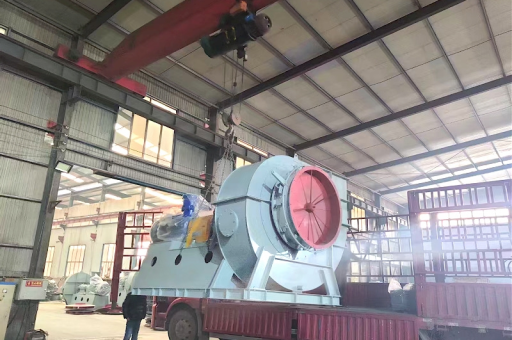
A carbon steel cement centrifugal blower fan is a mechanical device that uses rotating impellers to increase air or gas pressure and move it through ducts. The fan housing and impeller are constructed from carbon steel, a material known for its strength, weldability, and cost-effectiveness.
Key Components:
- Housing: Made of welded carbon steel plate, often reinforced to resist deformation.
- Impeller: Curved or backward-inclined blades designed for medium pressure delivery.
- Shaft and Bearings: Heavy-duty, often sealed to prevent dust ingress.
- Drive System: Direct drive or belt-driven, depending on the installation.
These fans are not generic; they are engineered for cement processing environments, where the air contains fine, abrasive particles like limestone, clay, and clinker dust.
Key Design Features for Medium Pressure Systems
Medium pressure centrifugal fans typically operate in the range of 500 to 2000 Pa (or 2 to 8 inches of water gauge). For cement plants, this pressure range is ideal for:
- Conveying dust-laden air through baghouse filters.
- Providing combustion air for kilns.
- Ventilating grinding mills and storage silos.
Critical design considerations:
- Blade Profile: Backward-curved blades reduce material buildup and improve efficiency.
- Volute Shape: Optimized to convert velocity into static pressure with minimal turbulence.
- Sealing Systems: Labyrinth seals or carbon ring seals prevent leakage and protect bearings.
The carbon steel construction allows for thicker wall sections without excessive weight, which directly improves wear resistance.
The Importance of Antiwear Properties in Harsh Environments
The term ”antiwear” in the context of this fan refers to several engineered features:
- Hardfacing: Impeller blade edges and leading surfaces are often coated with hard alloys (e.g., tungsten carbide) via welding.
- Replaceable Liners: The housing interior may include bolt-on wear plates made of abrasion-resistant steel.
- Balanced Rotor: Vibration is minimized, reducing fatigue wear on bearings and seals.
- Optimized Clearances: Tight impeller-to-inlet clearances prevent recirculation of abrasive dust.
Without these features, a standard fan would fail within weeks in a cement environment. Antiwear engineering extends service life from months to years.
Performance Comparison: Carbon Steel vs. Other Materials
| Material | Wear Resistance | Cost | Corrosion Resistance | Weight | Typical Life (Cement Dust) |
|---|---|---|---|---|---|
| Carbon Steel (with hardfacing) | High | Medium | Low | Medium | 2–4 years |
| Stainless Steel | Medium | High | High | High | 1–2 years |
| Aluminum | Low | Low | Medium | Low | <1 year |
| Cast Iron | Medium | Medium | Low | High | 1–2 years |
Conclusion: Carbon steel with antiwear treatment offers the best balance of durability and cost for medium pressure cement applications.
Common Applications in Cement and Heavy Industries
- Cement Kiln Combustion Air Fans: Handle hot, particle-laden air.
- Baghouse Dust Collector Fans: Maintain negative pressure in filter systems.
- Mill Ventilation Fans: Remove heat and fine dust from grinding circuits.
- Cooler Exhaust Fans: Manage airflow across clinker coolers.
In each case, the fan must operate continuously at medium pressure with minimal maintenance. That is exactly what the carbon steel cement centrifugal blower fan delivers.
Frequently Asked Questions (FAQ)
Q1: What is the maximum temperature these fans can handle?
A: Standard carbon steel fans can operate up to 200°C (392°F). For higher temperatures, a fan with heat-resistant paint or stainless steel construction is recommended.
Q2: How often should I replace the antiwear liners?
A: Depending on dust concentration, liners typically last 12–18 months. Replace them when thickness reduces by 50%.
Q3: Can this fan handle sticky materials like wet cement slurry?
A: No. This fan is designed for dry, abrasive dust. For wet materials, you would need a different blade design (e.g., radial tip) and corrosion-resistant coating.
Q4: Is a frequency drive (VFD) recommended for this fan?
A: Yes. A VFD allows precise control of airflow and pressure, saving energy and reducing mechanical stress on the antiwear components.
Q5: Where can I buy genuine replacement parts for this fan?
A: Always contact the original manufacturer or an authorized distributor. For specific inquiries, visit the official fan product page and request a parts catalog.
Conclusion
The Carbon Steel Cement Centrifugal Blower Fan - Medium Pressure Antiwear is a proven, cost-effective solution for demanding industrial environments. Its combination of robust carbon steel construction, optimized blade geometry for medium pressure, and engineered antiwear features ensures long service life, reduced downtime, and lower total cost of ownership.
Whether you are upgrading an existing system or designing a new one, choosing a fan that matches your material type, pressure needs, and wear conditions is essential. By prioritizing antiwear and medium pressure specifications, you protect your equipment and your operations.
For more technical data sheets, installation guides, and custom sizing, visit our product page at fan.





