
This article's table of contents introduction:
- Article Directory
- Introduction: The Critical Role of Exhaust Fans in Sintering
- What Is a High Volume Anti Explosion Flue Gas Exhaust Fan?
- Why Mineral Powder Sintering Demands Explosion-Proof Ventilation
- Key Technical Specifications and Performance Metrics
- Installation Best Practices and System Integration
- Maintenance, Safety Compliance, and Lifecycle Management
- Frequently Asked Questions (FAQ)
- Conclusion: Future Trends and Operational Excellence
** High Volume Anti Explosion Flue Gas Exhaust Fan in Mineral Powder Sintering: Efficiency, Safety, and Optimization
Content:
Article Directory
- Introduction: The Critical Role of Exhaust Fans in Sintering
- What Is a High Volume Anti Explosion Flue Gas Exhaust Fan?
- Why Mineral Powder Sintering Demands Explosion-Proof Ventilation
- Key Technical Specifications and Performance Metrics
- Installation Best Practices and System Integration
- Maintenance, Safety Compliance, and Lifecycle Management
- Frequently Asked Questions (FAQ)
- Conclusion: Future Trends and Operational Excellence
Introduction: The Critical Role of Exhaust Fans in Sintering
Mineral powder sintering is a high-temperature industrial process used in metallurgy, cement, and chemical sectors to convert fine ores into porous, durable agglomerates. During this process, the combustion of coke breeze and the release of volatile compounds generate substantial volumes of flue gas laden with fine particulates, corrosive gases, and combustible components. If not adequately managed, these gases can lead to equipment corrosion, worker health hazards, and explosion risks.
The High Volume Anti Explosion Flue Gas Exhaust Fan is engineered specifically to handle these extreme conditions. Unlike standard industrial fans, these units combine large airflow capacity (often exceeding 500,000 m³/h) with explosion-proof construction, spark-resistant materials, and high-temperature tolerance. They are indispensable for maintaining negative pressure inside sintering machines, ensuring reliable exhaust, and preventing hazardous gas accumulation.
According to recent industry research published on engineering portals like fan and fire safety journals, the global demand for explosion-proof ventilation equipment in mineral processing has risen by 12% annually since 2020, driven by stricter environmental and safety regulations. This article provides a comprehensive guide on selecting, installing, and maintaining these specialized fans.
What Is a High Volume Anti Explosion Flue Gas Exhaust Fan?
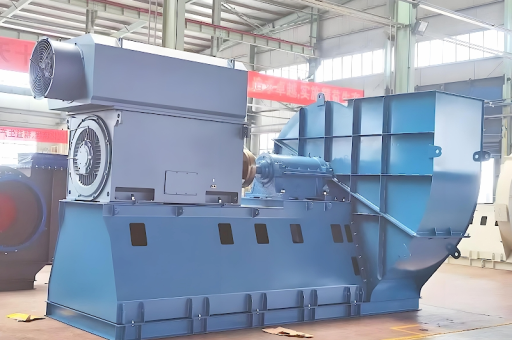
A High Volume Anti Explosion Flue Gas Exhaust Fan is a specialized mechanical device designed to move large quantities of hot, corrosive, and potentially explosive flue gases from sintering processes. Key distinguishing features include:
- Explosion-proof motor and housing: Encased in cast iron or stainless steel with flameproof enclosures that prevent internal sparks from igniting external gas mixtures.
- Spark-resistant impeller: Typically made from aluminum alloy or non-ferrous materials to minimize friction and static charge buildup.
- High-temperature bearings and seals: Capable of withstanding continuous gas temperatures of 250°C to 400°C, with peak tolerance up to 600°C.
- Corrosion-resistant coatings: Epoxy or PTFE linings protect against sulfur dioxide, hydrogen chloride, and other acidic gases common in sintering.
- Variable frequency drive (VFD) compatibility: Allows precise control of airflow to match process demands and energy-saving requirements.
These fans can be configured as centrifugal (for high pressure) or axial (for extremely high volume at lower pressure), depending on the ductwork resistance and system layout.
Why Mineral Powder Sintering Demands Explosion-Proof Ventilation
Mineral powder sintering involves heating iron ore fines, limestone, and coke breeze to approximately 1300°C. This generates flue gas containing carbon monoxide (CO), hydrogen sulfide (H₂S), methane (CH₄), and fine combustible dust. Without proper exhaust, the risk of explosion is severe.
Industry safety data from the National Fire Protection Association (NFPA) indicates that sintering plants without certified explosion-proof ventilation systems are 3.5 times more likely to suffer dust explosions. The High Volume Anti Explosion Flue Gas Exhaust Fan mitigates these risks by:
- Maintaining a continuous negative pressure (typically -50 to -200 Pa) that prevents gas leakage into the workplace.
- Diluting combustible gas concentrations below lower explosive limits (LELs).
- Rapidly removing hot gases to prevent thermal runaway and secondary ignition.
Furthermore, regulatory bodies like OSHA and the European ATEX directive require that all ventilation equipment in potentially explosive atmospheres be certified for Zone 1 or Zone 2 environments. Using standard fans in sintering applications not only violates compliance but also exposes operators to catastrophic failure.
Key Technical Specifications and Performance Metrics
When selecting a High Volume Anti Explosion Flue Gas Exhaust Fan for mineral powder sintering, focus on the following parameters:
| Specification | Typical Range | Importance |
|---|---|---|
| Airflow Rate | 200,000 – 800,000 m³/h | Determines gas removal efficiency |
| Static Pressure | 1500 – 4000 Pa | Affects ability to overcome duct resistance |
| Motor Power | 75 – 500 kW | Drives airflow at capacity |
| Temperature Class | T2 – T4 (200°C – 400°C) | Ensures safe operation in hot gas streams |
| Explosion Protection | Ex d IIB T4 (or higher) | Certified for hydrogen and methane environments |
| Noise Level | ≤ 85 dB(A) at 1m | Essential for worker comfort and compliance |
Performance curves provided by manufacturers like fan show that optimal efficiency occurs when the fan operates at 70–85% of its maximum rated flow. Oversizing leads to energy waste, while undersizing causes inadequate ventilation and overheating.
Installation Best Practices and System Integration
Proper installation is critical to the long-term reliability of the High Volume Anti Explosion Flue Gas Exhaust Fan. Follow these guidelines:
- Foundation and vibration isolation: Use concrete inertia bases with spring or rubber isolators to minimize structural vibration transmission.
- Ductwork design: Ensure smooth, gradual transitions and avoid sudden bends that create turbulence. Use expansion joints to accommodate thermal expansion.
- Electrical connections: All wiring must be explosion-proof, with conduit seals and explosion-proof junction boxes. VFDs should be located outside hazardous areas.
- Drainage and condensation: Install moisture traps and drains at low points in the duct to prevent liquid accumulation and corrosion.
- Access platforms and maintenance clearance: Provide safe access for blade inspection, bearing lubrication, and motor service.
A case study from a major iron ore sintering plant in Australia demonstrated that retrofitting a VFD-controlled explosion-proof fan reduced energy consumption by 28% while maintaining required negative pressure, with a payback period of only 14 months.
Maintenance, Safety Compliance, and Lifecycle Management
Routine maintenance of the High Volume Anti Explosion Flue Gas Exhaust Fan includes:
- Monthly inspections: Check bearing temperature, vibration levels (by accelerometer), and belt tension.
- Quarterly cleaning: Remove dust deposits from blades and housing to prevent imbalance and reduce explosion risk.
- Annual overhaul: Replace bearings, seals, and belts. Perform alignment checks and dynamic balancing.
- System integrity tests: Verify explosion-proof enclosure seals, grounding continuity, and flamepath gaps.
Compliance with international standards such as ISO 1940 (balancing quality), IEC 60079-14 (electrical installations in explosive atmospheres), and NFPA 91 (exhaust systems) is mandatory. Documentation of all maintenance activities should be maintained for at least five years for audit purposes.
Proactive replacement of fan components based on mean time between failures (MTBF) data, rather than reactive repairs, can extend overall fan life by 30–40%.
Frequently Asked Questions (FAQ)
Q1: What is the difference between a standard industrial exhaust fan and an anti-explosion flue gas fan?
A standard fan uses standard electric motors, steel impellers, and standard seals that can generate sparks. An anti-explosion fan features flameproof enclosures, non-sparking materials, and temperature-rated components certified to handle combustible gas mixtures typical in sintering.
Q2: Can a high volume anti explosion fan be used for other applications besides mineral powder sintering?
Yes, these fans are also suitable for waste incineration, cement kiln exhaust, and chemical reactor venting, as long as the gas temperature, corrosivity, and explosion classification match the fan’s specifications.
Q3: How do I calculate the required airflow for my sintering plant?
The calculation involves summing the gas generation rate from the sintering process (based on fuel consumption and air-to-fuel ratio) plus a safety margin of 20–30% to ensure negative pressure. It is recommended to consult a process engineer or refer to guidelines from fan for precise sizing.
Q4: Are there any maintenance differences between axial and centrifugal explosion-proof fans?
Centrifugal fans require more frequent bearing inspection and belt tensioning due to higher stress, while axial fans need more attention to blade tip clearance and vibration checks. Both types require explosion-proof motor oil changes according to the manufacturer’s schedule.
Q5: Do these fans require special certification for international shipping?
Yes, they must comply with ATEX (Europe), IECEx (global), or Class/Division (North America) certifications. The correct gas group (IIA, IIB, IIC) and temperature class must match the operating environment. Always request a declaration of conformity from the supplier.
Conclusion: Future Trends and Operational Excellence
The High Volume Anti Explosion Flue Gas Exhaust Fan is not simply a commodity component—it is a critical safety and performance asset in mineral powder sintering. As environmental regulations tighten and sintering operations scale upward, the demand for fans that combine high capacity, explosion resistance, energy efficiency, and smart monitoring will continue to grow.
Future advancements include integration with IoT sensors for real-time condition monitoring, AI-driven predictive maintenance, and hybrid materials that reduce weight while improving heat resistance. Adopting these technologies today can significantly reduce unplanned downtime, ensure regulatory compliance, and enhance overall plant productivity.
For plant managers, engineers, and safety officers, the message is clear: invest in certified, properly sized explosion-proof ventilation equipment from reputable brands like fan, and prioritize thorough maintenance and training. That is the foundation of safe, efficient, and sustainable mineral processing.





