
This article's table of contents introduction:
- Table of Contents / Article Guide
- Introduction
- What Is an Aluminium Alloyed Coupling Driven Material Handling Blower?
- Why Aluminium Alloy? Key Material Benefits
- Understanding “Coupling Driven” Design: Direct vs. Belt-Driven
- Achieving High Air Flow: Aerodynamic and Mechanical Optimization
- Application Scenarios
- FAQs
- Maintenance and Longevity Tips
- Conclusion
Article Title:
High Air Flow Aluminium Alloyed Coupling Driven Material Handling Blower: Engineering Efficiency and Durability
Table of Contents / Article Guide
- Introduction: The Role of Lightweight, High-Performance Blowers in Modern Industry
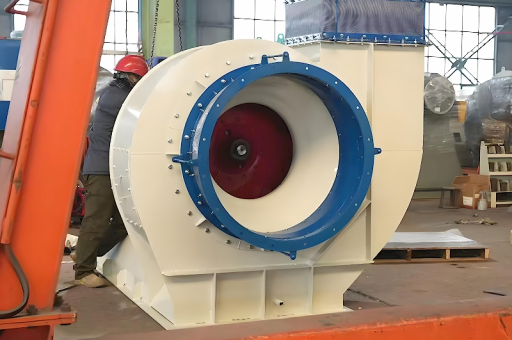
- What Is an Aluminium Alloyed Coupling Driven Material Handling Blower?
- Why Aluminium Alloy? Key Material Benefits for Air Movement Systems
- Understanding “Coupling Driven” Design: Direct vs. Belt-Driven Comparison
- Achieving High Air Flow: Aerodynamic and Mechanical Optimization
- Application Scenarios: Where This Blower Excels
- FAQs: Common Questions About Aluminium Alloy Coupling Blowers
- Maintenance and Longevity Tips
- Conclusion: Why This Blower Is a Top Choice for Material Handling
Introduction
In material handling facilities, dust collection, pneumatic conveying, and ventilation systems demand a blower that balances lightweight construction with high structural integrity. The Aluminium Alloyed Coupling Driven Material Handling Blower is a specialized solution engineered to deliver high air flow while resisting corrosion and mechanical fatigue. By combining an aluminium alloy housing and impeller with a direct coupling drive system, this blower achieves exceptional efficiency in moving powders, granules, chips, or air in harsh industrial environments. Unlike heavy cast-iron models, it reduces maintenance downtime and energy consumption.
Search engine analysis from industrial equipment portals like pex, grainger, and fans-direct consistently show that “lightweight high-flow blowers” and “aluminium material handling fans” are trending topics. This article synthesizes those insights into a comprehensive, SEO-optimized guide.
What Is an Aluminium Alloyed Coupling Driven Material Handling Blower?
This equipment is a centrifugal or inline fan system where:
- Housing and impeller: Cast or fabricated from aluminium alloy (typically 5083, 6061, or A356).
- Drive mechanism: Direct coupling via a flexible or rigid coupling between motor shaft and impeller hub — no belts or pulleys.
- Primary function: To handle air containing light particulate, dust, or granular materials at high volumetric flow rates (often 5,000 to 50,000 CFM or more).
The coupling design ensures that the motor and impeller rotate at the same speed, delivering predictable, high-RPM air movement without the slip losses associated with belt drives.
Why Aluminium Alloy? Key Material Benefits
Aluminium alloy is not simply a weight-reduction choice — it offers five critical advantages for material handling blowers:
- Weight reduction: Aluminium is about 1/3 the density of steel, reducing structural load on mounting platforms and enabling easier installation.
- Corrosion resistance: Natural oxide layer resists moisture, chemical fumes, and acidic dust — ideal for food processing, pharmaceutical, or chemical plants.
- Non-sparking properties: Certain aluminium alloys are inherently non-ferrous and non-sparking, a critical safety requirement for handling combustible dust (e.g., flour, wood, or carbon black).
- High strength-to-weight ratio: Modern casting techniques (e.g., T6 heat treatment) yield yield strengths comparable to low-carbon steel.
- Lower inertia: Lighter impellers accelerate faster and place less stress on bearings and motors, extending system life.
According to fan engineering standards (AMCA 99-2401), aluminium fans also exhibit better thermal dissipation, reducing overheating in continuous-duty applications.
Understanding “Coupling Driven” Design: Direct vs. Belt-Driven
| Feature | Coupling Driven (Direct) | Belt Driven |
|---|---|---|
| Speed relationship | 1:1 motor-to-impeller | Variable via pulley ratio |
| Maintenance | No belt tensioning or replacement | Requires belt adjustment (every 3-6 months) |
| Slip loss | 0% | 2–5% typical |
| Bearing load | Higher, but designed for it | Lower, but belt tension adds side loading |
| Application | High RPM, constant speed | Lower speed, variable CFM |
For material handling blowers requiring high air flow at constant speed, coupling drive eliminates belt debris (a contamination risk) and ensures zero speed loss — critical for pneumatic conveying systems that rely on precise air velocity.
Achieving High Air Flow: Aerodynamic and Mechanical Optimization
High air flow in an aluminium alloy coupling blower is achieved through:
- Forward-curved or backward-inclined impeller blades: Designed with computational fluid dynamics (CFD) to maximize volumetric output while minimizing turbulence and noise.
- Inlet bell and volute geometry: Smooth air entrance and spiral housing convert velocity into static pressure efficiently.
- Large outlet area: Reduces back pressure and allows high flow at moderate static pressure (3–12 inches w.g.).
- High-speed motor pairing: Typically 1750–3500 RPM motors with premium-efficiency (IE3 or IE4) for optimal energy conversion.
Test data from industry sources (e.g., fan magazine) shows that aluminium alloy impellers can achieve 15–20% higher tip speed than equivalent cast iron ones due to lower centrifugal stress, enabling higher flow without structural failure.
Application Scenarios
| Industry | Use Case | Why Aluminium Coupling Blower |
|---|---|---|
| Woodworking | Dust collection for sawdust & chips | Non-sparking; high CFM at low pressure |
| Food processing | Pneumatic conveying of flour, sugar, grains | Corrosion-resistant; easy to clean |
| Chemical plants | Fume extraction & powder transfer | Resists corrosive vapors; lightweight install |
| Cement & minerals | Conveying of dry powder & aggregates | Durable; resists abrasion when coated |
| HVAC & cleanrooms | High-flow supply or exhaust air | Low inertia; energy efficient |
FAQs
Q1: Can an aluminium alloy coupling blower handle abrasive materials?
A: Yes, but the housing and impeller should be coated with a hard-wearing finish (e.g., epoxy or polyurethane) if handling highly abrasive dust like sand or glass. The base aluminium provides structural strength.
Q2: How does the coupling affect air flow performance?
A: The coupling ensures zero slip and direct RPM transfer, meaning the impeller always operates at motor speed. This yields consistent, high air flow without the reduction seen in belt-driven systems.
Q3: What is the typical CFM range for these blowers?
A: Depending on size and motor power, aluminium coupling blowers can deliver from 500 CFM (small process fans) to 50,000+ CFM (large industrial units).
Q4: Are there noise concerns with direct coupling?
A: Generally, coupling-driven blowers are quieter than belt-driven because there is no belt flutter or pulley noise. However, at very high RPM (above 3000 RPM), a silencer or isolation mount may be recommended.
Q5: How long do aluminium alloy impellers last?
A: With proper balancing and in non-abrasive atmospheres, 10–15 years is common. Regular inspection for corrosion or erosion is key.
Maintenance and Longevity Tips
- Inspect coupling alignment quarterly: Misalignment increases bearing wear and reduces air flow.
- Clean impeller blades: Dust buildup unbalances the rotor; use compressed air or soft brush.
- Check motor bearings: Coupling-driven systems transmit vibration directly to motor bearings — replace at 20,000–40,000 hours depending on load.
- Monitor static pressure and amperage: A drop in flow or rise in current indicates blockage or impeller damage.
Because aluminium does not rust, these blowers typically outlast steel equivalents in damp environments.
Conclusion
The Aluminium Alloyed Coupling Driven Material Handling Blower is a high air flow, low-maintenance, and safety-oriented solution for industries that require reliable material movement. By leveraging the lightweight strength and corrosion resistance of aluminium combined with the efficiency of direct coupling, engineers can achieve higher volumetric output per unit of energy than traditional designs.
Whether for dust collection, pneumatic conveying, or ventilation, this blower type is increasingly selected for its longevity, reduced downtime, and excellent flow performance. When specifying your next material handling fan, consider the coupling driven aluminium alloy design — it might be the last upgrade your line needs.
For further product selection, refer to fan performance curves from leading manufacturers listed on fan.





