
This article's table of contents introduction:
- Table of Contents (Directory Guide)
- Introduction: What Is a Double Inlet Coupling Driven Backward Centrifugal Blower?
- Core Design and Mechanical Architecture
- How It Compares to Single-Inlet and Forward-Curved Designs
- High-Pressure Performance Characteristics
- Coupling-Driven vs. Direct-Drive Systems: Pros and Cons
- Critical Selection Criteria for Industrial Environments
- Common Questions and Expert Answers (Q&A)
- Future Trends and Technological Innovations
- Conclusion: Why This Configuration Matters for High-Pressure Ventilation
Article Title:
Double Inlet Coupling Driven Backward Centrifugal Blower High Pressure: Engineering Principles, Performance Optimization, and Industrial Applications
Table of Contents (Directory Guide)
- Introduction: What Is a Double Inlet Coupling Driven Backward Centrifugal Blower?
- Core Design and Mechanical Architecture
- How It Compares to Single-Inlet and Forward-Curved Designs
- High-Pressure Performance Characteristics
- Coupling-Driven vs. Direct-Drive Systems: Pros and Cons
- Critical Selection Criteria for Industrial Environments
- Common Questions and Expert Answers (Q&A)
- Future Trends and Technological Innovations
- Conclusion: Why This Configuration Matters for High-Pressure Ventilation
Introduction: What Is a Double Inlet Coupling Driven Backward Centrifugal Blower?
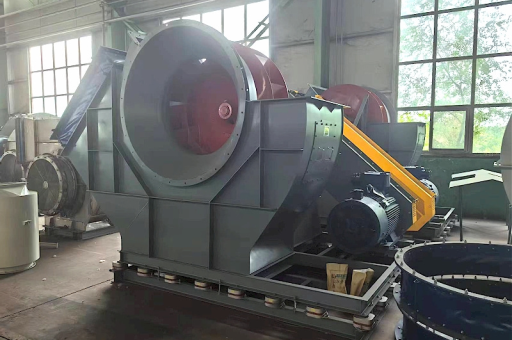
A Double Inlet Coupling Driven Backward Centrifugal Blower High Pressure system is a specialized air-moving device engineered for demanding industrial environments. Unlike standard centrifugal fans, this design features two symmetrical air inlets, a backward-curved impeller, and a coupling mechanism that connects the motor to the fan shaft. The combination delivers exceptionally high static pressure, stable airflow, and mechanical flexibility.
In practical terms, such blowers are often referred to as double-inlet backward-curved centrifugal fans with belt or coupling drive. They are widely used in HVAC systems, pneumatic conveying, combustion air supply, dust extraction, and process ventilation where pressure requirements exceed 5,000 Pa (20 in w.g.). The "double inlet" configuration allows the impeller to draw air from both sides, effectively doubling the intake area without increasing rotational speed, which reduces inlet losses and enhances volumetric efficiency.
Core Design and Mechanical Architecture
Impeller Geometry (Backward-Curved Blades)
The backward-curved impeller is the heart of this blower. Blades curve away from the direction of rotation, which reduces air velocity at the blade exit. This design yields higher static pressure efficiency—typically 75% to 85%—compared to forward-curved or radial types. The backward curvature also prevents pressure surges and provides non-overloading power characteristics: if system resistance increases, the motor draws less current instead of overheating.
Double Inlet Configuration
Both sides of the impeller are open to intake ducts. This symmetry eliminates axial thrust, reduces bearing load, and improves flow distribution. In single-inlet designs, the motor must be positioned on one side, creating an unbalanced air path. With double inlets, the fan can be mounted between two plenums or directly in a duct system, offering greater layout flexibility.
Coupling-Driven Transmission
Rather than direct drive (impeller mounted on motor shaft), a coupling drive uses a flexible or rigid coupling to connect the motor to the fan shaft. In some designs, a belt-and-pulley system is used. The coupling provides several advantages:
- Motor can be positioned remotely for heat or hazard isolation.
- Speed adjustment via pulley ratio changes (variable without VFD).
- Shock load absorption protects motor bearings.
- Easier maintenance—motor can be replaced without disturbing the impeller.
High-Pressure Housing
The housing is typically fabricated from heavy-gauge steel or stainless steel, reinforced with internal stiffeners. The discharge volute is designed for high-pressure recovery, often with a cut-off angle optimized to minimize turbulence. Inlet cones (venturi-type) are precisely aligned to the impeller eye to reduce pre-swirl and cavitation noise.
How It Compares to Single-Inlet and Forward-Curved Designs
| Feature | Double Inlet Backward (Coupling) | Single Inlet Forward Curved | Single Inlet Backward (Direct) |
|---|---|---|---|
| Inlet Area | 2x (both sides) | 1x (motor side blocked) | 1x |
| Static Pressure Capability | Very high (up to 15,000 Pa) | Low to medium (under 3,000 Pa) | High |
| Efficiency at high pressure | 78–85% | 55–65% | 70–78% |
| Overload risk | Non-overloading | Overloading possible | Non-overloading |
| Noise level | Lower due to symmetrical flow | Higher due to turbulence | Moderate |
| Maintenance access | Easy (coupling disconnects) | Motor inside housing | Motor removal required |
For applications requiring double inlet coupling driven backward centrifugal blower high pressure performance, the backward-curved coupling design is clearly superior when pressure thresholds exceed 5,000 Pa and efficiency is critical.
High-Pressure Performance Characteristics
Pressure-Volume Curve
A typical P-Q curve for this blower shows a steep, stable downward slope. Unlike forward-curved fans, which have a "dip" near the free-delivery point, backward-curved designs produce a consistent pressure rise as flow decreases. This characteristic is essential for systems with variable resistance, such as baghouse filters or pneumatic conveyors.
System Resistance Matching
To operate at peak efficiency (BEP – Best Efficiency Point), the system resistance curve should intersect the blower curve near 70–80% of wide-open flow. In double-inlet designs, because the impeller is fed from both sides, the velocity profile across the blade inlet is more uniform, reducing recirculation losses that normally degrade high-pressure performance.
Temperature and Altitude Corrections
High-pressure blowers are often used in hot or high-altitude environments. Standard performance ratings (at 20°C, sea level, 1.2 kg/m³ air density) must be corrected. A coupling-driven blower can be equipped with a motor rated for higher ambient temperatures without derating the fan itself, since the motor is isolated via the coupling.
Coupling-Driven vs. Direct-Drive Systems: Pros and Cons
| Coupling-Driven | Direct-Drive |
|---|---|
| Motor can be placed outside the airstream | Motor exposed to air/gas temperature and corrosive particles |
| Speed change via pulley replacement (no VFD needed) | Speed fixed to motor RPM unless using VFD |
| Easier alignment and maintenance | Requires precise shaft alignment; impeller removal often requires motor disassembly |
| Higher initial cost (coupling, guard, pulleys) | Lower initial cost, simpler construction |
| Acceptable for explosive or humid environments | Not recommended for explosive atmospheres unless motor is ATEX-rated and isolated |
For double inlet coupling driven backward centrifugal blower high pressure systems, the coupling drive is almost always preferred when the process fluid is hot, corrosive, or combustible.
Critical Selection Criteria for Industrial Environments
When specifying a double inlet backward centrifugal blower with coupling drive, consider the following:
- Pressure Requirement: Confirm required static pressure at desired flow. Use 15–20% safety factor for duct losses over time.
- Air or Gas Temperature: Ensure impeller material (steel, SS304, SS316, or aluminum) and housing seals are rated for maximum operating temperature.
- Particulate Load: For dirty gases, backward-curved blades resist material buildup better than forward-curved or radial blades.
- Motor Power and Coupling Torque: Calculate shaft power (P = Q × Δp / η). Select coupling with 1.5x service factor.
- Sound Level: Double inlet designs are inherently quieter than single inlet. Check ISO 13347 or AMCA 301 sound data.
- Mounting and Space: Plan for inlet duct connections on both sides. Ensure access for belt tensioning and bearing lubrication.
Common Questions and Expert Answers (Q&A)
Q1: Why is backward-curved better than forward-curved for high pressure?
Backward-curved blades generate higher static pressure per impeller diameter. They also have a non-overloading power curve, meaning the motor cannot be overdriven even if the system pressure drops—this protects against burnout.
Q2: Can I convert a single-inlet blower to double-inlet?
Not practically. The housing, shaft length, and impeller are designed specifically for double inlet. Retrofitting would require a new shaft, new housing, and new impeller.
Q3: How often should the coupling be inspected?
For belt-driven couplings, check belt tension and alignment every 500 operating hours. For flexible jaw couplings (spider), inspect for wear annually. Always follow the manufacturer’s maintenance schedule.
Q4: What pressure range is considered "high pressure" for this blower type?
Industry standard: above 5,000 Pa (20 in w.g.). Some heavy-duty models reach 15,000 Pa (60 in w.g.) or more.
Q5: Which material is best for corrosive gas applications?
Stainless steel 316L for the impeller and housing. The coupling must be non-sparking (aluminum or bronze) in flammable environments.
Q6: Can the inlet be dampened for flow control?
Yes, but inlet box dampers or variable inlet vanes (VIVs) are preferred. Throttling the discharge reduces efficiency.
Future Trends and Technological Innovations
Smart Couplings with Torque Sensors
New coupling designs incorporate strain gauges or torque transducers, allowing real-time monitoring of fan load and early detection of impeller imbalance or bearing failure.
Computational Fluid Dynamics (CFD) Optimization
Manufacturers now use CFD to fine-tune the double inlet volute shape and blade angle, achieving efficiencies exceeding 86% for high-pressure models.
Direct-Drive High-Speed Motor Alternatives
Though coupling-driven remains dominant for high pressure, some OEMs offer permanent magnet synchronous motors (PMSM) at speeds up to 6,000 RPM, matching the performance of belt-driven units without coupling losses.
Lightweight Composite Impellers
Carbon-fiber-reinforced polymer (CFRP) impellers reduce rotational inertia, lowering starting torque and allowing smaller couplings and motors.
IoT-Enabled Predictive Maintenance
Vibration and temperature sensors mounted on the coupling guard transmit data to cloud platforms, enabling predictive maintenance that reduces downtime by up to 30%.
Conclusion: Why This Configuration Matters for High-Pressure Ventilation
The Double Inlet Coupling Driven Backward Centrifugal Blower High Pressure configuration represents a mature yet continuously evolving technology. By combining the aerodynamic benefits of backward-bladed impellers with the mechanical flexibility of coupling-driven transmission and the flow advantages of dual inlets, this blower type delivers reliable, efficient, and maintainable operation in the most challenging industrial settings.
Whether you are designing a cement plant dust collection system, a biomass boiler combustion air supply, or an explosion-proof ventilation network, this design provides the highest static pressure per unit of energy consumed. Its non-overloading power curve and symmetrical intake make it a preferred choice among mechanical engineers and plant operators alike.
For further technical consultation or to download performance curves, always refer to the manufacturer’s certified data for your specific model. And remember: the correct selection and installation of a double inlet coupling driven backward centrifugal blower high pressure system can reduce lifecycle costs by 20–40% compared to oversimplified single-inlet alternatives.





