
This article's table of contents introduction:
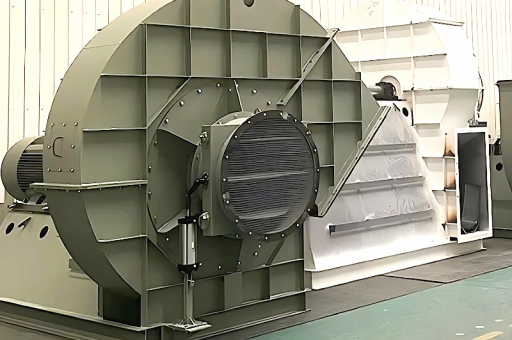
- What is this fan?
- Key Features & Specifications
- Typical Applications
- How to Select or Identify This Fan
This sounds like you are looking for specifications, features, or applications for a heavy-duty, energy-efficient, forward-curved, high-pressure centrifugal fan.
Here is a detailed breakdown of what this type of fan is, its key features, and where it is typically used.
What is this fan?
This is a specific type of centrifugal fan designed for industrial and commercial applications requiring high static pressure (to push air through long ducts or filters) and high volume, while minimizing energy consumption.
- Heavy Duty: Built with robust materials (thicker steel, reinforced shafts, heavy-duty bearings) to withstand harsh environments, continuous operation, and vibration.
- Energy Efficiency: Designed with aerodynamically optimized impellers and housings (e.g., backward-inclined or airfoil blades) to reduce horsepower requirements compared to older, less efficient models. Often features premium-efficiency motors.
- Forward Curved (FC) vs. Backward Curved: This is a critical distinction. Your input says "Forward" . Let's clarify:
- Forward Curved (FC): Blades curve in the direction of rotation. They are lower speed for a given pressure and volume, quieter, and smaller. However, they are less efficient (usually 60-75%) and have a "non-overloading" horsepower curve (power draw increases as pressure decreases, which can overload the motor if the system is unstable).
- Backward Inclined/Airfoil (BI/BA): Blades curve away from rotation. These are the gold standard for energy efficiency (usually 75-85%+). They are typically used in heavy-duty high-pressure applications.
- Correction/Clarification: If you truly need "heavy-duty energy efficiency" and "high pressure" , a Backward Inclined (BI) or Airofoil (AF) fan is almost always chosen over a Forward Curved fan. A Forward Curved fan is better for lower-pressure, high-volume residential/commercial HVAC. The market for heavy-duty, high-pressure, high-efficiency fans almost exclusively uses Backward Curved or Airfoil designs.
Assuming you mean a high-efficiency, heavy-duty fan (likely Backward Curved) for high pressure, here are the key features and specs:
Key Features & Specifications
-
Construction:
- Material: Heavy-gauge steel (or stainless steel for corrosive environments). Welded construction for durability.
- Housing: Reinforced, often split for easier maintenance. Inlet and outlet flanged.
- Wheel/Impeller: Robust, dynamically balanced to minimize vibration. For high pressure, an Airfoil (hollow, aerodynamic blade) or Backward Inclined (flat or curved plate) wheel is standard.
- Shaft & Bearings: Oversized, solid steel shaft. Grease-lubricated or oil-lubricated pillow block bearings designed for heavy radial and thrust loads.
- Drive: Typically belt-driven to allow for speed adjustment (RPM) to fine-tune performance to system demand. Direct drive is also available.
-
Energy Efficiency Features:
- High-Efficiency Motor: NEMA Premium® or IE4/IE5 rated motors (e.g., >95% efficiency).
- Aerodynamic Design: Low-loss inlets (venturi), streamlined scroll housing, and high-efficiency impeller blades minimize turbulence and drag.
- VFD Ready: Designed to be paired with a Variable Frequency Drive (VFD) for precise speed control, further boosting energy savings by matching airflow to actual demand.
-
Performance Metrics (Typical for Heavy-Duty High Pressure):
- Pressure: Capable of 10" to 40"+ w.g. (Water Gauge) (approx. 2.5 - 10 kPa) or more in heavy-duty configurations.
- Volume: From a few thousand CFM to over 100,000 CFM for industrial sizes.
- Efficiency: >80-85% static efficiency for a well-designed Backward Curved/Airfoil fan.
Typical Applications
These fans are workhorses in demanding environments:
- Industrial HVAC: Large factories, warehouses, clean rooms.
- Process Air: Drying ovens, material conveying (pneumatic), combustion air for boilers/furnaces.
- Pollution Control: Baghouses, scrubbers, and dust collection systems requiring high static pressure to draw air through restrictive filters.
- Mining & Tunneling: Ventilation systems for deep tunnels or mines.
- Power Generation: Cooling towers, boiler forced draft/induced draft.
How to Select or Identify This Fan
If you are buying or specifying one, you will need:
- Required Airflow (CFM or m³/h)
- Required Static Pressure (in w.g. or Pa)
- Air Density / Temperature (for high-temp or altitude applications)
- Operating Environment (dust, humidity, corrosive gases)
- Motor Power Requirement (HP or kW) – This is critical for energy efficiency.
Word of Caution on "Forward Curved" for this description: If a salesperson offers you a Forward Curved fan for a "heavy duty high pressure" application that needs "energy efficiency," be very skeptical. A Forward Curved fan will be:
- Larger for the same duty.
- Less efficient (wasted energy).
- Prone to motor overload if the system pressure drops unexpectedly.
The correct type for high efficiency and high pressure is almost always a Backward Inclined (BI) or Airfoil (AF) design.
To get a precise recommendation, please provide:
- Target CFM and static pressure.
- Application (e.g., "Dust collector on a cement plant").
- Ambient conditions (temperature, dust, chemicals).





