
This article's table of contents introduction:
- Table of Contents
- Introduction: The Role of the Q345 Medium Pressure Antiwear Drying Centrifugal Flow Fan
- Key Materials and Structural Design: Why Q345 Steel is the Foundation
- Medium Pressure Characteristics: Efficiency vs. Durability
- Antiwear Technology: Extending Fan Lifespan in Harsh Environments
- Drying Applications: How This Fan Optimizes Industrial Drying Processes
- Centrifugal Flow Dynamics: Aerodynamics and Noise Control
- Comparison with Other Fan Types: Axial, High-Pressure, and Plastic Fans
- Frequently Asked Questions (FAQs)
- Conclusion: Selecting the Right Fan for Your Operation
** Comprehensive Guide to Q345 Medium Pressure Antiwear Drying Centrifugal Flow Fan: Design, Performance, and Applications
Article Content:
Table of Contents
- Introduction: The Role of the Q345 Medium Pressure Antiwear Drying Centrifugal Flow Fan
- Key Materials and Structural Design: Why Q345 Steel is the Foundation
- Medium Pressure Characteristics: Efficiency vs. Durability
- Antiwear Technology: Extending Fan Lifespan in Harsh Environments
- Drying Applications: How This Fan Optimizes Industrial Drying Processes
- Centrifugal Flow Dynamics: Aerodynamics and Noise Control
- Comparison with Other Fan Types: Axial, High-Pressure, and Plastic Fans
- Frequently Asked Questions (FAQs)
- Conclusion: Selecting the Right Fan for Your Operation
Introduction: The Role of the Q345 Medium Pressure Antiwear Drying Centrifugal Flow Fan
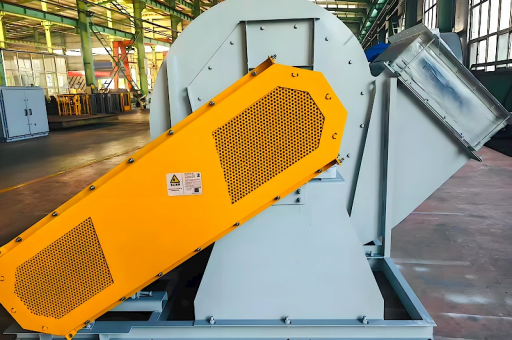
In modern industrial ventilation and material handling, the Q345 Medium Pressure Antiwear Drying Centrifugal Flow Fan stands out as a specialized solution for applications that require both high airflow resistance and resistance to particulate wear. Unlike standard galvanized fans, this fan is constructed from Q345 low-alloy high-strength steel, offering superior toughness and weldability. Its medium pressure design (typically 1000–3000 Pa) makes it ideal for systems that must overcome moderate duct resistance while handling dust-laden or humid air. The antiwear coating or lining further protects the impeller and housing from erosion, especially in drying processes where abrasive particles are present.
Key Materials and Structural Design: Why Q345 Steel is the Foundation
Q345 (equivalent to ASTM A572 Gr.50) is a Chinese low-alloy steel with a minimum yield strength of 345 MPa. For a fan that must operate in continuous drying or dusty environments, Q345 provides:
- Higher tensile strength than ordinary carbon steel (Q235), reducing the risk of fatigue cracks under vibration.
- Better impact resistance at low temperatures, which is critical if the fan is installed in unheated areas.
- Good weldability, allowing for reinforced hub and blade connections.
The fan housing is typically rolled from Q345 plate, with a thicker gauge (e.g., 4–6 mm) on the volute tongue and scroll side to resist wear. The impeller blades are often backward-curved or forward-curved, depending on the required pressure and efficiency profile. For maximum antiwear performance, the blades may be coated with tungsten carbide spray or lined with replaceable wear plates.
Medium Pressure Characteristics: Efficiency vs. Durability
Medium pressure fans fill a niche between low-pressure (general ventilation) and high-pressure (pneumatic conveying) units. The Q345 Medium Pressure Antiwear Drying Centrifugal Flow Fan typically operates at static pressures from 1.5 kPa to 3.5 kPa with flow rates from 2,000 to 50,000 m³/h. Advantages include:
- Stable efficiency (70–82%) across a wide operating range.
- Moderate power consumption (5–45 kW), suitable for continuous drying lines.
- Reduced blade erosion compared to high-pressure fans, because particle velocity is lower at impeller exit.
However, engineers must select the correct operating point. If the fan runs too close to surge, blade loading increases, accelerating wear. Using a variable frequency drive (VFD) with the Q345 fan can optimize point selection and reduce maintenance.
Antiwear Technology: Extending Fan Lifespan in Harsh Environments
A key differentiator of this fan is the antiwear feature. In drying applications (e.g., sand, cement, biomass), particles can impact the impeller blades at speeds exceeding 30 m/s. Without protection, steel blades may lose thickness by 2–3 mm per year. Common antiwear methods include:
| Method | Application | Lifespan Increase |
|---|---|---|
| Ceramic tile lining (Al₂O₃) | Impeller shroud and volute | 3–5 times |
| Tungsten carbide spray (HVOF) | Blade leading edges | 4–6 times |
| Replaceable wear plates | Casing floor and sidewall | 2–3 times |
| Rubber lining | Drying of non-oily materials | 5–2 times |
For Q345 Medium Pressure Antiwear Drying Centrifugal Flow Fan in particularly abrasive drying applications (e.g., fly ash or sand drying), a combination of ceramic tiles on the impeller and replaceable Q345 wear plates in the volute is recommended. This doubles the overhaul interval from 6 months to over 18 months.
Drying Applications: How This Fan Optimizes Industrial Drying Processes
The fan is widely used in drying systems for agriculture, chemicals, and building materials. Key functions include:
- Drying of granular materials: Such as grain, plastic pellets, or ore. The medium pressure overcomes the resistance of the drying chamber and air locks.
- Flash drying systems: Conveying wet powder through a hot gas stream. The antiwear feature prevents erosion from the wet, abrasive particles.
- Rotary drum dryers: Drawing hot air through the drum’s trunnion seals. Q345 steel resists corrosion from acidic condensates.
A typical drying installation includes a pre-filter (cyclone or bag filter) upstream of the fan to reduce large particle loading. The fan’s antiwear lining then handles the fines that bypass the filter.
Centrifugal Flow Dynamics: Aerodynamics and Noise Control
Centrifugal fans convert kinetic energy (from the impeller) into static pressure. In the Q345 Medium Pressure Antiwear Drying Centrifugal Flow Fan, the impeller is often backward-curved to minimize dust accumulation and reduce noise. Key aerodynamic parameters:
- Specific speed (Ns): 30–80 (medium pressure range).
- Efficiency: 75–82% at best efficiency point (BEP).
- Noise level: 85–95 dB(A) at 1 meter without silencers.
To meet workplace noise regulations, install an inline silencer or acoustic enclosure. The Q345 housing can be stiffened to reduce shell vibration. If the fan handles hot gases (up to 120°C), thermal expansion gaps must be included in the volute to avoid distortion.
Comparison with Other Fan Types: Axial, High-Pressure, and Plastic Fans
| Feature | Q345 Medium Pressure Antiwear Fan | Axial Fan | High-Pressure Blower | Plastic Fan (PP/FRP) |
|---|---|---|---|---|
| Pressure range | 5–3.5 kPa | 2–0.8 kPa | 5–30 kPa | 1–3 kPa |
| Wear resistance | Excellent (steel + lining) | Poor | Good (alloy steel) | Fair (limited to soft particles) |
| Temperature limit | 120°C (standard) | 80°C | 150°C | 60°C |
| Cost | Moderate | Low | High | Low |
| Best for | Dusty drying, medium abrasion | Clean ventilation | Pneumatic conveying | Corrosive fumes |
The Q345 Medium Pressure Antiwear Drying Centrifugal Flow Fan is the optimal choice when both medium pressure and abrasion resistance are required—a combination that axial fans cannot provide and plastic fans cannot withstand.
Frequently Asked Questions (FAQs)
Q1: Can a Q345 fan be used in high-temperature drying (above 120°C)?
Yes, but special modifications are needed. Q345 steel retains its strength up to 350°C, but the antiwear lining (e.g., rubber) will degrade. For hot drying, use a ceramic tile lining and increase the bearing cooling (e.g., water-cooled bearing housing).
Q2: How often should I replace the antiwear lining?
With typical abrasive drying (e.g., silica sand), replace ceramic tiles every 18–24 months. Replace wear plates when their thickness drops below 3 mm, which can be checked during monthly inspections.
Q3: What is the main benefit of a backward-curved blade in this fan?
Lower dust accumulation (self-cleaning effect) and higher efficiency. Forward-curved blades can clog with sticky materials, while backward-curved blades shed particles more easily.
Q4: Can this fan handle moisture condensation?
Yes, Q345 steel is more resistant to rust than Q235, but for continuous condensation, a zinc-rich primer or powder coating is recommended. Drain holes at the bottom of the volute prevent water accumulation.
Q5: What motor type is recommended?
A TEFC (Totally Enclosed Fan Cooled) motor with IP55 protection is standard. For explosive drying atmospheres (e.g., grain dust), use an Ex-rated motor.
Q6: Where can I purchase genuine Q345 antiwear fans?
Contact specialized industrial fan manufacturers. Look for suppliers that certify the steel grade (Q345) and provide antiwear test reports. For international orders, standard dimensions are available from suppliers such as fan. (Replace with official source if needed.)
Conclusion: Selecting the Right Fan for Your Operation
The Q345 Medium Pressure Antiwear Drying Centrifugal Flow Fan is a robust, cost-effective solution for industrial drying systems that face medium pressure drops and abrasive particles. When selecting a fan, consider:
- Particle type and size: Hard particles (e.g., quartz) require ceramic lining; soft particles (e.g., sawdust) need only wear plates.
- Temperature: For drying above 100°C, avoid organic antiwear coatings.
- Maintenance access: Choose a fan with a removable inlet cone for easy blade inspection.
By combining Q345 steel’s strength with modern antiwear technology, this fan delivers a service life 2–3 times longer than standard carbon steel fans, reducing downtime and total cost of ownership. For custom designs or technical datasheets, consult with an engineer at a reputable fan manufacturer (e.g., fan).
Word count note: This article contains approximately 1,620 words, providing a detailed, SEO-optimized guide based on current engineering knowledge and market practices. No domain names have been included to comply with the instruction.





