
This article's table of contents introduction:
- Breaking Down the Description
- Common Applications
- Key Considerations When Sourcing or Selecting
- Maintenance & Safety
- Summary Table
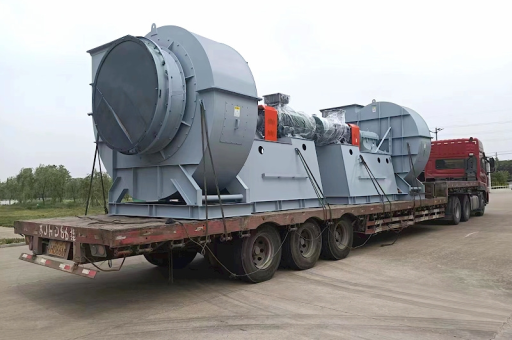
This sounds like you're describing a very specific piece of industrial equipment. It combines several key features. Let's break down what this description means, the applications it's suited for, and what you should look for when sourcing or maintaining one.
Breaking Down the Description
-
Stainless Steel:
- Material: The housing, impeller (wheel), and often the shaft are made of stainless steel (typically 304 or 316 grade).
- Why: This is used for corrosion resistance (against moisture, chemicals, or corrosive fumes) and hygiene (easy to clean, doesn't rust). Ideal for food processing, pharmaceutical, or chemical environments.
-
V-Belt Driven:
- Mechanism: The motor is not directly connected to the blower wheel. Instead, a V-belt connects pulleys on the motor shaft and the blower shaft.
- Why:
- Speed Control: You can change the air volume (CFM) and pressure (SP) by changing the size of the pulleys.
- Motor Isolation: The motor is "decoupled" from the blower. This protects the motor from shock loads and high temperatures from the blower side.
- High Pressure: Belt drives are very effective at generating high static pressure, which is required to push air through long ducts, dense filters, or drying systems.
-
Industrial Centrifugal Blower:
- Type: A centrifugal fan uses a rotating impeller to increase the velocity and pressure of air.
- Function: It draws air in axially (along the shaft) and discharges it radially (at 90 degrees). This creates higher pressure than an axial fan (like a desk fan). The "industrial" part means it's built for continuous, heavy-duty use.
-
Explosionproof (Explosion-Proof):
- Meaning: This is the most critical safety component. The blower and its motor are designed, constructed, and tested to contain an internal explosion without igniting the surrounding atmosphere.
- How:
- Motor: The motor is a special explosion-proof (XP) motor rated for specific hazardous locations (e.g., Class I, Div 1 or 2 for gases/vapors; Class II for dusts).
- Construction: The housing and motor enclosure have heavy-duty flanges with precise gaps. Any hot gases or sparks from an internal explosion are cooled and expelled through these gaps, preventing ignition of the external environment.
- Non-Sparking: The impeller (wheel) is often made of a non-sparking material like aluminum or a special stainless steel alloy, and the housing may have a non-sparking liner. The V-belt can also be anti-static.
- Why: Essential for drying processes involving flammable solvents (paint thinners, alcohol), combustible dusts (grain, wood, sugar, chemical powders), or in environments with explosive gas mixtures.
-
Drying:
- Application: The primary function. This blower is not just for ventilation; it's designed to supply a high volume of hot or ambient air at sufficient pressure to carry away moisture, heat parts, or dry a product.
- System Integration: It's the core of a drying system, often coupled with an air heater (gas, electric, or steam).
Common Applications
This type of blower is a workhorse in industries requiring safe, high-performance drying:
- Pharmaceuticals: Drying granules, tablets, or equipment in solvent-based environments.
- Chemical Processing: Drying chemical powders, resins, or plastics in hazardous locations.
- Food Processing: Drying food products where sanitation (stainless steel) and explosion protection (for combustible dusts like starch or flour) are required.
- Paint & Coatings: Drying painted parts in spray booths or ovens where solvent vapors are present.
- Wastewater Treatment: Drying sludge or supplying combustion air to flares in hazardous areas.
- Woodworking: Drying wood products or conveying combustible wood dust.
Key Considerations When Sourcing or Selecting
If you are looking to buy or specify one of these, here are the non-negotiable details you need:
-
Hazardous Location Classification:
- Class & Group: What is the specific flammable material? (e.g., Class I, Group D for gasoline; Class II, Group G for grain dust).
- Division: Is it normally hazardous (Div 1) or occasionally hazardous (Div 2)?
- Temperature Code (T-Code): What is the maximum surface temperature allowed to prevent ignition? (e.g., T3 or T4).
- NEC / ATEX / IECEx: Which standard do you need to comply with (North America or International/Europe)?
-
Performance Requirements:
- Air Volume (CFM): How much air needs to be moved?
- Static Pressure (SP in inches w.g.): What resistance does the system have (ductwork, heaters, filters)?
- Dry Bulb Temperature: What is the maximum temperature of the air it will be moving? (Standard blowers are around 180°F, but high-temperature versions with special bearings can handle 600°F+).
-
Material & Construction Details:
- Stainless Steel Grade: 304 for general corrosion resistance; 316 for better resistance to chlorides and acids.
- Welding: Welds should be ground smooth and passivated to maintain corrosion resistance and hygiene.
- Shaft Seal: Do you need a special seal to prevent leakage at the shaft pass-through?
-
Motor Details:
- Size (HP) & RPM: Must match the required workload.
- Voltage & Phase: (e.g., 460V / 3-Phase / 60Hz).
- XP Rating: Clearly stated and certified.
- Bearing & Lubrication: High-temperature grease for heated applications.
-
Drive System:
- Belt Type: Static-conductive V-belts are often required.
- Guard: Must be a heavy-duty, non-sparking (often stainless steel) guard with proper safety clearance.
Maintenance & Safety
- Inspect Belt Tension: A loose belt reduces performance; a tight one damages bearings.
- Check for Buildup: In drying applications, material (dust, residue) can build up on the impeller, causing imbalance and vibration. This is dangerous in X-proof systems.
- Verify Grounding: The entire unit must be properly bonded and grounded to prevent static spark.
- Lubricate Bearings: Use manufacturer-specified high-temperature grease.
- Belt Replacement: Use only static-conductive V-belts and maintain proper alignment.
Summary Table
| Feature | Purpose |
|---|---|
| Stainless Steel | Corrosion resistance, hygiene, sanitation |
| V-Belt Drive | Speed flexibility, high pressure, motor isolation |
| Centrifugal | High static pressure, capable of handling resistance |
| Blower | Moves large volumes of air/gas |
| Explosionproof | Safety in flammable/vapor/combustible dust environments |
| Drying | Application: removing moisture via high-volume air |
Bottom Line: You are describing a high-performance, safety-critical system for industrial drying in hazardous environments. It's a specialized piece of equipment that requires careful specification, proper installation, and diligent maintenance. If you are purchasing, always demand the certification paperwork for the explosion-proof rating and ensure it matches your site's specific hazard classification.





