
This article's table of contents introduction:
- Table of Contents (Directory Guide)
- Executive Summary: Why Induced Draft Fans Matter in Cement Production
- Understanding the Basics: What is an Induced Draft Fan?
- The High-Volume, High-Performance Imperative
- Key Design Features for Cement Plant Applications
- Operational Benefits: Energy Savings and Reliability
- Common Challenges and Troubleshooting
- Maintenance Best Practices for Longevity
- Frequently Asked Questions (FAQ)
- Conclusion: Optimizing Your Cement Plant’s Airflow System
** Maximizing Efficiency: The Role of High-Performance, High-Volume Industrial Induced Draft Fans in Cement Plants
Table of Contents (Directory Guide)
- Executive Summary: Why Induced Draft Fans Matter in Cement Production
- Understanding the Basics: What is an Induced Draft Fan?
- The High-Volume, High-Performance Imperative
- Key Design Features for Cement Plant Applications
- Operational Benefits: Energy Savings and Reliability
- Common Challenges and Troubleshooting
- Maintenance Best Practices for Longevity
- Frequently Asked Questions (FAQ)
- Conclusion: Optimizing Your Cement Plant’s Airflow System
Executive Summary: Why Induced Draft Fans Matter in Cement Production
In the highly competitive cement industry, operational efficiency directly translates to profitability. One of the most critical yet often overlooked components in a cement plant’s mechanical system is the high performance high volume industrial induced draft fan. These fans are the lungs of the plant, responsible for pulling combustion gases through the preheater, kiln, and cooling systems. Without a reliable induced draft fan, the entire pyro-processing line can face production bottlenecks, increased fuel consumption, and environmental compliance failures. This article examines how modern fan technology—specifically tailored for high-volume and high-performance demands—can radically improve a cement plant’s bottom line.
Understanding the Basics: What is an Induced Draft Fan?
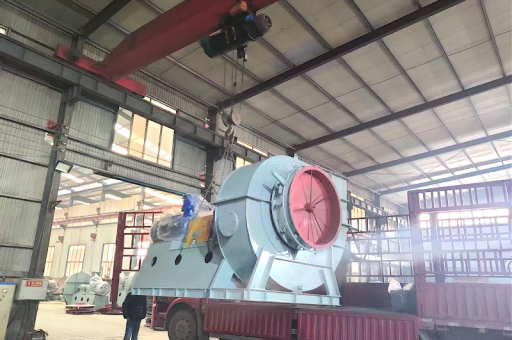
An industrial induced draft fan (ID fan) is a mechanical device installed at the end of a process gas path. In a cement plant, it creates negative pressure (vacuum) to draw hot gases, dust, and combustion byproducts from the kiln and preheater towers through the pollution control equipment (baghouses or electrostatic precipitators) and up the stack.
Unlike forced draft fans that push air into a system, the ID fan pulls gas out. This key distinction means the fan must handle extremely harsh conditions: high temperatures (often exceeding 350°C or 662°F), abrasive dust particles, and corrosive flue gases. Therefore, a high performance high volume industrial induced draft fan must be engineered for maximum durability and flow capacity.
The High-Volume, High-Performance Imperative
Cement plants are massive operations. A single large kiln can produce several thousand tons of clinker per day. To support this output, the ID fan must move an enormous volume of gas—often measured in cubic meters per hour (m³/h) or cubic feet per minute (CFM). The term "high volume" implies flow rates that can exceed 1 million m³/h.
But volume alone is insufficient. "High performance" means:
- High static pressure: Ability to overcome resistance from ductwork, dust collectors, and scrubbers.
- Variable speed control: Modern fans use VFDs (Variable Frequency Drives) to match airflow precisely to production needs.
- High efficiency: Low energy consumption per unit of gas moved.
- Low maintenance downtime: Rugged bearings, robust shaft seals, and wear-resistant impellers.
Key Design Features for Cement Plant Applications
When selecting a high performance high volume industrial induced draft fan for your cement plant, consider these engineering characteristics:
- Impeller Material & Coating: Due to highly abrasive cement dust, impellers are often made from high-strength steel with hard-facing (e.g., Stellite) or ceramic coatings to extend service life.
- Double Inlet Design: Many large ID fans are double-inlet (double-suction), allowing the fan to handle higher volumes with lower tip speeds.
- Radial or Backward-Inclined Blades: Backward-inclined blades are common for high-volume applications because they offer non-overloading power characteristics and higher efficiency.
- Water Cooling: For fans handling extremely hot gases (e.g., directly from the kiln), water-cooled bearings and shaft seals are essential.
- Corrosion Resistance: Cement process gases can contain sulfur and chlorides, so protective coatings or stainless steel construction may be necessary.
Operational Benefits: Energy Savings and Reliability
Investing in a modern, high-efficiency ID fan delivers quantifiable returns:
- Energy Reduction: A high-performance fan can reduce kiln-specific electrical consumption by 10-15%. Given that a typical 5000 TPD plant’s ID fan motor can be 3000-5000 kW, the annual savings can be substantial.
- Improved Combustion: Proper draft ensures complete fuel combustion, reducing clinker production costs and lowering NOx emissions.
- Environmental Compliance: A reliable ID fan maintains constant negative pressure at the kiln hood, preventing fugitive dust emissions and ensuring the baghouse or ESP works optimally.
- Reduced Unplanned Shutdowns: High-quality components mean fewer mechanical failures, which is critical in continuous process industries like cement.
Common Challenges and Troubleshooting
Even the best high performance high volume industrial induced draft fan can face issues. Common problems include:
| Problem | Likely Cause | Solution |
|---|---|---|
| Excessive Vibration | Impeller imbalance from dust buildup or erosion | Clean impeller; check for wear; rebalance if needed |
| Low Airflow | Damper malfunction or duct blockage | Inspect dampers; check baghouse for high pressure drop |
| Bearing Overheating | Misalignment or inadequate lubrication | Align shaft; check lube system; consider water cooling |
| Reduced Fan Efficiency | Blade erosion or coating failure | Schedule a turnaround for blade repair or replacement |
Maintenance Best Practices for Longevity
To maximize the lifespan of your industrial ID fan:
- Condition Monitoring: Install vibration sensors and temperature probes on both drive-end and non-drive-end bearings.
- Regular Balancing: Impellers should be dynamically balanced periodically, especially after cleaning.
- Lubrication Schedule: Use high-temperature grease and follow the manufacturer’s OEM intervals.
- Inlet Box Inspection: Check for dust accumulation and erosion at the inlet cone and throat.
- Belt Tension (if applicable): For belt-driven units, incorrect tension leads to premature bearing failure.
Frequently Asked Questions (FAQ)
Q1: What is the difference between an Induced Draft fan and a Forced Draft fan in a cement plant?
A: The ID fan pulls flue gas out of the kiln system (creating negative pressure), while the FD fan pushes ambient air into the cooler or burner. The ID fan handles much hotter, dustier, and more corrosive gases.
Q2: How do I select the right high-volume ID fan for my cement line?
A: You need to calculate the total gas volume (m³/h), total system pressure drop (including preheater, baghouse, and ductwork), and gas temperature. Always consult with a fan manufacturer like fan for a custom performance curve.
Q3: Can a high-performance ID fan reduce my cement plant’s carbon footprint?
A: Yes. A more efficient fan reduces electricity consumption from the grid. If your plant is burning alternative fuels, better draft control ensures complete combustion and reduces CO emissions.
Q4: How long does a cement plant ID fan typically last before major overhaul?
A: With proper maintenance (including regular balancing and coating repair), an ID fan can operate 5-8 years before needing a full rotor replacement. However, abrasive dust can reduce this to 3-5 years if not protected.
Q5: What speed control is best for a large ID fan?
A: Variable Frequency Drives (VFDs) are the industry standard. They allow precise airflow control, reduce energy consumption at partial loads, and reduce mechanical stress during startup.
Q6: Why does my ID fan vibrate after a plant shutdown?
A: Thermal expansion or contraction can cause misalignment. Additionally, dust can settle unevenly on blades. Always perform a cold alignment check and clean the rotor before restart.
Conclusion: Optimizing Your Cement Plant’s Airflow System
The high performance high volume industrial induced draft fan is not merely a utility component in a cement plant—it is a strategic asset. By ensuring proper selection, advanced design features (like wear-resistant coatings and VFD drives), and rigorous maintenance, plant managers can achieve significant energy savings, higher production uptime, and better environmental compliance. Whether you are retrofitting an older kiln line or building a new greenfield plant, prioritizing ID fan technology from reputable sources like fan will yield measurable returns over the life of the facility.
In a market where every kilowatt-hour and every ton of clinker counts, an optimized induced draft system is your competitive edge.





