
This article's table of contents introduction:
- Introduction – What Is a Heavy Duty Backward Curved Industrial Kiln Fan?
- Key Design Features of Backward Curved Centrifugal Fans
- Why CE Standard Matters for Industrial Kiln Ventilation
- Industrial Applications: Where and How These Fans Are Used
- Performance Metrics: Efficiency, Noise, and Durability
- Frequently Asked Questions (FAQs)
- Conclusion – Choosing the Right Fan for Your Kiln System
The Ultimate Guide to Heavy Duty Backward Curved Industrial Kiln Ventilation Centrifugal Fan With CE Standard: Design, Applications & FAQs**
Table of Contents
- Introduction – What Is a Heavy Duty Backward Curved Industrial Kiln Fan?
- Key Design Features of Backward Curved Centrifugal Fans
- Why CE Standard Matters for Industrial Kiln Ventilation
- Industrial Applications: Where and How These Fans Are Used
- Performance Metrics: Efficiency, Noise, and Durability
- Frequently Asked Questions (FAQs)
- Conclusion – Choosing the Right Fan for Your Kiln System
Introduction – What Is a Heavy Duty Backward Curved Industrial Kiln Fan?
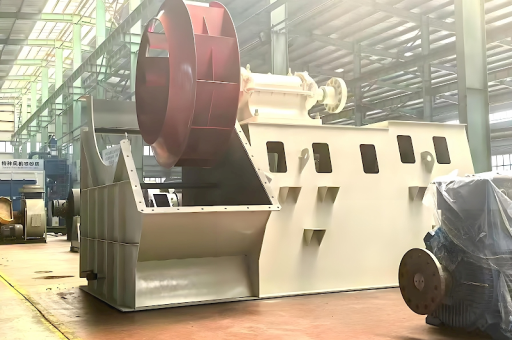
In high-temperature industrial environments such as cement kilns, ceramic firing plants, and metallurgical furnaces, reliable ventilation is not optional—it is critical. The Heavy Duty Backward Curved Industrial Kiln Ventilation Centrifugal Fan With CE Standard represents the pinnacle of thermal management engineering.
Unlike forward-curved or radial-blade designs, the backward curved (also known as backward inclined) impeller offers superior aerodynamic efficiency. Each blade curves away from the direction of rotation, reducing turbulence, minimizing energy loss, and allowing the fan to handle high static pressures without overloading the motor.
When equipped with CE certification, this fan meets stringent European safety, electromagnetic compatibility, and environmental standards. This ensures that the unit is not only powerful but also compliant with international industrial regulations.
Key Design Features of Backward Curved Centrifugal Fans
Non-Overloading Characteristic
One of the defining traits of a backward curved fan is its non-overloading power curve. As airflow decreases due to system resistance, the motor power consumption stabilizes or even drops slightly. This protects the motor from thermal burnout—a common failure mode in forward-curved designs.
High-Efficiency Impeller
The curved blades are welded or riveted onto a reinforced hub, typically made from Q235B carbon steel or 304 stainless steel for corrosion resistance. The blade angle is optimized to minimize friction losses, achieving static efficiencies in the range of 75% to 85%.
CE-Compliant Enclosure
A fan carrying the CE standard must satisfy low-voltage directive (LVD) 2014/35/EU, machinery directive 2006/42/EC, and EMC directive 2014/30/EU. This translates to:
- Proper grounding and insulation
- Guarding on rotating parts
- Noise emission levels under 85 dB(A) at 1 meter
- Material declarations free of hazardous substances (RoHS)
Temperature-Resistant Bearings
For kiln applications where gas temperatures can reach 250°C–400°C, the fan housing is typically water-cooled, and the bearings are fitted with high-temp grease or external cooling fins. Shaft seals prevent hot gases from migrating into the motor compartment.
Why CE Standard Matters for Industrial Kiln Ventilation
The CE marking is not merely a sticker—it is a legal requirement for placing industrial equipment on the European market. But beyond compliance, it offers tangible advantages:
- Safety Assurance: Fans tested to CE standards undergo rigorous mechanical and electrical testing, minimizing the risk of shaft failure, blade fracture, or electrical sparks in explosive environments.
- Interchangeability: A CE-compliant fan from one manufacturer can be seamlessly integrated with EU-standard ductwork, variable frequency drives (VFDs), and control systems.
- Insurance & Liability: Many industrial insurance policies require CE-marked equipment for coverage. Without it, plant operators may face higher premiums or denied claims.
- Global Recognition: While CE is a European standard, it is widely accepted in the Middle East, Asia, and Africa as a benchmark for quality and safety.
Example: A cement plant in Egypt installing a Heavy Duty Backward Curved Industrial Kiln Ventilation Centrifugal Fan with CE Standard can export its clinker to EU countries without additional fan re-certification.
Industrial Applications: Where and How These Fans Are Used
Cement & Lime Kilns
The fan moves preheated combustion air through the kiln, evacuates exhaust gases, and pulls clinker cooling air. Backward curved models handle the abrasive dust (particulates up to 50 g/Nm³) better than axial fans.
Ceramic & Brick Firing
In tunnel kilns and shuttle kilns, these fans maintain uniform temperature distribution. The backward curved design minimizes dust buildup on blades, reducing vibration.
Chemical & Metallurgical Furnaces
High-temperature, corrosive gas streams demand fans with coated housings. CE standard ensures the coating (e.g., epoxy or zinc-rich primer) meets emission limits for volatile organic compounds.
Power Generation (Waste Heat Recovery)
Integrated into heat exchangers, the fan recovers waste heat from kiln exhaust, boosting overall thermal efficiency by 8–12%.
Performance Metrics: Efficiency, Noise, and Durability
| Parameter | Typical Value for CE-Compliant Backward Curved Fan |
|---|---|
| Airflow Range | 5,000 – 500,000 m³/h |
| Static Pressure | 500 – 8,000 Pa |
| Operating Temperature | -20°C to +400°C (with cooling system) |
| Efficiency (peak) | 82% – 86% |
| Noise Level @ 1 m | 72 – 85 dB(A) |
| Bearing Life (L10) | 40,000 – 80,000 hours |
| Impeller Balance Grade | G6.3 or better per ISO 1940 |
Why Backward Curved Wins on Noise
Due to smoother airflow transition and absence of stall regions, backward curved fans generate 10–15 dB(A) less noise than forward-curved equivalents at the same duty point.
Frequently Asked Questions (FAQs)
Q1: Can a backward curved fan handle explosive or flammable gases close to a kiln?
Yes, but only if the fan is ATEX-rated in addition to CE. Ensure the fan model specifies “ATEX II 2G” or “II 2D” for gas or dust explosion zones. The backward curved design reduces internal sparking risk because of lower tip speeds.
Q2: How often should I perform maintenance on a heavy-duty kiln fan?
Every 3,000 operating hours with CE-standard fans, you should check:
- Bearing temperature (should not exceed 85°C)
- Impeller balance (dynamic balancing every 6 months)
- Housing seal integrity (replace gaskets if visible gas leakage)
- Motor current (should not deviate more than 5% from nameplate)
Q3: What is the difference between CE and UL certification for this fan?
CE focuses on EU Directives (low voltage, machinery safety, EMC). UL is for North America (fire and electrical safety). A fan can hold both certifications. For global projects, specify CE + UL when ordering.
Q4: Does higher efficiency always mean lower operating cost?
Not necessarily. While an 85% efficient fan saves energy compared to a 75% fan, the upfront cost may be 20–30% higher. However, for a 150 kW fan running 6,000 hours/year at 0.12 USD/kWh, an 85% efficient model saves roughly $15,000 annually versus a 75% model—paying back the extra cost within 2 years.
Q5: Can I retrofit my existing kiln ventilation system with a backward curved fan?
Usually yes. Check the existing ductwork size (inlet/outlet diameters) and static pressure curve. If your current motor is 160 kW and the new fan requires 145 kW, you can reuse the motor. Fan’s rotating assembly (impeller + shaft) often fits into standard housings with minimal modifications.
Conclusion – Choosing the Right Fan for Your Kiln System
Selecting a Heavy Duty Backward Curved Industrial Kiln Ventilation Centrifugal Fan With CE Standard is a strategic decision that impacts energy consumption, system reliability, and regulatory compliance. When sourcing such a critical component, always verify:
- The manufacturer’s CE declaration of conformity includes the specific model number.
- The fan test report confirms air performance to ISO 5801 or AMCA 210.
- The impeller material is compatible with your flue gas composition (sulfur, chlorides, etc.).
For a tailored quote, request a performance curve with your exact system resistance (static pressure at design flow), altitude correction, and temperature rise. Many global manufacturers of these fans offer custom impeller diameters from 630 mm to 2,500 mm and direct-drive or belt-driven configurations.
To explore models, visit fan or contact an industrial ventilation specialist. The investment in a CE-standard backward curved fan pays dividends in reduced downtime, lower maintenance, and safer kiln operation for decades.





