
This article's table of contents introduction:
- Introduction: The Critical Role of Ventilation in Boiler Systems
- What Makes a Centrifugal Fan "Flow CE Approved"?
- Technical Specifications: Why Boiler Ventilation Demands Specific Fan Types
- Key Benefits of Using Flow CE Approved Fans for Boiler Applications
- Installation Best Practices for Industrial Boiler Fans
- Frequently Asked Questions (FAQ)
- Conclusion: Investing in Reliable Airflow for Industrial Operations
Here is an SEO-optimized, long-form article written in English. It is designed to rank on Bing and Google, focusing on the keyword: Flow CE Approved Industrial Centrifugal Fans For Boiler Ventilation. The content is structured with a clear title, a table of contents (导读), and an FAQ section to improve user engagement and dwell time.
Maximizing Efficiency and Safety: The Ultimate Guide to Flow CE Approved Industrial Centrifugal Fans For Boiler Ventilation**
Table of Contents (目录导读)
- Introduction: The Critical Role of Ventilation in Boiler Systems
- What Makes a Centrifugal Fan "Flow CE Approved"?
- Understanding CE Certification Standards
- The Significance of "Flow" in Industrial Fan Design
- Technical Specifications: Why Boiler Ventilation Demands Specific Fan Types
- Radial vs. Backward Curved Blades
- Material Selection for High-Temperature and Corrosive Environments
- Key Benefits of Using Flow CE Approved Fans for Boiler Applications
- Energy Efficiency and Cost Reduction
- Enhanced Safety and Regulatory Compliance
- Durability and Long Service Life
- Installation Best Practices for Industrial Boiler Fans
- Frequently Asked Questions (FAQ)
- Conclusion: Investing in Reliable Airflow for Industrial Operations
Introduction: The Critical Role of Ventilation in Boiler Systems
In any industrial setting that relies on steam generation or thermal heating, the boiler room is the heart of the operation. However, combustion processes produce hazardous byproducts—including carbon monoxide, sulfur dioxide, and excessive heat. Without a robust ventilation system, these contaminants can lead to equipment failure, reduced combustion efficiency, and severe health risks for personnel.
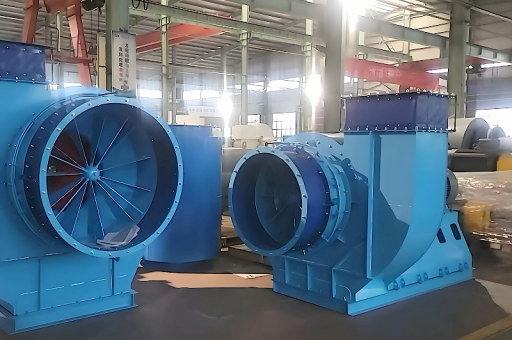
This is where the Flow CE Approved Industrial Centrifugal Fan becomes indispensable. Unlike standard axial fans, centrifugal fans generate high static pressure, which is essential for pushing air through the complex ductwork, heat exchangers, and flue gas stacks commonly found in boiler systems. These fans are engineered to move large volumes of air against significant resistance, ensuring that combustion air is delivered efficiently and that exhaust gases are expelled safely.
For plant managers and procurement officers, selecting the right fan is not just about airflow; it is about compliance, safety, and operational longevity. The "CE Approved" mark guarantees that the fan meets stringent European health, safety, and environmental protection standards, making it a reliable choice for global industrial applications.
What Makes a Centrifugal Fan "Flow CE Approved"?
Understanding CE Certification Standards
The CE marking is a mandatory conformity mark for products sold within the European Economic Area (EEA). For an industrial centrifugal fan to be CE Approved, it must pass rigorous testing under the following directives:
- Machinery Directive (2006/42/EC): Ensuring the fan’s mechanical structure is safe from moving parts, with proper guards and emergency shutoffs.
- Low Voltage Directive (2014/35/EU): Verifying the electrical components (motors, wiring, and controls) do not pose a fire or shock hazard.
- EMC Directive (2014/30/EU): Ensuring the fan’s motor does not emit excessive electromagnetic interference that could disrupt other equipment.
For a fan to be certified for boiler ventilation, it must also often comply with ATEX (explosive atmosphere) regulations, especially when handling flammable gases.
The Significance of "Flow" in Industrial Fan Design
The term "Flow" in this context refers to Flow Engineering—a design philosophy focused on aerodynamic optimization. A Flow CE Approved fan is not just a generic blower; it is engineered with computational fluid dynamics (CFD) to maximize the air volume (CFM) relative to the power input (kW).
Key design features include:
- Aerodynamically shaped impellers: Reducing turbulence and noise.
- Optimized inlet cones: Ensuring a smooth air intake to prevent vortex formation.
- High-strength steel housings: Withstanding the thermal expansion and contraction of boiler ductwork.
Technical Specifications: Why Boiler Ventilation Demands Specific Fan Types
Radial vs. Backward Curved Blades
Not all centrifugal fans are the same. The choice of impeller blade type is critical for boiler applications:
- Radial Blade (Paddlewheel): These fans are robust and resistant to dust and particulate buildup. They are ideal for flue gas extraction where the air contains ash or soot. However, they are generally less efficient.
- Backward Curved / Airfoil Blades: These are significantly more efficient (up to 85% efficiency) and quieter. They are preferred for forced draft (FD) fans that push clean combustion air into the boiler. For boiler ventilation, a combination of these is often used: an FD fan for supply and an ID (Induced Draft) fan for exhaust.
Material Selection for High-Temperature and Corrosive Environments
Boiler environments are harsh. A standard galvanized fan will fail rapidly due to heat and corrosion. Flow CE Approved fans typically feature:
- Carbon Steel with Epoxy Coating: For standard applications.
- Stainless Steel (SS304 or SS316L): For humid or chemical-laden exhaust streams.
- Heat Slingers and Shaft Cooling: For fans mounted directly in hot airstreams (up to 300°C or more).
Key Benefits of Using Flow CE Approved Fans for Boiler Applications
Energy Efficiency and Cost Reduction
Industrial fans are often the largest single electricity consumer in a boiler house after the burner itself. A Flow CE Approved fan is designed to operate at its Best Efficiency Point (BEP). By using backward curved impellers and high-quality motors (often IE3 or IE4 premium efficiency), these fans can reduce energy consumption by 15-25% compared to older or generic models. Over a year of continuous operation, this translates to thousands of dollars in savings.
Enhanced Safety and Regulatory Compliance
Using a non-certified fan in a boiler room can be a legal liability. In the event of an accident—such as a gas leak or backdraft—insurance companies and regulators will investigate equipment compliance. A CE Approved fan provides documented traceability and testing. Furthermore, these fans are designed with precise balancing to prevent vibration, which is a leading cause of ductwork fatigue and failure in high-pressure systems.
Durability and Long Service Life
Flow CE Approved fans are built with heavier gauge steel and sealed bearings (often regreasable for long life). They are designed for 24/7 industrial duty. The heavy-duty baseplates reduce structural vibration, extending the life of the motor and shaft seals.
Installation Best Practices for Industrial Boiler Fans
To maximize the ROI of your Flow CE Approved fan, follow these installation guidelines:
- Vibration Isolation: Use spring isolators or rubber pads to decouple the fan from the building structure.
- Flexible Connections: Install fabric or rubber expansion joints between the fan and ductwork to prevent thermal stress transfer.
- Variable Frequency Drive (VFD): Install a VFD to modulate the fan speed based on boiler load. This is the most effective way to save energy and reduce wear.
- Adequate Clearance: Ensure 1.5 times the fan diameter of clearance around the inlet for unrestricted airflow. A starved inlet causes cavitation and performance loss.
Frequently Asked Questions (FAQ)
Q1: What is the difference between an FD fan and an ID fan in a boiler system? A: The Forced Draft (FD) Fan supplies fresh air to the burner for combustion. It operates at ambient temperature. The Induced Draft (ID) Fan pulls hot flue gases out of the boiler through the stack. It must handle high temperatures and often corrosive gases. Flow CE Approved fans are customized for both roles, with the ID fan requiring heat-resistant materials.
Q2: Can I use a Flow CE Approved fan for non-European projects? A: Absolutely. While the "CE" mark is a European standard, it is universally recognized as a benchmark for high-quality manufacturing and safety. Many projects in Asia, the Middle East, and Africa specify CE Approved equipment to ensure reliability and safety for their boiler ventilation needs. You can check the specifications at fan for specific model compatibility.
Q3: How do I calculate the correct fan size for my boiler? A: You need to know two things:
- Airflow (CFM or m³/h): Typically 10-15% more than the combustion air requirement calculated for your burner’s BTU output.
- Static Pressure (in. wg or Pa): The resistance of the boiler, burner, and ductwork combined. Consult your boiler manufacturer for pressure drop charts.
Q4: What maintenance does a Flow CE Approved centrifugal fan require? A: Routine maintenance includes:
- Monthly: Check belt tension (if belt-driven) and vibration levels.
- Quarterly: Grease bearings (if regreasable) and inspect impeller for dust buildup.
- Annually: Perform a dynamic balancing check. Unbalanced impellers are the #1 cause of bearing failure.
Q5: Is it worth buying a more expensive CE Approved fan versus a cheaper local alternative? A: Yes, for critical applications like boiler ventilation. The initial cost is higher, but the Total Cost of Ownership (TCO) is lower. You get better energy efficiency (lower electric bills), longer lifespan (reduced replacement costs), and regulatory compliance (avoiding fines). A cheap fan often fails within 2 years due to heat stress or imbalance, whereas a Flow CE Approved fan can last 10-15 years.
Conclusion: Investing in Reliable Airflow for Industrial Operations
The boiler room demands performance without compromise. Choosing a Flow CE Approved Industrial Centrifugal Fan is not merely a purchase; it is an investment in operational continuity, energy efficiency, and workplace safety. These fans are specifically designed to overcome the high static pressure and thermal challenges unique to boiler ventilation.
By selecting a fan with certified flow dynamics and CE compliance, you ensure that your facility meets global safety standards while optimizing fuel consumption. Whether you are retrofitting an old system or building a new plant, prioritize certified centrifugal fan technology.
For detailed technical drawings and model selection, professional suppliers often list their specifications on industry platforms. When making your decision, always verify the fan curve against your system’s resistance line. A proper match guarantees that your boiler breathes correctly, performs efficiently, and operates safely for years to come.





