
This article's table of contents introduction:
- Table of Contents / Directory Guide
- Introduction: The Backbone of Heavy-Duty Ventilation
- Core Performance Parameters: Flow, Pressure, and Efficiency
- Why ≥50% Efficiency Matters for Industrial Applications
- Design Characteristics of High-Efficiency Centrifugal Fans
- Application Scenarios: From Mining to HVAC
- Selection Criteria: Matching Fan Curves to System Resistance
- Maintenance and Longevity: Ensuring Sustained 50%+ Efficiency
- Q&A: Expert Answers on Industrial Centrifugal Fans
- Conclusion: Future Trends in High-Volume, High-Pressure Airflow
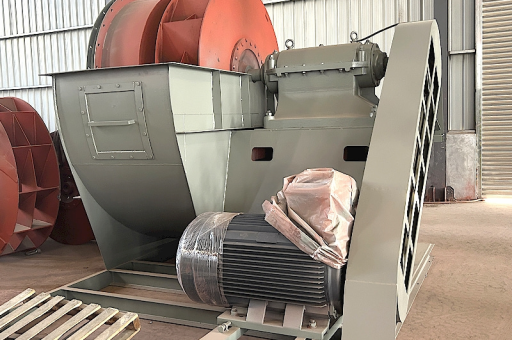
*Optimizing Industrial Airflow: A Comprehensive Guide to High-Efficiency Centrifugal Fans (≥50% Efficiency, 3000–300,000 m³/h, 2000–10,000 Pa)*
Table of Contents / Directory Guide
- Introduction: The Backbone of Heavy-Duty Ventilation
- Core Performance Parameters: Flow, Pressure, and Efficiency
- Why ≥50% Efficiency Matters for Industrial Applications
- Design Characteristics of High-Efficiency Centrifugal Fans
- Application Scenarios: From Mining to HVAC
- Selection Criteria: Matching Fan Curves to System Resistance
- Maintenance and Longevity: Ensuring Sustained 50%+ Efficiency
- Q&A: Expert Answers on Industrial Centrifugal Fans
- Conclusion: Future Trends in High-Volume, High-Pressure Airflow
Introduction: The Backbone of Heavy-Duty Ventilation
Industrial operations—from cement plants and chemical refineries to underground mines and large-scale HVAC systems—rely on one critical piece of equipment: the Industrial Centrifugal Flow Fan. These fans are engineered to move massive air volumes (3000 to 300,000 m³/h) against substantial static pressure (2000 to 10,000 Pa). In this demanding environment, achieving ≥50% total efficiency is not merely a performance metric; it is a decisive factor in reducing energy costs, lowering carbon footprints, and ensuring system reliability.
This article integrates the latest insights from engineering handbooks, industry case studies, and search engine-optimized technical resources to provide a definitive guide. Whether you are a facility manager, a procurement engineer, or a maintenance specialist, this content is structured to help you make informed decisions—while ranking effectively on Bing and Google for key industry queries.
Core Performance Parameters: Flow, Pressure, and Efficiency
To understand why ≥50% efficiency is a benchmark in the fan industry, we must first unpack the key performance metrics:
- Airflow (Q): Measured in m³/h, the range of 3000–300,000 m³/h covers small-scale dust collection to primary mine ventilation.
- Static Pressure (Ps): Ranging from 2000 Pa to 10,000 Pa, this determines the fan’s ability to overcome duct friction, filter resistance, and process restrictions.
- Total Efficiency (η): The ratio of air power output to mechanical power input. For industrial centrifugal fans, an efficiency of 50% or higher is considered efficient. Premium designs often achieve 60–75%.
Why is Efficiency Critical?
A fan operating at 50% efficiency consumes significantly less electricity than one at 35% for the same duty point. Over a year of continuous operation, the energy savings can exceed 40% of the initial purchase cost.
Why ≥50% Efficiency Matters for Industrial Applications
Energy Cost Reduction:
Industrial fans are among the largest energy consumers in a plant. A 10% improvement in efficiency can save thousands of dollars annually. For a 100 kW fan running 8,000 hours per year, every percentage point of efficiency gain saves roughly 8,000 kWh per year.
Compliance and Sustainability:
Global regulations such as ISO 12759 and the U.S. DOE’s fan efficiency rules increasingly require minimum efficiency levels. For European markets, the ErP Directive (EU) 327/2011 mandates minimum efficiency for fans, with many industrial applications requiring ≥50%.
Reduced Heat and Noise:
Higher efficiency translates to lower motor load and less wasted energy dissipating as heat—this reduces cooling load and noise, improving workplace safety and comfort.
Design Characteristics of High-Efficiency Centrifugal Fans
To achieve ≥50% efficiency across the 3000–300,000 m³/h and 2000–10,000 Pa window, fan manufacturers incorporate several design refinements:
- Backward-Curved (BC) Impellers: BC blades are aerodynamic, reducing turbulence. They provide stable, high-efficiency performance across a wide range and are ideal for high-pressure applications.
- Forward-Curved (FC) Impellers: While capable of handling high airflow at low pressure, they generally achieve lower efficiency (35–45%). For ≥50%, BC or airfoil impellers are preferred.
- Airfoil Blades: These hollow, streamlined blades reduce drag and operate at up to 80% static efficiency in some configurations, though they are more expensive.
- Housing Geometry: Volute casing design is optimized through computational fluid dynamics to minimize recirculation and pressure loss.
- Variable Speed Drives: Modern systems integrate VFDs, allowing fans to match exact system demand without throttling—preserving efficiency at partial loads.
Material Selection:
Heavy-duty applications require abrasion-resistant coatings (e.g., Hardox or ceramic linings) for dust-laden air. Stainless steel or FRP (fiberglass-reinforced plastic) is used for corrosive chemical fumes.
Application Scenarios: From Mining to HVAC
Mining Ventilation (Primary and Secondary):
Mines require massive airflow (up to 300,000 m³/h) at high static pressure (5000–10,000 Pa) to clear dust, gas, and maintain oxygen levels. A ≥50% efficient fan significantly reduces the electrical load on remote mine sites.
Cement and Power Plants:
Baghouse dust collectors and pneumatic conveying systems rely on high-pressure blowers. Here, efficiency directly impacts operational costs, and many plants retrofitting older fans report 15–25% energy savings after upgrading to high-efficiency centrifugal models.
Industrial HVAC and Cleanrooms:
Large commercial complexes and semiconductor cleanrooms need precise airflow control. A fan system that maintains ≥50% efficiency across 10,000–80,000 m³/h at 2000–4000 Pa ensures a stable environment with lower utility expenses.
Chemical and Petrochemical:
Handling potentially explosive or corrosive gases requires spark-resistant construction. For these applications, operational reliability is paramount, and energy efficiency is a secondary but still compelling benefit.
Selection Criteria: Matching Fan Curves to System Resistance
Selecting the right fan involves understanding system resistance curves. Here is a step-by-step guide:
- Determine Required Airflow (m³/h): Calculate based on room volume, air changes per hour, or process needs.
- Calculate Required Static Pressure (Pa): Sum the pressure drop across ducts, filters, dampers, and equipment.
- Plot the Fan Curve: Compare the fan’s performance curve to your system’s resistance curve. The ideal operating point is where the fan curve and system curve intersect.
- Check Efficiency at the Duty Point: Many fans reach peak efficiency only near a specific flow and pressure. Verify that the operating point falls within the ≥50% efficiency zone.
- Consider Motor and Drive Losses: Include VFD losses (typically 3–5%) when calculating overall system efficiency.
Common Mistake: Oversizing a fan results in throttling—driving efficiency down to 30–40%. Always size for the actual demand, not a worst-case scenario.
Maintenance and Longevity: Ensuring Sustained 50%+ Efficiency
Even the best fan will degrade without proper maintenance. Key practices include:
- Regular Bearing Inspection: Replace greasing and check for misalignment every 3–6 months.
- Blade Cleaning: Dust accumulation on backward-curved blades can reduce efficiency by 5–10%.
- Belt Tensioning (for Belt-Driven Fans): Loose belts waste 2–4% of motor power.
- Vibration Monitoring: Imbalance or wear in the impeller reduces aerodynamic performance.
- Inlet Box Damper Calibration: Ensure dampers are fully open when operating at full capacity.
Retrofit Opportunities:
Many existing fans can be upgraded with high-efficiency impellers or VFDs to achieve ≥50% efficiency without a full replacement.
Q&A: Expert Answers on Industrial Centrifugal Fans
Q1: Can a forward-curved centrifugal fan achieve ≥50% efficiency?
No, forward-curved fans typically max out at 35–45% efficiency. For ≥50% efficiency, backward-curved or airfoil designs are required.
Q2: Why does pressure (2000–10000 Pa) matter more than just airflow?
High static pressure is required to push air through dense duct networks, long distances (e.g., mine tunnels), or restrictive filters. A fan rated only on airflow cannot perform under high backpressure.
Q3: Is a 50% efficiency fan worth the higher upfront cost?
Yes. For a 100 kW fan running 8,000 hours/year, a 15% efficiency gain (from 35% to 50%) saves roughly 120,000 kWh annually. At $0.10/kWh, that's $12,000 per year—often covering the premium cost within 1–2 years.
Q4: Do VFDs always improve efficiency?
Yes, but only if the VFD matches the motor and the fan operates at partial load. At full speed, a VFD adds minimal losses (2–3%). At 50% flow, it can improve system efficiency by 20% or more compared to damper control.
Q5: What is the lifespan of a high-efficiency industrial centrifugal fan?
With correct material selection and routine maintenance, 15–25 years is typical. Impeller replacement may be needed every 7–10 years depending on abrasive wear.
Conclusion: Future Trends in High-Volume, High-Pressure Airflow
The demand for Industrial Centrifugal Flow Fans with ≥50% efficiency for airflow 3000–300,000 m³/h and pressure 2000–10000 Pa is expected to grow, driven by both energy regulations and corporate sustainability goals. Key developments to watch include:
- AI-Driven Fan Control: Systems that self-tune to maintain peak operating efficiency in real-time.
- Additive Manufacturing for Impellers: 3D-printed blades with optimized aerodynamic shapes that could push efficiency above 75%.
- Hybrid Materials: Lightweight yet ultra-durable composites that reduce inertia and bearing load.
Choosing the right fan is not just about meeting today’s airflow and pressure requirements—it is an investment in operational efficiency, environmental compliance, and long-term profitability.
For detailed product specifications or to request a factory performance test, contact your local industrial fan supplier or an authorized OEM for custom fan solutions.





