
This article's table of contents introduction:
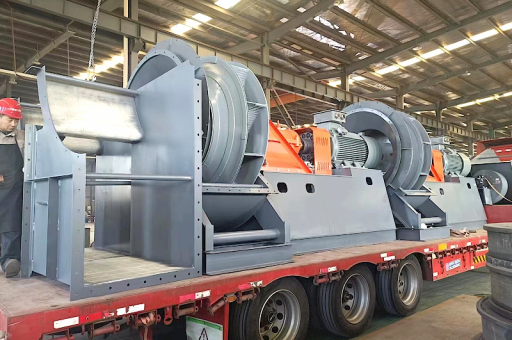
- What is this fan?
- Key Features of Backward Curved Blades for Tunnels
- Common Applications (5.5kW to 1500kW)
- Performance Specifications (Typical)
- Important Considerations for Purchase
- Summary of Benefits for your Specific Query
It appears you are looking for information on an Industrial Tunnel ID Fan (Induced Draft Fan) with Backward Curved Blades (BC), specifically with a power range of 5 kW to 1500 kW.
Here is a breakdown of what this specification means, the typical applications, and the key benefits of choosing a backward curved blade design for tunnel ventilation.
What is this fan?
- Type: Industrial Centrifugal Fan (specifically for Induced Draft / Ventilation).
- Power Range: 5.5 kW (small, auxiliary tunnels) to 1500 kW (major highway or metro tunnels).
- Blade Design: Backward Curved (BC). The blades curve away from the direction of rotation.
- Application: "ID" (Induced Draft) implies the fan is pulling air out of the tunnel (negative pressure), creating a low-pressure zone that draws fresh air in from the entrance.
Key Features of Backward Curved Blades for Tunnels
When dealing with tunnel ventilation, efficiency and reliability are critical. Backward curved blades offer several distinct advantages over forward curved or radial blades:
- High Efficiency: BC blades operate via centrifugal force rather than "scooping" air. They are generally 15-25% more efficient than forward curved fans. For a motor that runs 24/7 (like a tunnel fan), this saves significant energy costs.
- Non-Overloading Power Curve: This is the most critical safety feature for tunnel fans.
- Other fan types can "overload" (draw excessive current) if the duct/tunnel is clear. BC motors have a peak power point; after that, power decreases as airflow increases. This protects the motor from burning out if the tunnel blockage is suddenly removed.
- Low Noise: The aerodynamic profile of backward curved blades creates less turbulence.
- Handling Static Pressure: They are excellent for handling the high static pressure required to push air through long tunnels or against dampers.
Common Applications (5.5kW to 1500kW)
| Power Range | Typical Application | Description |
|---|---|---|
| 5 kW – 30 kW | Short road tunnels, pedestrian underpasses, mine adits. | Used for small axial or centrifugal jet fans. |
| 30 kW – 200 kW | Metro stations, medium highway tunnels, car park ventilation. | Main extraction fans for station platforms or tunnel midpoints. |
| 200 kW – 1500 kW | Major highway tunnels (e.g., Alpine tunnels), railway tunnels, hydroelectric plants. | Massive ID fans capable of moving hundreds of cubic meters of air per second. Often installed in ventilation towers. |
Performance Specifications (Typical)
For a fan in this category, you would typically look for:
- Airflow (Q): 5 m³/s to over 600 m³/s (depending on kW and size).
- Static Pressure (SP): 500 Pa (low pressure) up to 5,000 Pa (high pressure).
- Speed: Direct drive (variable frequency drive - VFD) or belt-driven.
- Material: Mild steel (painted), Corten steel (for corrosion), or Stainless Steel (for corrosive exhaust).
- Temperature Rating: Standard (80°C) or High Temperature (250°C to 400°C) for emergency smoke extraction.
Important Considerations for Purchase
If you are sourcing this fan, verify the following:
- Full Load Amps (FLA): Ensure the electrical supply matches the motor.
- Noise Constraint: Tunnel fans often need silencers (attenuators).
- Emergency Rating: If the fan is for smoke control, it must be certified to operate at high temperatures (e.g., 250°C for 2 hours).
- Mounting: Is it a horizontal or vertical installation?
- Vibration/Performance Testing: High-end tunnel fans usually require AMCA (Air Movement and Control Association) certified performance ratings.
Summary of Benefits for your Specific Query
- ✅ 1,500 kW Rating: Suitable for the largest Class 1 tunnel ventilation projects.
- ✅ Backward Curved: High efficiency (reduced energy costs) + non-overloading power curve (motor protection).
- ✅ ID Configuration: Efficient extraction of stale smoke/hot air.
Would you like assistance with:
- How to calculate the specific static pressure required for your tunnel length?
- The difference between a Belt-Driven vs. Direct-Drive fan for this power range?





