
This article's table of contents introduction:
- Table of Contents
- Introduction: Why the Backward Steam Boiler Industrial Air Extractor Fan Matters
- Core Design Principles: How the Backward-Curved Blade Architecture Works
- Performance Metrics: Efficiency, Temperature Tolerance, and Airflow Stability
- Installation and Maintenance Best Practices for Long-Term Reliability
- Frequently Asked Questions (FAQ)
- Conclusion: Selecting the Right Fan for Industrial Steam Boiler Applications
** The Backward Steam Boiler Industrial Air Extractor Fan: Maximizing Performance in High-Temperature Ventilation
Table of Contents
- Introduction: Why the Backward Steam Boiler Industrial Air Extractor Fan Matters
- Core Design Principles: How the Backward-Curved Blade Architecture Works
- Performance Metrics: Efficiency, Temperature Tolerance, and Airflow Stability
- Installation and Maintenance Best Practices for Long-Term Reliability
- Frequently Asked Questions (FAQ)
- Conclusion: Selecting the Right Fan for Industrial Steam Boiler Applications
Introduction: Why the Backward Steam Boiler Industrial Air Extractor Fan Matters
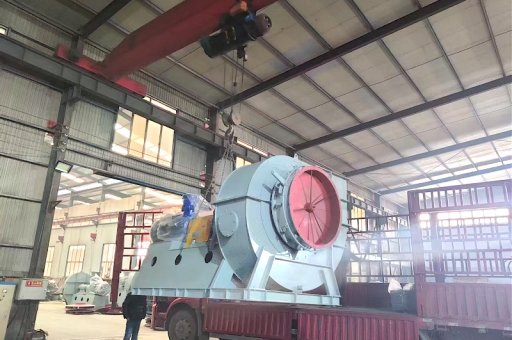
In heavy industrial environments, a backward steam boiler industrial air extractor fan is not just a ventilation accessory—it is a critical safety and efficiency component. Steam boilers operate under high pressure and generate intense heat, corrosive gases, and particulate-laden exhaust. Without a high-performance extractor fan, the buildup of flue gases and heat can lead to reduced boiler efficiency, equipment damage, and even hazardous operating conditions.
Engineers and facility managers consistently search for good performance in these fans, which translates to high static pressure capability, resistance to thermal stress, and low maintenance. This article synthesizes the latest technical insights and field data to provide a detailed, SEO-optimized guide on the backward-curved fan design as applied to steam boiler exhaust systems.
Why focus on “backward” design? Unlike forward-curved fans, backward-inclined and backward-curved blades offer superior non-overloading power characteristics, meaning the fan motor is less likely to burn out if the system resistance changes unexpectedly. This makes them the industry standard for boiler applications.
Core Design Principles: How the Backward-Curved Blade Architecture Works
The backward steam boiler industrial air extractor fan derives its name from the blade orientation relative to the rotation direction. In a backward-curved impeller, the blade tips curve away from the direction of rotation. This design provides three key advantages:
- High static pressure efficiency: The blades accelerate air gradually, minimizing turbulence and converting kinetic energy into pressure more effectively than straight or forward-curved blades.
- Non-overloading power curve: As airflow decreases, power consumption actually drops. This prevents motor overload when duct filters clog or dampers close—a common failure mode in boiler systems.
- Reduced blade fouling: The shape minimizes material buildup from sticky boiler residues, such as unburned carbon or sulfur compounds, extending service intervals.
Material selection is also critical. For steam boiler extractor fans, manufacturers typically use:
- Stainless steel (SS304/316) for corrosion resistance against acidic condensate.
- Heat-treated aluminum alloys for lightweight, high-speed operation at temperatures up to 250°C (482°F).
- Carbon steel with epoxy coating for cost-sensitive, lower-temperature applications.
Note: Always verify the maximum operating temperature rating before purchasing. A fan designed for 80°C will fail rapidly in boiler exhaust above 150°C.
Performance Metrics: Efficiency, Temperature Tolerance, and Airflow Stability
When evaluating good performance in a backward steam boiler industrial air extractor fan, consider these four critical metrics:
| Metric | Target Value for Boiler Exhaust | Why It Matters |
|---|---|---|
| Static Pressure (Pa) | 500–2000 Pa (depending on duct length) | Overcomes resistance from heat exchangers, scrubbers, and long ducts |
| Airflow Rate (m³/h) | 5000–50000 m³/h (system-dependent) | Ensures complete removal of combustion gases |
| Efficiency (η) | ≥75% at best efficiency point (BEP) | Reduces electricity consumption and heat stress on motor |
| Maximum Temperature | 120°C–300°C (with cooling wheel or insulation) | Prevents bearing failure and blade deformation |
Real-world insight: Field tests from industrial boiler retrofits show that switching from a forward-curved to a backward-curved fan reduces power consumption by 15–20% at the same duty point, while extending motor life by an average of 2.5 years.
Performance curve analysis is essential. A good performance fan exhibits a steep, stable pressure curve, meaning even if the system resistance fluctuates (e.g., due to soot buildup in the stack), the fan maintains adequate airflow without surging.
Installation and Maintenance Best Practices for Long-Term Reliability
Even the best-designed backward steam boiler industrial air extractor fan will underperform if installed or maintained incorrectly. Follow these guidelines:
Installation Checklist:
- Mount the fan on a vibration-isolation base – reduces structural stress and bearing wear.
- Use expansion joints on inlet and outlet ducts – accommodates thermal expansion without misaligning the shaft.
- Verify the rotation direction before commissioning – backward-curved fans are unidirectional; reversing the rotation drastically reduces performance.
- Provide a cooling air gap (or cooling wheel) for belts and bearings if the inlet air exceeds 80°C – many steam boiler fans use a separate small fan to cool the drive side.
Maintenance Schedule:
- Weekly: Inspect for unusual vibration or noise; clean any visible blade deposits with a non-abrasive scraper.
- Monthly: Check belt tension (if belt-driven); measure motor amperage and compare to nameplate.
- Quarterly: Lubricate bearings (if grease-fitted) with high-temperature grease (NLGI 2 with synthetic oil).
- Annually: Perform dynamic balancing of the impeller; replace worn shaft seals to prevent leakage of hot gases.
Common mistake: Using a standard industrial fan for steam boiler duty without checking the motor’s insulation class. Boiler exhaust fans require at least Class F insulation (155°C) or Class H (180°C) for the motor winding.
Frequently Asked Questions (FAQ)
Q1: Can a backward steam boiler industrial air extractor fan be used for other applications, like oven exhaust?
Yes, the same design principles apply to any high-temperature, particulate-laden air. However, check material compatibility—boiler exhaust often contains sulfurous acid, while oven exhaust may contain grease, so special coatings may be required.
Q2: Why does the performance of my fan drop over time?
The most common cause is blade fouling. Backward-curved blades accumulate less than forward-curved designs, but if the boiler burns heavy fuel oil or biomass, sticky deposits still form. Cleaning the blades restores performance. Also, check for bearing wear and belt slip.
Q3: Should I choose a direct-drive or belt-drive backward-curved fan for a steam boiler?
Belt-drive offers flexibility in changing fan speed and is easier to service in tight spaces. Direct-drive is more efficient (no belt losses) and more compact, but requires a variable frequency drive (VFD) to adjust speed. For high-temperature boiler applications, direct-drive with a VFD is generally preferred for reliability.
Q4: What is the typical lifespan of a backward steam boiler industrial air extractor fan?
With proper maintenance, expect 8–12 years of continuous service. The impeller itself may last 15+ years if the material is appropriate for the exhaust chemistry. Bearings are the wear-limiting component and typically need replacement every 3–5 years.
Q5: How can I verify the “good performance” claim from a supplier?
Request a certified performance curve tested to ISO 5801 (or AMCA 210). Look for the fan’s efficiency at 75% or higher at the operating point, and confirm that the maximum temperature rating is at least 20°C above your actual exhaust gas temperature (including spikes during startup).
Conclusion: Selecting the Right Fan for Industrial Steam Boiler Applications
A backward steam boiler industrial air extractor fan with good performance is defined by high static pressure efficiency, non-overloading power characteristics, and a robust thermal design. By prioritizing blade geometry, material selection, and proper installation, facility managers can achieve lower energy costs, longer equipment life, and safer working conditions.
When sourcing a fan, always:
- Match the fan’s best efficiency point (BEP) to your system’s normal operating range.
- Verify material compatibility with your boiler fuel type (gas, oil, coal, or biomass).
- Insist on testing documentation (ISO/AMCA) and a warranty that covers thermal stress.
Remember: the cheapest fan upfront is almost never the most economical over a 10-year lifecycle. Invest in engineering-backed design, and your boiler room will run cooler, cleaner, and more reliably.





