
This article's table of contents introduction:
- What Does "Double Suction" Mean?
- Key Features of an Industrial-Grade Heavy Duty Unit
- Common Applications for This Fan
- How to Ensure You Get "True" Durability (Buying Guide)
- Summary Table for Your Specification
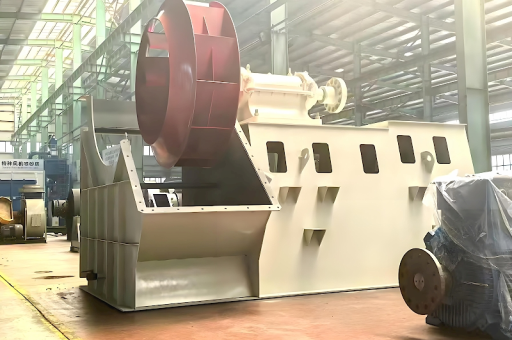
It sounds like you are describing a high-performance, industrial-grade centrifugal fan specifically engineered for dust collection and material handling applications.
Here is a breakdown of what that specification means, the key features you should expect, and how to ensure you are getting a truly "heavy duty" and "durable" unit.
What Does "Double Suction" Mean?
Unlike a standard single-suction fan (where air enters from one side), a Double Suction (or Double Inlet) fan pulls air from both sides of the impeller.
- Benefit: This effectively doubles the airflow capacity (CFM) for the same wheel diameter and speed, while reducing the axial load on the bearings.
- Typical Use: High-volume, low-to-medium pressure systems (e.g., large baghouses, central vacuum systems, or ventilation for large factories).
Key Features of an Industrial-Grade Heavy Duty Unit
For a fan to be considered "Heavy Duty" and "Durable" for dust collection, it must possess these specific characteristics:
Construction Materials (The "Toughness")
- Housing: Heavy-gauge carbon steel (typically 7-10 gauge, or thicker). For corrosive or abrasive dust, stainless steel or abrasion-resistant liners are necessary.
- Impeller: Fabricated steel (not cast) with backward-inclined (BI) or airfoil blades. These are non-clogging and more efficient for particulate handling.
- Shaft: Large diameter, oversized to prevent vibration at high RPMs.
Bearing & Drive System (The "Longevity")
- Bearings: Pillow block bearings with a high L10 life rating (50,000+ hours). Grease fittings should be externally accessible.
- Drive: Direct drive (shaft-mounted motor) or belt drive. For heavy dust, belt drive is often preferred because the motor can be isolated from the dirty air stream, and pulley changes allow for speed adjustments.
- Shaft Seals: Teflon lip seals or labyrinth seals to prevent dust from entering the bearings.
Performance Characteristics
- Pressure: Capable of handling static pressures from 10" to 30" WG (water gauge) or higher.
- Volume: Typically ranges from 10,000 CFM to over 100,000 CFM.
- Efficiency: Backward-inclined impellers offer 80-85% peak efficiency, reducing energy costs.
"Dust Collector" Specifics
- Spark Resistance: If handling combustible dust (wood, metal, grain), the fan must have a non-sparking construction (aluminum or bronze impeller tips or a steel wheel running in a steel housing).
- Abrasion Resistance: For sand, glass, or heavy metal dust, the fan should have sacrificial wear plates (AR-400 steel or ceramic tiles) in critical areas (the "cut-off" and "volute").
- Clean-Out Doors: Large access doors for internal inspection and cleaning.
Common Applications for This Fan
- Woodworking: Chip handling, sawdust collection from CNC machines, planers, and sanders.
- Mining & Aggregates: Ventilation and dust extraction at crushers, screens, and conveyor transfer points.
- Welding & Metal Fabrication: Capturing smoke, fumes, and metal oxides.
- Pharmaceutical & Chemical: Handling fine powders and toxic dusts.
- Cement & Glass Plants: Moving abrasive and high-temperature gases.
How to Ensure You Get "True" Durability (Buying Guide)
If you are sourcing this fan, ask the manufacturer or supplier these specific questions to verify it meets the "heavy duty" claim:
- "What is the housing thickness?" (Look for at least 3/16" gauge or thicker).
- "What type of bearings are used?" (Sealed, regreasable, oversized spherical roller bearings).
- "Is there a wear liner on the cut-off plate?" (Yes is mandatory for abrasive dust).
- "What is the maximum RPM and tip speed?" (Heavy duty fans should handle 8,000+ FPM tip speed without resonance).
- "Is the fan AMCA Certified for sound and air performance?" (This ensures it actually moves the air it claims to).
- "What is the material of the impeller?" (Hardox, AR-400, or stainless steel 304/316?).
Summary Table for Your Specification
| Feature | Standard Fan | Your Spec (Heavy Duty Double Suction) |
|---|---|---|
| Inlet | Single | Double (Both Sides) |
| Impeller Type | Forward Curve | Backward Inclined (BI) |
| Housing Gauge | 16-14 ga. | 10 ga. to 1/4" |
| Bearings | Light Duty | Oversized Pillow Block |
| Dust Resistance | Minimal | Wear Liners / Non-Spark |
| Motor | Standard TEFC | Severe Duty (C-Face or Foot Mount) |
Final Verdict: A double suction, heavy duty centrifugal fan built for dust collection is a "workhorse" machine. It is overbuilt by design to handle the constant abuse of abrasive particulate, high static pressure, and continuous operation. If you are purchasing one, emphasize the material handling aspect—ask for a "Material Handling" or "Industrial Exhauster" series, not a standard HVAC fan.





