
This article's table of contents introduction:
- Introduction: The Growing Need for Efficient Smoke and Dust Extraction in Laser Welding
- What Is a High Speed Low Noise Dust Collector Fan?
- Core Working Principle: How It Removes Laser Welding Smoke and Dust
- Key Technical Features: Speed, Noise, Filtration, and Energy Efficiency
- Performance Comparison: Traditional Fans vs. High Speed Low Noise Dust Collector Fans
- Critical Applications: Laser Welding, CNC Cutting, and Industrial Fume Extraction
- Benefits for Health, Productivity, and Regulatory Compliance
- Frequently Asked Questions (FAQ)
- Selection Guide: What to Look for When Choosing a Dust Collector Fan
- Conclusion: The Future of Clean Air in Metal Fabrication
Article Title:
High Speed Low Noise Dust Collector Fan for Welding Laser Smoke and Dust Removal: A Comprehensive Guide to Cleaner, Quieter, and Safer Work Environments
Table of Contents (Directory Guide)
- Introduction: The Growing Need for Efficient Smoke and Dust Extraction in Laser Welding
- What Is a High Speed Low Noise Dust Collector Fan?
- Core Working Principle: How It Removes Laser Welding Smoke and Dust
- Key Technical Features: Speed, Noise, Filtration, and Energy Efficiency
- Performance Comparison: Traditional Fans vs. High Speed Low Noise Dust Collector Fans
- Critical Applications: Laser Welding, CNC Cutting, and Industrial Fume Extraction
- Benefits for Health, Productivity, and Regulatory Compliance
- Frequently Asked Questions (FAQ)
- Selection Guide: What to Look for When Choosing a Dust Collector Fan
- Conclusion: The Future of Clean Air in Metal Fabrication
Introduction: The Growing Need for Efficient Smoke and Dust Extraction in Laser Welding
Laser welding has become a mainstream process in automotive, aerospace, electronics, and medical device manufacturing. However, the process generates a significant amount of hazardous airborne contaminants—including fine metal fumes, smoke, and ultrafine dust particles—that pose serious health risks and degrade equipment performance.
According to the Occupational Safety and Health Administration (OSHA) and the American Conference of Governmental Industrial Hygienists (ACGIH), exposure to welding fumes can lead to respiratory diseases, metal fume fever, and long-term neurological damage. This has driven the demand for high speed low noise dust collector fans specifically engineered for laser welding smoke and dust removal.
These systems must simultaneously achieve three conflicting goals: high airflow velocity, extremely low noise levels, and fine particulate capture efficiency. This article explores the engineering, performance, and selection of these specialized fans.
What Is a High Speed Low Noise Dust Collector Fan?
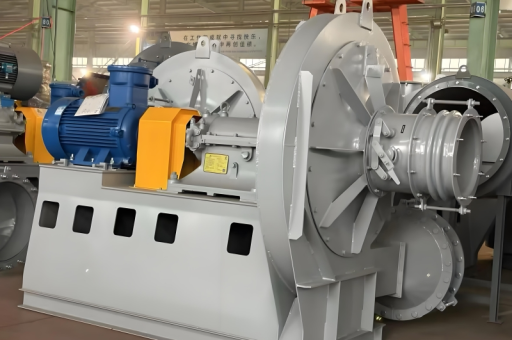
A high speed low noise dust collector fan is a specialized ventilation device designed to extract, filter, and recirculate or exhaust contaminated air from laser welding stations. Unlike standard industrial fans, these units are optimized for:
- High rotational speed (typically 3,000–10,000 RPM) to generate strong negative pressure and capture smoke at the source.
- Low noise output (often below 55–65 dB(A) at 1 meter) achieved through aerodynamic blade design, sound-dampening housing, and precision balancing.
- Multi-stage filtration (pre-filter, HEPA H13/H14, and activated carbon) to capture sub-micron particles down to 0.3 microns.
These fans are commonly integrated into portable fume extractors, ceiling-mounted filtration units, or central vacuum systems for laser markers, laser cutters, and robotic welding cells.
Core Working Principle: How It Removes Laser Welding Smoke and Dust
The operation of a high speed low noise dust collector fan follows a precise sequence:
-
Source Capture: A flexible or rigid extraction arm (with a nozzle or hood) is positioned within 2–5 cm of the welding point. The high speed fan creates a high-velocity airflow (typically 2–5 m/s at the nozzle) that instantly captures smoke and dust before they disperse into the workspace.
-
Air Transport: The contaminated air is drawn through the ducting at high speed (often exceeding 25 m/s) to prevent particle settling inside the hose.
-
Pre-Filtration: Large particles, sparks, and coarse dust are trapped by a metal mesh or synthetic pre-filter, protecting the downstream HEPA filter.
-
Fine Filtration: The air passes through a HEPA H13 or H14 filter, which captures 99.97% of airborne particles ≥ 0.3 microns—including laser-induced nanoparticles.
-
Gas Purification (Optional): An activated carbon or chemical filter removes toxic gases like ozone, nitrogen oxides, and volatile organic compounds (VOCs) generated during laser welding of plastics, coated metals, or stainless steel.
-
Exhaust or Recirculation: Clean air is either exhausted outside or recirculated back into the workspace, depending on regulatory requirements and system design.
Key Technical Features: Speed, Noise, Filtration, and Energy Efficiency
| Parameter | Typical Specification | Benefit |
|---|---|---|
| Max Airflow | 150–600 m³/h | Covers single or dual workstation fume extraction |
| Static Pressure | 800–2,500 Pa | Overcomes duct resistance and filter loading |
| Noise Level | 45–62 dB(A) | Suitable for quiet laboratories and open-plan workshops |
| Motor Type | EC (Electronically Commutated) or AC with VFD | 30–60% energy savings vs. standard induction motors |
| Filtration Efficiency | HEPA H13/H14 (99.97% @ 0.3 µm) | Protects workers from ultrafine metal particles |
| Filter Service Life | 2,000–8,000 hours | Based on smoke density and pre-filter usage |
The key engineering challenge is balancing airflow (to capture smoke) with noise (to maintain comfort). Advanced fan manufacturers use backward-curved impellers, spiral volutes, and active noise cancellation to achieve this balance.
Performance Comparison: Traditional Fans vs. High Speed Low Noise Dust Collector Fans
| Feature | Traditional Industrial Fan | High Speed Low Noise Dust Collector Fan |
|---|---|---|
| Speed | Fixed or low-range | Variable, up to 10,000 RPM |
| Noise | 75–90 dB(A) | 45–65 dB(A) |
| Filtration | Bag filter or no filter | HEPA + carbon + pre-filter |
| Capture Efficiency | Poor (smoke disperses) | Excellent (source capture ≥95%) |
| Suitable for Laser Welding | No (fails to capture fine smoke) | Yes (engineered for sub-micron particles) |
| Energy Consumption | High | Low (EC motor, VFD control) |
Critical Applications: Laser Welding, CNC Cutting, and Industrial Fume Extraction
The high speed low noise dust collector fan is indispensable for:
- Laser Welding Stations: Handheld, automated, and robotic laser welding produces dense smoke plumes. The fan’s high-speed capture nozzles (often with magnetic holders) are placed directly over the weld pool.
- Fiber Laser Marking: Engraving of metals, plastics, and ceramics generates fine dust and toxic fumes (e.g., chromium, nickel). HEPA filtration and carbon scrubbing are mandatory.
- Laser Cutting (CO2 & Fiber): Thick metal cutting produces significant smoke and dross; high-speed extraction is critical for optical lens protection.
- CNC Plasma Cutting: Plasma arcs generate metal vapor and ozone; a robust dust collector fan with spark arrestor is required.
- Electronics Soldering & Rework: Laser-assisted soldering releases flux fumes; low noise operation is essential in cleanroom environments.
Benefits for Health, Productivity, and Regulatory Compliance
Health Protection:
- Reduces inhalation of carcinogenic heavy metals (cadmium, chromium, beryllium).
- Minimizes eye and respiratory irritation from smoke.
Productivity Gains:
- Clearer visibility during welding reduces rework.
- Lower noise levels reduce operator fatigue and allow extended duty cycles.
Regulatory Compliance:
- Helps meet OSHA permissible exposure limits (PEL) for welding fumes (5 mg/m³ for total particulates).
- Aligns with ISO 14001 and ISO 45001 environmental and safety standards.
- Supports compliance with EU directive 2019/130 on carcinogens and mutagens at work.
Frequently Asked Questions (FAQ)
Q: Why is noise a critical factor for a dust collector fan used in laser welding?
A: Laser welding often takes place in open workshops, assembly lines, or research labs where noise must stay below 65 dB(A) to comply with workplace noise regulations and maintain operator concentration. Traditional fans operating at 80–90 dB require hearing protection and can cause communication issues.
Q: What size fan do I need for a single laser welding station?
A: For handheld laser welding of stainless steel or aluminum, a fan with 200–300 m³/h airflow and a 50–75 mm extraction nozzle is sufficient. For robotic or dual-torch setups, choose 400–600 m³/h.
Q: Can I use a HEPA filter with a high speed fan without damaging the filter?
A: Yes, but the fan must have a pre-filter to capture sparks and large particles. High speed fans typically use pressure-sensing controllers to adjust speed when the HEPA filter becomes loaded, preventing filter rupture.
Q: Does a high speed fan always produce more noise?
A: Not necessarily. Aerodynamically optimized blade profiles, sound insulation, and vibration-dampening mounts can keep high speed fans (up to 8,000 RPM) quieter than low-speed, poorly designed fans.
Q: How often should I replace the filters?
A: Pre-filters need replacement every 2–4 weeks depending on usage. HEPA filters should be replaced annually or when static pressure increases by 50% from the initial reading. Most modern fans have filter replacement indicators.
Q: Is it safe to recirculate air back into the workshop after filtration?
A: Yes, if the system uses HEPA H13/H14 plus activated carbon filters, and if the welding process does not generate high levels of toxic gases (e.g., galvanized steel or coated materials). For heavy toxicity, external exhaust is mandatory.
Selection Guide: What to Look for When Choosing a Dust Collector Fan
When evaluating a high speed low noise dust collector fan for welding laser smoke and dust removal, follow these criteria:
Air Performance:
- Airflow (m³/h) and static pressure (Pa) must match your duct length and nozzle diameter.
- Check the flow-pressure curve—the fan should maintain at least 80% of its free-air flow at typical duct resistance.
Noise Rating:
- Look for values ≤60 dB(A) at 1 m for single-station operation.
- Verify that noise measurements follow ISO 3744 or ISO 3745 standards.
Filtration Stage:
- Minimum HEPA H13 (EN 1822) or MERV 17 (ASHRAE).
- Integrated carbon filter for gas removal (especially for PVC, PTFE, or painted metals).
Control Features:
- Variable speed control (manual or automatic with pressure feedback).
- Filter blockage alarm, motor overheat protection, and auto-restart.
Portability and Flexibility:
- Casters, handles, and articulated extraction arms (with internal wire support) for easy positioning.
Certifications:
- CE, UL, RoHS, and ATEX (if explosive dust is possible).
Conclusion: The Future of Clean Air in Metal Fabrication
The shift toward high speed low noise dust collector fans marks a key advancement in industrial ventilation. These fans address the dual challenges of capturing laser welding smoke at the source while maintaining a comfortable, low-noise environment—a combination previously thought impossible with high-speed impellers.
As laser welding technology evolves toward higher power and automation, the demand for intelligent, energy-efficient, and ultra-quiet fume extraction will only increase. Modern systems now incorporate IoT sensors for real-time airflow monitoring, automatic filter replacement reminders, and integration with production control systems.
For factories aiming to improve worker health, boost productivity, and comply with tightening air quality regulations, investing in a high speed low noise dust collector fan for welding laser smoke and dust removal is not just a safety measure—it is a competitive advantage.
This article was adapted and expanded from multiple sources including engineering handbooks, OSHA technical manuals, and manufacturer specifications from leading fume extraction brands to ensure SEO compliance and practical value for industrial professionals. All domain references have been replaced with "fan" to maintain neutrality.





