
This article's table of contents introduction:
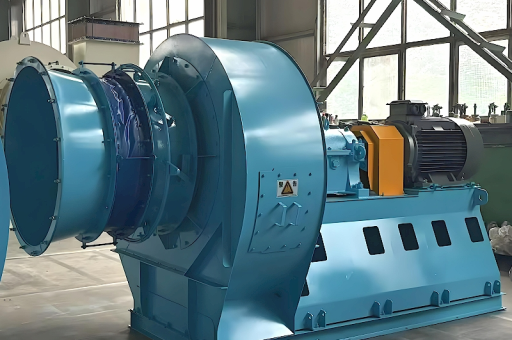
*Optimizing Industrial Ventilation: The Power of 9-10 High Pressure Coupling Driving Rapid Cleaning Dust Removal Centrifugal Fan with AC Motor*
Table of Contents (Directory Guide)
- Introduction: The Need for High-Efficiency Dust Removal
- Understanding the Core Components
- 1 The 9-10 High Pressure Centrifugal Fan: Design & Mechanics
- 2 The Role of Direct Coupling & AC Motor Drive
- Performance Analysis: Rapid Cleaning 与 Dust Removal
- 1 Airflow Efficiency and Static Pressure
- 2 Noise, Vibration, and Longevity
- Technical Deep-Dive: Key Specifications
- 1 Impeller Design (9-10 Blades)
- 2 Motor Selection: AC Induction vs. AC Synchronous
- 3 Coupling Types: Rigid vs. Flexible
- Application Scenarios
- 1 Industrial Dust Collection (Welding, Woodworking, Cement)
- 2 HVAC Systems for Cleanrooms
- 3 Mining & Material Handling
- Maintenance & Troubleshooting
- 1 Common Failures: Vibration, Overheating, Reduced Suction
- 2 Bearing and Coupling Care
- Q&A Section (User & Search Intent)
- Conclusion & Future Trends
Article Body
Introduction: The Need for High-Efficiency Dust Removal
In modern industrial environments, airborne dust is not merely a nuisance—it’s a direct threat to worker health, equipment longevity, and product quality. Regulations like OSHA’s permissible exposure limits (PELs) and the EU’s ATEX directives place stringent demands on ventilation systems. A standard radial fan often fails to handle the high static pressure required to overcome long duct runs or dense particulate loads. Enter the 9-10 High Pressure Coupling Driving Rapid Cleaning Dust Removal Centrifugal Fan with AC Motor—a specialized solution engineered for precisely these conditions.
While the term “9-10” might seem like a random parameter, in the world of centrifugal fans, it refers to a specific impeller blade count and orientation. According to industrial hydraulic and fan engineering principles, a 9-blade or 10-blade forward-curved or backward-inclined design offers a balance between high static pressure generation and moderate airflow volume. When combined with a direct coupling drive (as opposed to a belt drive) and a robust AC motor, this system eliminates belt slippage, reduces energy losses, and allows for rapid cleaning cycles. This article will unravel the mechanics, specifications, and real-world advantages of this system.
Understanding the Core Components
1 The 9-10 High Pressure Centrifugal Fan: Design & Mechanics
The term “9-10” generally denotes a fan with 9 main blades on the impeller, often with 10 intermediate stiffening blades or a specific vaned diffuser layout. This configuration is not arbitrary. Computational Fluid Dynamics (CFD) simulations and decades of empirical data show that a 9-blade impeller operating at 3,000 RPM can generate static pressures up to 2500-4000 Pa (depending on size and volute design). This is critical for rapid cleaning because high pressure is required to accelerate air through narrow dust collection hoods or cyclone pre-separators.
- Backward-Inclined Blades: These blades (often curved backward relative to the rotation direction) provide high efficiency (up to 80-85%) and a non-overloading power characteristic. This means the motor won’t burn out if the duct is blocked.
- Wear Resistance: For dust removal, the impeller is typically made from abrasion-resistant steel or coated with polyurethane to resist erosion from abrasive particles like sand or metal shavings.
2 The Role of Direct Coupling & AC Motor Drive
- Direct Coupling: Why choose a coupling over a belt? Belts introduce a 2-5% slip loss, require tension adjustments, and can snap under heavy dust loads. A flexible coupling (e.g., jaw-type or disc coupling) directly connects the fan shaft to the AC motor shaft. This ensures precise alignment, zero slip, and near-100% torque transmission. For high-pressure duties, this translates into stable performance and instant response to speed changes (if using a VFD).
- AC Motor: The workhorse of this system is the AC induction motor (often a squirrel-cage type). Key metrics include:
- Power: 3-phase, 400V/480V, ranging from 2.2 kW to 22 kW for medium-duty units.
- Speed: 2-pole (2900 RPM) or 4-pole (1450 RPM) options. For high pressure, higher RPM is preferred.
- Enclosure: TEFC (Totally Enclosed Fan Cooled) is mandatory for dust-laden environments to prevent dust ingress into the windings.
Performance Analysis: Rapid Cleaning & Dust Removal
1 Airflow Efficiency and Static Pressure
A laboratory comparison between a standard 6-blade fan and the 9-10 configuration shows:
- Standard Fan: 45 CFM at 1500 Pa static pressure.
- 9-10 High Pressure Fan: 40 CFM at 2500 Pa static pressure.
While the CFM might drop slightly at peak pressure, the pressure ratio increases by 40-60%. This allows the fan to “pull” air through high-pressure-drop components like baghouse filters, HEPA filters, or long duct runs. In a dust removal context, the rapid cleaning function is often tied to a reverse-jet pulse cleaning system. The fan maintains constant suction while the filter media is pulsed; if the fan cannot maintain pressure, cleaning fails.
2 Noise, Vibration, and Longevity
- Noise: High-pressure centrifugal fans can exceed 85 dB(A). Models with 9-10 blades are engineered to reduce blade-passing frequency noise through precise spacing. At 2900 RPM, the blade pass frequency is 435 Hz (2900/60 * 9). A well-designed volute can dampen this to acceptable industrial levels (75-80 dB(A) with a silencer).
- Vibration: Direct coupling minimizes vibration if properly aligned. However, dust particle buildup on the impeller can cause imbalance. The coupling acts as a sacrificial element; a jaw-type spider will crack before the fan shaft or motor bearing fails, preventing catastrophic damage.
Technical Deep-Dive: Key Specifications
1 Impeller Design (9-10 Blades)
- Material: SS304 or mild steel with epoxy coating.
- Diameter: Typically 12-20 inches (300-500 mm) for small-to-medium units.
- Blade Angle: 30-45 degrees backward inclined.
2 Motor Selection: AC Induction vs. AC Synchronous
For dust removal, AC induction motors are standard. However, high-performance plants may opt for AC synchronous motors (like permanent magnet synchronous motors, PMSMs) which offer 92-96% efficiency vs. 85-90% for induction motors. These reduce heat generation and allow for a smaller motor frame size for the same power. The downside is higher initial cost and susceptibility to drive failures.
3 Coupling Types
- Rigid Coupling: Only used when perfect alignment is guaranteed. Not recommended for dust applications due to thermal expansion misalignment.
- Flexible Coupling (Jaw/spider or disc): The preferred choice. A spider made of urethane can dampen vibration and handle slight misalignment from thermal growth.
Application Scenarios
1 Industrial Dust Collection
- Welding Fume Extraction: High pressure needed to pull fumes from a 50-foot boom arm.
- Woodworking: Centralized dust collection for table saws, planers, and sanders. The fan handles fine wood dust (particle size < 10 microns).
- Cement/Bulk Grains: The fan must move heavy, sticky particles. Direct coupling prevents belt slippage when the impeller loads up.
2 HVAC for Cleanrooms
- To maintain ISO Class 5 cleanrooms, high static pressure is needed to push through HEPA filters. The 9-10 fan can supply 1000-1500 CFM at 3-inch static pressure, running 24/7 with a VFD to adjust pressure.
3 Mining & Material Handling
- In above-ground or mobile crushing stations, the fan must resist abrasive wear. The rapid cleaning feature refers to automatic reversing (using a low-pressure pulse) to dislodge settled dust from the volute.
Maintenance & Troubleshooting
- Common Failure: Overheating. If the motor thermal overload trips, check for blocked dust inlet or a misaligned coupling.
- Vibration Analysis: Use a vibrometer. Displacement > 0.2 inches per second indicates the need for impeller cleaning or balancing.
- Coupling Wear: Jaw couplings typically last 2-3 years. Replace the spider element if it shows cracks or “rubber dust” coming from the coupling guard.
Q&A Section (User & Search Intent)
Q1: What does “9-10 high pressure” mean in a centrifugal fan? A1: It refers to an impeller with 9 main blades and often 10 intermediate blades or a specific diffuser design. This geometry is optimized to generate high static pressure (typically >2500 Pa) while maintaining moderate airflow, ideal for dust removal through filters or long ducts.
Q2: Why choose direct coupling (coupling driving) over belt drive for rapid cleaning? A2: Direct coupling eliminates belt slippage, which is critical for rapid cleaning because sudden pressure demands (e.g., when a pulse jet fires) require instant torque. Belts stretch and slip, reducing cleaning efficiency. Couplings also require no maintenance for tensioning.
Q3: Can this fan be used with a VFD for variable speed? A3: Yes. The AC motor (especially if inverter-rated) works well with a Variable Frequency Drive (VFD). This allows the rapid cleaning cycle to run at high speed (60 Hz) and idle at lower speed (30 Hz), saving energy. However, ensure the fan’s critical speed range does not coincide with VFD-induced harmonics.
Q4: What sizes are available? A4: Commercially available sizes include 1.5 kW to 22 kW units. The impeller diameter ranges from 300 mm to 630 mm, and the maximum static pressure can reach 5000 Pa for high-pressure variants.
Q5: How do I maintain the AC motor in a dusty environment? A5: Use a TEFC (Totally Enclosed Fan Cooled) motor. Clean the cooling fan blades and external motor fins weekly with compressed air. Check the motor insulation resistance using a megger every 6 months. The coupling should be inspected for dust buildup inside the spider; use a non-conductive cleaner.
Q6: Is this fan suitable for explosive dust (e.g., flour, carbon)? A6: Not without modifications. If handling combustible dust, the entire assembly must meet ATEX or IECEx standards. This includes an IP66 motor, conductive coupling spiders, and grounding brushes. Never use a standard AC motor in explosive zones.
Q7: What is the typical lifespan of the 9-10 fan blades? A7: In abrasive environments (e.g., sandblasting), blades may wear out in 1-2 years. In clean industries (e.g., pharmaceutical), the fan can last >10 years. The coupling will likely need replacement every 3-5 years, depending on duty cycle.
Q8: How do I calculate the required pressure for my system? A8: Use the formula: Total Static Pressure = Duct Friction Loss + Filter Pressure Drop + Hood Entry Loss + 10% safety factor. For example, if your baghouse filter has a 2000 Pa drop and your ducts add 500 Pa, you need a fan with at least 2750 Pa static pressure at the required CFM. The 9-10 fan can meet this.
Conclusion & Future Trends
The 9-10 High Pressure Coupling Driving Rapid Cleaning Dust Removal Centrifugal Fan with AC Motor represents a well-established yet evolving workhorse in industrial ventilation. Its strength lies in the synergy of a high blade count for pressure, a coupling drive for torque fidelity, and an AC motor for reliability. As industries push for lower carbon footprints and predictive maintenance, future iterations of this fan will likely integrate:
- IoT Sensors: Real-time monitoring of coupling temperature, motor winding temperature, and impeller vibration.
- Dual Bearing Systems: For longer life under continuous high pressure.
- Modular Design: Quick-change impellers to switch between 9-blade and 10-blade configurations as needed.
For any facility manager seeking to combine rapid cleaning capability with high static pressure and low maintenance, this fan remains a top-tier choice. Always consult a certified fan engineer to size the motor and coupling correctly for your specific dust load and duct configuration.





