
This article's table of contents introduction:
- What is it?
- Key Design Features for Efficiency & Durability
- Critical Performance Considerations
- Applications (Where you find this fan)
- How to Ensure Efficiency in Your Fan
- Summary Table: Typical Specifications
- Finding a Manufacturer
Here is a comprehensive breakdown of an Efficient Industrial Kiln Boiler Chemical Exhaust Centrifugal Fan. This covers the specific design requirements, materials, efficiency considerations, and applications for this demanding equipment.
What is it?
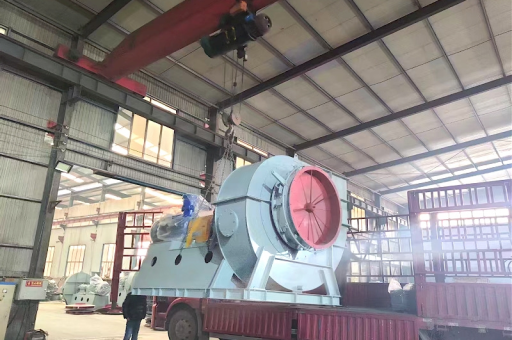
This is a specialized, heavy-duty centrifugal fan designed to handle the harsh exhaust gases from industrial processes like kilns, boilers, and chemical reactors. Unlike standard ventilation fans, these fans must withstand high temperatures, corrosive chemical compounds, and particulate-laden gas streams while operating at high efficiency to minimize energy costs.
Key Design Features for Efficiency & Durability
The "efficiency" and "durability" of this fan are achieved through specific engineering choices:
Impeller (Wheel) Design
- Backward-Curved or Airfoil Blades: These are the most efficient blade types (up to 85-90% static efficiency). They are non-overloading (power draw peaks at a certain point and then drops), preventing motor burnout.
- Radial or Paddlewheel Blades: Used for severe duty (high dust, sticky materials). Lower efficiency (60-70%), but self-cleaning and more robust.
- Material: High-strength steel (e.g., Corten, AR steel) or stainless steel (304/316L for corrosion resistance). For very high temps (>500°C/932°F), alloys like Hastelloy or Inconel are used.
- Hardfacing: Leading edges of blades are often welded with a hardfacing alloy (e.g., Stellite) to resist erosion from fly ash and chemical particulates.
Casing & Housing
- Materials: Same as impeller.
- Heavy-Gauge Construction: Thicker steel to withstand pressure and vibration.
- Replaceable Wear Liners: In the scroll (volute) area, particularly at the "cut-off" (the closest point between the wheel and casing). These liners are bolted in, allowing easy replacement without replacing the entire housing.
- Expansion Joints: To handle thermal expansion.
Shaft & Bearings
- Oversized Shaft: Reduces deflection and stress.
- Water-Cooled Bearings: For high-temperature gas streams (>150°C/300°F), the bearing housing is often water-cooled using a cooling jacket or a heat shield to prevent lubricant degradation.
- Shaft Seal: A high-temperature labyrinth seal or a mechanical seal prevents hot, corrosive gas from leaking out along the shaft and damaging the bearings.
Drive System
- Direct Drive (Preferred for Efficiency): Motor is directly coupled to the fan shaft. Zero belt losses, ideal for high-speed applications.
- V-Belt Drive (More Common): Allows for speed changes (adjusting flow/pressure) and isolates motor from fan vibration/heat. Requires proper tensioning and pulley alignment for efficiency.
- Variable Frequency Drive (VFD): Essential for modern efficiency. Allows the motor to run at exactly the speed needed for the process, rather than using inlet dampers or outlet dampers (which are very inefficient). VFDs can save 30-60% in energy.
Critical Performance Considerations
| Feature | Why it Matters |
|---|---|
| High Temperature Capability | Kilns and boilers can have exhaust temps from 200°C to 800°C+. Fans must be rated for continuous operation at these levels. |
| Corrosion Resistance | Chemical exhaust (SOx, NOx, HCl, HF, etc. in the presence of moisture) creates acids. Stainless steel or special coatings (e.g., FRP, rubber lining) are needed. |
| Abrasion Resistance | Fly ash, clinker dust, and catalyst fines rapidly erode unprotected metal. Hardfacing, wear liners, and thicker materials are crucial. |
| Backward Compatibility | Often retrofitted into existing ductwork. Fan dimensions (inlet/outlet, foot bolts, shaft height) must match standard industrial patterns. |
| Cleanability | In boilers burning heavy fuel oil (HFO) or waste, the fan can foul quickly. Features like a blow-in seal (bleeding clean air into the casing) can keep the wheel clean. |
Applications (Where you find this fan)
- Cement & Lime Kilns: Induced Draft (ID) fan pulling air through the kiln/preheater.
- Industrial Boilers: ID fan on the boiler outlet, handling flue gas from coal, biomass, oil, or gas.
- Chemical Plants: Exhaust from incinerators, thermal oxidizers, reactors (e.g., sulfuric acid plant).
- Waste-to-Energy Plants: Exhaust from waste incineration (highly corrosive & abrasive).
- Glass Manufacturing: Exhaust from glass melting furnaces.
- Metallurgy: Exhaust from electric arc furnaces, blast furnaces.
How to Ensure Efficiency in Your Fan
- Correct Sizing: The fan must be selected for the actual operating point (flow, pressure, temperature, gas density). Oversizing is a major efficiency killer.
- VFD Control: Use a VFD, not inlet guide vanes or outlet dampers, for modulation. This is the single biggest efficiency improvement.
- Proper Ductwork: Ensure smooth, straight inlet ducts (no swirl) and discharge ducts. Incorrect ductwork can rob 10-20% of fan capacity.
- Routine Maintenance:
- Clean the impeller (build-up ruins balance and airflow).
- Check belt tension (if belt-driven).
- Grease/lubricate bearings to spec.
- Inspect wear liners.
- Monitor vibration levels (a sign of imbalance or bearing wear).
Summary Table: Typical Specifications
| Parameter | Typical Range / Value | Notes |
|---|---|---|
| Type | Centrifugal | Backward-curved, radial, or airfoil |
| Flow (CFM / m³/hr) | 10,000 - 500,000+ CFM | Custom-sized per plant |
| Pressure (SP) | 10 - 60 inWG (2.5 - 15 kPa) | ID fans run at negative pressure |
| Temperature | 200°C - 800°C (400°F - 1500°F) | With cooling or high-temp alloys |
| Max Efficiency | 75% - 90% | Backward-curved/airfoil |
| Corrosion Protection | 316L SS, Hastelloy, FRP | Depends on chemical species |
| Abrasion Protection | Hardfacing, Chrome carbide overlay | For coal/fly ash |
| Drive | Direct or Belt | VFD is standard for efficiency |
Finding a Manufacturer
Major manufacturers known for these heavy-duty, efficient fans include (alphabetically): Greenheck, Howden, New York Blower, Robinson Fans (now part of Howden), TLT-Babcock, Ziehl-Abegg.
Conclusion: An "Efficient Industrial Kiln Boiler Chemical Exhaust Centrifugal Fan" is not a single product but a highly engineered system. Its efficiency comes from the combination of an optimized aerodynamic design, robust materials for the harsh environment, and a modern VFD control system. The upfront cost is higher than a standard fan, but the energy savings, reduced downtime, and longer lifespan deliver a rapid return on investment (ROI). For a specific quote, contact a specialist manufacturer with your process gas conditions (temp, composition, dust load, required flow/pressure).





