
This article's table of contents introduction:
- Table of Contents
- Introduction: The Critical Role of Cooling in Sintering Processes
- What Is an Adjustable Stator Blades Axial Fan?
- Why Sintering Annular Cooler Projects Require Specialized Fan Solutions
- Key Advantages of Adjustable Stator Blade Technology
- OEM Supported Customization: A Strategic Advantage
- Frequently Asked Questions
- Conclusion: Future-Proofing Sintering Cooling with Precision Engineering
Optimizing Industrial Cooling: The Role of Adjustable Stator Blades Axial Fan for Sintering Annular Cooler Projects with OEM Support**
Table of Contents
- Introduction: The Critical Role of Cooling in Sintering Processes
- What Is an Adjustable Stator Blades Axial Fan?
- Why Sintering Annular Cooler Projects Require Specialized Fan Solutions
- Key Advantages of Adjustable Stator Blade Technology
- OEM Supported Customization: A Strategic Advantage
- Frequently Asked Questions
- Conclusion: Future-Proofing Sintering Cooling with Precision Engineering
Introduction: The Critical Role of Cooling in Sintering Processes
In the iron and steel manufacturing industry, sintering is a key step where fine iron ore particles are fused into a porous mass called sinter. This material is then fed into a blast furnace for further processing. However, the sintering process generates intense heat, and the hot sinter must be cooled efficiently before transport or storage. This is where an Annular Cooler — a circular, rotating cooling system — becomes essential.
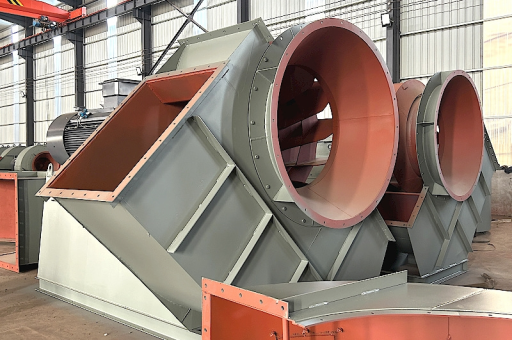
To achieve efficient cooling, a high-performance fan system is required. Among the most advanced solutions is the Adjustable Stator Blades Axial Fan for Sintering Annular Cooler Projects, which offers superior airflow control, energy efficiency, and durability. With OEM Supported customization, these fans can be tailored to meet the specific demands of each project.
What Is an Adjustable Stator Blades Axial Fan?
An adjustable stator blades axial fan is a type of axial flow fan where the stator blades (stationary guide vanes) can be manually or automatically adjusted to optimize airflow direction and pressure. Unlike fixed-blade fans, these adjustable components allow operators to fine-tune the performance characteristics without changing the entire fan assembly.
Key components include:
- Rotor blades – Driven by a motor to move air axially.
- Stator blades – Stationary vanes that straighten and direct airflow, reducing turbulence.
- Adjustment mechanism – Allows blade angle changes to suit varying operating conditions.
- Housing and support structure – Built for heavy industrial environments.
This design is particularly suitable for high-temperature, high-dust applications such as sintering annular coolers, where consistent airflow is critical for uniform cooling.
Why Sintering Annular Cooler Projects Require Specialized Fan Solutions
The environment surrounding a sintering annular cooler is harsh. Hot sinter material, ranging from 600°C to 800°C, is discharged onto the annular cooler, where air is forced through the material bed to cool it. This demands a fan that can:
- Operate continuously at high temperatures.
- Withstand abrasive dust particles.
- Maintain stable airflow despite varying bed resistance.
- Support energy-efficient operations over long cycles.
Standard fans often fail in this environment due to rapid wear, blade erosion, and mechanical imbalance. A custom-designed adjustable stator blades axial fan specifically engineered for sintering annular cooler projects overcomes these issues.
According to industry studies, adjusting stator blade angles can improve fan efficiency by up to 15–20% compared to fixed-blade designs in variable load applications. This is critical for sintering plants, where airflow demand fluctuates based on sinter quality, bed height, and ambient temperature.
Key Advantages of Adjustable Stator Blade Technology
1 Enhanced Flow Control
By adjusting stator blade angles, operators can modify the pressure-volume curve of the fan. This allows precise matching of fan output to cooler requirements, reducing energy waste and improving cooling uniformity.
2 Reduced Maintenance and Longer Lifespan
Adjustable stator blades are typically built from wear-resistant materials. Combined with the ability to angle blades to minimize particle impact, these fans experience less erosion. Many OEM-supported designs also include replaceable liners and segmented components for easy maintenance.
3 Energy Savings
In variable cooling demand scenarios, adjustable blades eliminate the need for throttling dampers, which cause significant pressure losses. The fan can operate near its best efficiency point (BEP) across a wider range.
4 OEM Customization
With OEM Supported manufacturing, every component — from motor power to blade material and sealing systems — can be designed for the specific sintering line. This is especially valuable in existing plants where space constraints or integration issues require non-standard solutions.
OEM Supported Customization: A Strategic Advantage
“OEM Supported” means the fan manufacturer works directly with the sintering plant’s engineering team to specify, design, and test the fan system. This ensures that the Adjustable Stator Blades Axial Fan integrates seamlessly into the annular cooler system.
Customization options include:
- Blade material: High-chrome alloys, stainless steel, or ceramic coatings.
- Blade angle range: Typically 15° to 55°, tailored to airflow requirements.
- Motor type: Fixed-speed, VFD-ready, or explosion-proof.
- Shaft sealing systems: For bearing protection in dusty environments.
- Inspection doors and sensors: For predictive maintenance integration.
Industry feedback from sintering plants in China, India, and Europe indicates that such OEM-supported fan upgrades reduce downtime by up to 30% while increasing cooling efficiency.
Frequently Asked Questions
Q1: What is the main difference between an adjustable stator blades axial fan and a standard axial fan?
A: The key difference is the ability to change stator blade angles. While standard axial fans have fixed guide vanes, adjustable stator blades allow fine-tuning of airflow direction and pressure without altering rotor speed. This makes them ideal for variable-load sintering cooling systems.
Q2: Can an adjustable stator blades axial fan be retrofitted into an existing sintering annular cooler?
A: Yes. With OEM support, the fan can be designed to fit existing ductwork, motor mounts, and control systems. Many retrofit projects have successfully upgraded older fans to adjustable stator designs, improving both cooling efficiency and reliability.
Q3: How does blade angle adjustment affect energy consumption?
A: Adjusting the stator blade angle changes the airflow path, reducing turbulence and pressure losses. This means the fan can operate at a higher efficiency range for a given airflow demand, often reducing energy consumption by 15–20% compared to a fixed-blade fan operating with dampers.
Q4: What materials are used for stator blades in high-temperature applications?
A: Common materials include heat-treated stainless steel, high-chrome cast iron, and alloys with ceramic coatings. The choice depends on gas temperature, dust content, and required lifespan. OEM engineering teams typically simulate operating conditions to recommend the best material.
Q5: Are adjustable stator blades axial fans compatible with automated control systems?
A: Yes. Many fans are designed with actuators that can interface with DCS (Distributed Control Systems) or PLC (Programmable Logic Controllers). This enables automatic blade angle adjustment based on cooler temperature readings, airflow sensors, or downstream process signals.
Q6: How often do stator blades need to be replaced?
A: Replacement frequency depends on operating conditions and material quality. In well-designed OEM systems, blades may last 3–5 years in continuous service. Regular inspection and minor angle adjustments can extend blade life significantly.
Conclusion: Future-Proofing Sintering Cooling with Precision Engineering
The sintering annular cooler is a challenging application that demands more than standard industrial fans. By integrating Adjustable Stator Blades Axial Fan technology with OEM Supported engineering, sintering plants can achieve:
- Greater cooling uniformity.
- Lower operational costs.
- Extended equipment life in harsh environments.
- Better integration with plant automation systems.
As steel producers face growing pressure to reduce energy consumption and increase production uptime, investing in high-performance, customizable axial fan systems is no longer optional — it is a strategic necessity.
For advanced fan solutions tailored to sintering annular cooler projects, working with a qualified OEM ensures your fan system is built to match your exact cooling profile, material properties, and plant layout. Whether you are designing a new sintering line or upgrading an existing cooler, adjustable stator blade technology offers a proven path to better performance and reliability.





