
This article's table of contents introduction:
- Table of Contents
- Introduction
- Understanding the Backward Steam Boiler Industrial Air Extractor Fan
- How Does It Work?
- Key Performance Advantages
- Applications Across Industries
- Common Questions and Answers
- Maintenance and Best Practices for Longevity
- Conclusion
** Maximizing Industrial Efficiency: The Role of Backward Steam Boiler Industrial Air Extractor Fan for High Performance
Table of Contents
- Introduction
- Understanding the Backward Steam Boiler Industrial Air Extractor Fan
- How Does It Work?
- Key Performance Advantages
- Applications Across Industries
- Common Questions and Answers
- Maintenance and Best Practices for Longevity
- Conclusion
Introduction
In the landscape of modern industrial operations, efficiency and safety are non-negotiable. One of the unsung heroes in achieving both is the Backward Steam Boiler Industrial Air Extractor Fan. This specialized equipment plays a critical role in maintaining optimal airflow, removing hazardous gases, and ensuring that steam boiler systems operate at peak performance. While many industries rely on standard air handling units, the backward-curved design of this fan offers a unique blend of energy efficiency, durability, and high static pressure capability. This article explores the engineering behind this fan, its performance benefits, and answers the most common questions about its use.
Understanding the Backward Steam Boiler Industrial Air Extractor Fan
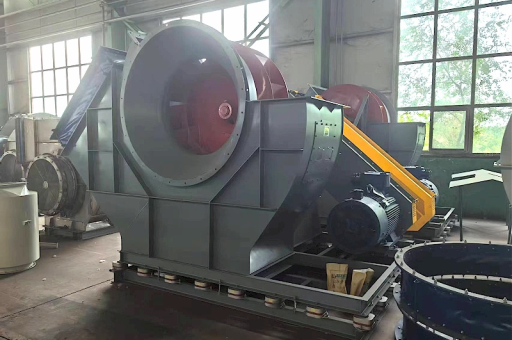
A Backward Steam Boiler Industrial Air Extractor Fan is a type of centrifugal fan specifically engineered for high-temperature, high-pressure environments typical of steam boiler systems. The "backward" designation refers to the orientation of the fan blades, which curve away from the direction of rotation. This design is distinct from forward-curved or radial-blade fans.
Key components include:
- Impeller with backward-curved blades: Reduces turbulence and improves aerodynamic efficiency.
- Heavy-duty housing: Often constructed from carbon steel or stainless steel to withstand thermal expansion and corrosive gases.
- Motor and drive assembly: Designed for continuous operation under high load.
- Inlet and outlet ducts: Optimized for minimal pressure drop.
These fans are used primarily to extract hot flue gases, steam, and airborne particulates from boiler rooms, ensuring that the combustion process remains stable and that ambient air quality meets safety standards.
How Does It Work?
The operating principle of a backward steam boiler industrial air extractor fan is rooted in fluid dynamics. When the impeller rotates, the backward-curved blades accelerate the air or gas radially outward. Unlike forward-curved fans, which rely on high speed for airflow, backward-curved designs generate higher static pressure with lower noise and vibration.
Step-by-step operation:
- Air intake: Hot, contaminated air from the boiler or exhaust duct enters the fan inlet.
- Acceleration: The rotating impeller imparts kinetic energy to the gas.
- Pressure conversion: The volute casing converts kinetic energy into static pressure.
- Exhaust: The high-pressure gas is directed through the outlet and out of the facility.
Because the blades are non-overloading, the motor will not burn out if the system pressure drops unexpectedly—a critical safety feature for industrial environments.
Key Performance Advantages
A. Energy Efficiency
Backward-curved fans typically achieve efficiency levels of 75–85%, significantly higher than forward-curved alternatives. This translates into lower electricity consumption and reduced operational costs over the fan's lifetime.
B. High Static Pressure Capability
In steam boiler applications, ductwork often includes long runs, elbows, and filters. The backward fan design can generate static pressures up to 10 kPa or more, ensuring consistent airflow despite system resistance.
C. Durability Under High Temperatures
Industrial steam boilers operate at temperatures ranging from 150°C to over 400°C. Backward steam boiler industrial air extractor fans are built with heat-resistant materials and often include cooling fins or shaft seals to protect motor bearings.
D. Low Noise and Vibration
The aerodynamic blade shape reduces turbulence, resulting in quieter operation. This is especially important in facilities where noise regulations are strict or where workers are present near the equipment.
E. Self-Cleaning Capability
The backward blade angle minimizes dust buildup, which is common in coal, biomass, or heavy oil boiler systems. This reduces the frequency of manual cleaning and maintenance.
F. Non-Overloading Power Curve
As mentioned earlier, the power consumption peaks at a specific point and then drops. This protects the motor from overload, even if the system experiences a blockage or open duct condition.
Applications Across Industries
The Backward Steam Boiler Industrial Air Extractor Fan is not limited to steam generation. Its robust design makes it suitable for a variety of high-performance environments:
- Power plants: For induced draft (ID) fans in coal, gas, or biomass boilers.
- Chemical processing: For removing corrosive vapors and maintaining negative pressure.
- Food and beverage: For steam exhaust in cooking, drying, and sterilization lines.
- Pharmaceuticals: For cleanroom ventilation and fume extraction.
- HVAC in large facilities: For high-static-pressure air handling in hospitals, data centers, and factories.
In each case, the fan's ability to handle high temperatures and particulate-laden air makes it a reliable choice for mission-critical operations.
Common Questions and Answers
Q1: What is the main difference between a backward and a forward-curved fan?
A: Backward-curved fans have blades that curve away from the direction of rotation. They generate higher static pressure, are more efficient, and have a non-overloading power curve. Forward-curved fans are better for low-pressure, high-volume applications but are less efficient and more prone to motor overload.
Q2: Can this fan be used for both air and gas extraction?
A: Yes, but you must select the correct material and coating. For corrosive gases, stainless steel or epoxy-coated housing is recommended. For high-temperature steam, heat-resistant bearing and shaft seals are required.
Q3: How do I determine the correct size for my steam boiler system?
A: You need to calculate the required airflow (CFM or m³/h), static pressure, and gas temperature. Most manufacturers provide fan selection software. It is advisable to consult with an engineer to ensure proper sizing.
Q4: What maintenance is required for long-term performance?
A: Regular inspection of bearings, belt tension (if belt-driven), blade condition, and vibration levels. Cleaning the impeller and housing every 3–6 months prevents imbalance and efficiency loss.
Q5: Is this fan suitable for high-altitude installations?
A: Yes, but the air density is lower at altitude, which reduces the fan's pressure output. You may need to oversize the motor or select a fan with a higher speed rating.
Q6: What does "good performance" mean in the context of this fan?
A: Good performance typically means high efficiency (>75%), low noise (<85 dB), stable airflow over time, and minimal maintenance downtime. It also implies that the fan can handle peak load without overheating or excessive vibration.
Maintenance and Best Practices for Longevity
To ensure that your Backward Steam Boiler Industrial Air Extractor Fan delivers excellent performance for years, follow these guidelines:
- Routine inspection: Check for blade wear, corrosion, and debris accumulation. Use a borescope if the fan is in a confined space.
- Lubrication: Bearings should be greased every 1,000 operating hours or per the manufacturer’s schedule.
- Vibration monitoring: Install vibration sensors and log readings. An increase of 1 mm/s may indicate imbalance or bearing failure.
- Belt tensioning: For belt-driven units, check tension monthly. Slipping belts reduce performance and generate heat.
- Temperature checks: Monitor motor and bearing temperatures. High temperatures can indicate overloading or poor ventilation.
- Spare parts: Keep a set of bearings, belts, and a spare impeller if downtime is critical.
Important tip: Always allow the fan to cool down before performing maintenance. Hot surfaces can cause severe burns.
Conclusion
The Backward Steam Boiler Industrial Air Extractor Fan represents a pinnacle of engineering for heavy-duty air movement. Its unique blade design offers a combination of high efficiency, durability, and safety that is difficult to match with other fan types. Whether you are managing a power plant, a chemical facility, or a food processing line, selecting a fan with good performance characteristics is essential for both operational reliability and cost control.
By understanding how these fans work, their performance advantages, and proper maintenance strategies, facility managers can maximize uptime, reduce energy bills, and ensure a safer working environment. As industrial demands continue to evolve, the backward steam boiler industrial air extractor fan will remain a critical tool for maintaining excellence in air management.
For more detailed specifications, installation guides, or product inquiries, please contact your local industrial fan supplier or engineering consultant.





