
This article's table of contents introduction:
- Table of Contents
- Introduction: The Industrial Shift Toward Energy Efficiency
- Understanding the Core Components: AC Motor, Fan Design, and Cement Kiln Cooling
- Why China Leads in Efficient Energy-Saving Centrifugal Fan Manufacturing
- The Science of Cooling: How Centrifugal Fans Reduce Energy Waste in Cement Kilns
- Key Technical Features of Modern AC Motor-Driven Cooling Fans
- Comparative Analysis: Traditional vs. High-Efficiency Cooling Fans
- FAQ: Common Questions About AC Motor Centrifugal Fans in Cement Plants
- Conclusion: Future Trends and Practical Recommendations
Optimizing Cement Kiln Cooling with China’s High-Efficiency AC Motor Centrifugal Fans: A Leap in Energy-Saving Innovation
Table of Contents
- Introduction: The Industrial Shift Toward Energy Efficiency
- Understanding the Core Components: AC Motor, Fan Design, and Cement Kiln Cooling
- Why China Leads in Efficient Energy-Saving Centrifugal Fan Manufacturing
- The Science of Cooling: How Centrifugal Fans Reduce Energy Waste in Cement Kilns
- Key Technical Features of Modern AC Motor-Driven Cooling Fans
- Comparative Analysis: Traditional vs. High-Efficiency Cooling Fans
- FAQ: Common Questions About AC Motor Centrifugal Fans in Cement Plants
- Conclusion: Future Trends and Practical Recommendations
Introduction: The Industrial Shift Toward Energy Efficiency
The global cement industry is under mounting pressure to reduce carbon emissions and operational costs. One of the most critical areas for improvement is the cement kiln cooling system, which traditionally consumes a significant portion of a plant’s electrical energy. In recent years, China has emerged as a dominant supplier of high-efficiency AC motor-driven centrifugal fans designed specifically for this application. These fans not only ensure optimal clinker cooling but also drastically lower energy consumption, aligning with international sustainability goals.
This article delves into the technical synergy between AC motors, centrifugal fan aerodynamics, and energy-saving control systems—all optimized for cement kiln environments. Whether you are a plant manager or a procurement specialist, understanding these innovations can lead to measurable ROI and compliance with stricter environmental regulations.
Understanding the Core Components: AC Motor, Fan Design, and Cement Kiln Cooling
To appreciate the efficiency gains, we must first dissect the three core elements:
-
AC Motor: The heart of the system. Modern high-efficiency AC motors (e.g., IE3, IE4, or NEMA Premium) convert electrical energy to mechanical energy with minimal losses. In Chinese manufacturing, these motors often incorporate copper rotor technology and variable frequency drive (VFD) compatibility to reduce idle energy waste.
-
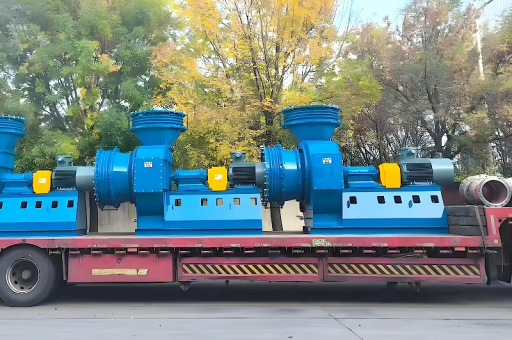
Centrifugal Fan: Unlike axial fans, centrifugal fans generate high-pressure airflow ideal for pushing air through dense clinker beds. The backward-curved blade design is particularly popular in China for its low noise, high static pressure, and non-overloading power characteristics.
-
Cement Kiln Cooling: In a rotary kiln, the clinker exits at approximately 1200–1400°C. The cooling fan system, often called a grate cooler fan or quenching fan, rapidly reduces temperature to stabilize mineral phases and recover heat. Inefficient cooling leads to product quality issues and wasted energy.
Why China Leads in Efficient Energy-Saving Centrifugal Fan Manufacturing
China’s dominance in this niche is not accidental. Several factors contribute to its global competitiveness:
- Government Mandates: The Chinese government enforces strict energy efficiency standards (GB 18613-2020) for motors and fans, pushing manufacturers to develop premium products.
- Advanced Manufacturing: Chinese factories now use CNC machining, laser welding, and computational fluid dynamics (CFD) to optimize fan blade profiles and motor windings.
- Cost-Effective Supply Chain: From rare-earth magnets to laminated silicon steel, China controls the raw material supply, enabling lower production costs without sacrificing quality.
- Real-World Testing: Many leading manufacturers collaborate with cement plants in regions like Shandong and Hebei, where data from 24/7 operations informs iterative design improvements.
The Science of Cooling: How Centrifugal Fans Reduce Energy Waste in Cement Kilns
The efficiency of a cement kiln cooling system depends on three parameters: airflow volume, static pressure, and power consumption. High-efficiency centrifugal fans achieve energy savings through:
- Variable Speed Control: When paired with VFDs, AC motor fans reduce speed during low-demand periods, cutting energy use by up to 35%.
- Aerodynamic Optimization: CFD-designed impellers and volute casings minimize turbulence, reducing the energy lost as heat and noise.
- Heat Recovery Integration: Some systems divert hot air from the cooler to preheat combustion air, maximizing thermal efficiency.
A typical Chinese-made energy-saving centrifugal fan for a 5,000 tpd cement kiln can reduce annual electricity consumption by 800,000–1,200,000 kWh compared to a standard fan, with payback periods under 18 months.
Key Technical Features of Modern AC Motor-Driven Cooling Fans
When evaluating a high-efficiency AC motor centrifugal fan from China, look for these features:
| Feature | Benefit |
|---|---|
| IE4/IE5 Efficiency Motor | Up to 96% motor efficiency, reducing heat loss |
| Backward-Curved Impeller | Non-overloading power curve, stable at high pressure |
| Wear-Resistant Coatings | Extends lifespan in abrasive cement dust conditions |
| Integrated VFD Support | Smooth start-up, soft stop, and dynamic speed adjust |
| Cast Iron or Stainless Steel Housing | Corrosion resistance in high-humidity cooler zones |
Comparative Analysis: Traditional vs. High-Efficiency Cooling Fans
| Parameter | Traditional Fan | China High-Efficiency Fan |
|---|---|---|
| Motor Efficiency | 85–89% | 94–97% (IE4/IE5) |
| Annual Power Cost (5,000 tpd) | ~$280,000 | ~$195,000 |
| Noise Level | 90–95 dB(A) | 78–85 dB(A) |
| Maintenance Interval | 6 months | 12–18 months |
| Payback Period | N/A | 12–18 months |
FAQ: Common Questions About AC Motor Centrifugal Fans in Cement Plants
Q1: Can I retrofit an existing cement kiln with a Chinese high-efficiency fan?
A: Yes. Most Chinese manufacturers offer retrofit kits with adapter flanges and VFD panels. However, ensure the motor frame size matches your existing base. We recommend consulting with the supplier about shaft alignment and foundation reinforcement.
Q2: How do I verify the energy savings before purchase?
A: Demand CFD simulation reports and certified efficiency test data (ISO 5801 for fans, IEC 60034-30 for motors). Many suppliers offer a guaranteed performance clause or trial period.
Q3: Are Chinese AC motors compatible with international voltage standards?
A: Yes. Most Chinese fan manufacturers offer dual-voltage motors (e.g., 380V/50Hz or 460V/60Hz). For plants in North America or Europe, confirm VFD and capacitor compatibility.
Q4: What is the typical lifespan of these fans?
A: With proper maintenance, a high-quality centrifugal fan can run 20–25 years. Bearing replacement is typically needed every 3–5 years.
Q5: Which Chinese company is most reliable for cement kiln fans?
A: Several reputable manufacturers exist. A recommended source is fan, a specialized supplier offering customized designs, on-site commissioning, and after-sales support for cement plant fans.
Conclusion: Future Trends and Practical Recommendations
The adoption of high-efficiency AC motor centrifugal fans from China is not merely a trend—it is an economic and environmental necessity for modern cement plants. As global carbon taxes tighten and energy costs rise, upgrading your kiln cooling system can yield immediate operational savings and a stronger competitive edge.
Practical next steps:
- Audit your current cooling fan’s power consumption and airflow.
- Request a free energy-saving assessment from a supplier like fan.
- Pilot one unit on a single cooler grate before full-scale deployment.
- Ensure your team is trained on VFD operation and predictive maintenance.
By embracing these innovations, you join a global movement toward smarter, greener cement manufacturing—one efficient fan at a time.





