
This article's table of contents introduction:
- Core Function in a Dust Collector
- Key Design Features for Dust Collector Fans
- Types of Centrifugal Fan Wheels (Impellers)
- Performance Parameters (What to Specify)
- Material Selection (Longevity)
- Common "High Performance" Fan Configurations for Dust Collectors
- Top Manufacturers Known for High-Performance Dust Collector Fans
- Selection Checklist (For Engineers/Procurement)
- Summary
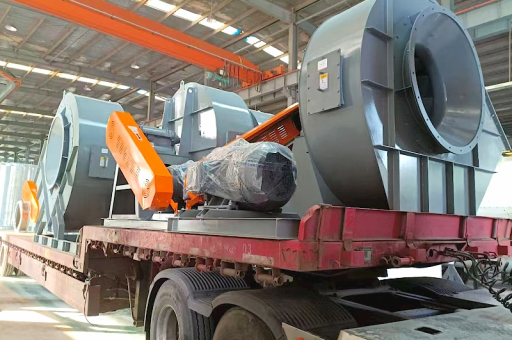
This is a highly specific and technical request. A High Performance Centrifugal Flow Fan (often called a Centrifugal Fan or a Radial Blower) designed for Dust Collectors is a critical component in industrial ventilation, material handling, and air pollution control.
Unlike standard HVAC fans, dust collector fans must handle heavy particulate loads, abrasive materials, and varying static pressures, all while maintaining high efficiency.
Here is a comprehensive breakdown of what defines a "High Performance" centrifugal fan for this application, including design features, types, and selection criteria.
Core Function in a Dust Collector
The fan provides the negative pressure (suction) needed to pull dust-laden air from the source (e.g., a grinder, saw, conveyor) through the filter media and then discharges cleaned air. "High Performance" means it can do this with the lowest possible energy consumption while resisting wear and tear.
Key Design Features for Dust Collector Fans
| Feature | Why It Matters |
|---|---|
| Heavy-Duty Construction | Thicker steel plate housing and wheel to withstand high rpm and resist wear from particle impact. |
| Non-Clogging Impeller | Airfoil or backward-inclined blades (not forward-curved) to prevent material buildup on the blades. |
| Abrasion Protection | Replaceable wear liners (ceramic, AR400 steel, or rubber) on the housing and impeller where erosion is fastest. |
| High Static Pressure | Designed to overcome resistance from long duct runs, filter bags/cartridges, and venturi tubes (often 10” w.g. to 40” w.g. or more). |
| Bearing Durability | Oversized, pillow-block bearings with grease purging or oil-lubricated systems for high heat and heavy loads. |
| Shaft Seal | Prevent dust from leaking along the shaft (improper seal leads to bearing failure). |
Types of Centrifugal Fan Wheels (Impellers)
Choosing the right wheel type is critical. For dust collectors, the two dominant types are:
A. Backward Inclined (BI) / Backward Curved (BC) — Most Common
- Blade Design: Blades lean away from the direction of rotation.
- Pros: High efficiency (70-85%), non-overloading power curve (motor won't burn up if static pressure drops), self-cleaning blade shape.
- Best For: High volume, moderate to high pressure, moderate dust loads. Preferred for baghouses and cartridge collectors.
- Performance: "High Performance" BI fans (Airfoil blades) are the most efficient but cannot handle sticky or fibrous dust (debris gets trapped inside the hollow blade).
B. Radial Blade (RB) — For Heavy/Sticky Dust
- Blade Design: Straight blades perpendicular to the shaft.
- Pros: Extremely rugged, handles high temperatures, best for abrasive or sticky dust (material flows off the blades), highest pressure capability.
- Cons: Lower efficiency (55-65%), high noise levels (requires a silencer).
- Best For: Blast cleaning, sand handling, wood waste, heavy industrial grinding.
C. Inline / Tubular Centrifugal
- Design: Fan wheel is inside a cylindrical tube.
- Pros: Space-saving, mounts directly in ductwork.
- Cons: Less efficient than a standard centrifugal, harder to clean.
- Best For: Smaller ducted systems where space is at a premium.
Performance Parameters (What to Specify)
To ensure "High Performance," you need to balance these three key factors:
- Airflow (CFM / m³/hr): The total volume of air the system needs to capture dust at every pickup point.
- Static Pressure (SP) (in. w.g. / Pa): The resistance the fan must overcome (duct friction + filter resistance + fittings).
- Important: A dust collector's pressure drop increases as the filter loads. You must specify a fan with a steep enough curve to handle this rising pressure without stalling.
- Efficiency (Peak %): A high-performance fan operates near its Best Efficiency Point (BEP) . Running far from the BEP wastes energy and causes vibration.
The "System Curve": A high-performance fan is often matched with a Variable Frequency Drive (VFD) . This allows the fan speed to increase as filters load up, maintaining constant air volume (CFM) while saving energy when filters are clean.
Material Selection (Longevity)
| Material | Application |
|---|---|
| Mild Steel | Standard dust, wood, paper. Good for general purpose. |
| Stainless Steel (304/316) | Food dust, chemical fumes, corrosive gases. |
| AR400 / Hardox Steel | Highly abrasive mineral dust (cement, sand, glass). |
| Aluminum / Non-Sparking | Combustible dust (grain, sugar, metal powder) – required by NFPA. |
| Corten Steel | High temperature (up to 700°F / 370°C) for industrial ovens. |
Common "High Performance" Fan Configurations for Dust Collectors
- Arrangement 1 (Direct Drive): Motor shaft is coupled directly to the fan wheel. Best for high speed / high efficiency; no belt maintenance.
- Arrangement 3 (Belt Drive): Fan wheel is on a separate shaft, driven by belts. Allows for speed adjustments (change pulleys); simpler motor replacement; better heat isolation from motor.
- Arrangement 4 (Overhung / Overhung Fan): Wheel is mounted on a shaft supported by two bearings outside the housing. Standard for heavy-duty units; allows for larger shafts and bearings.
Top Manufacturers Known for High-Performance Dust Collector Fans
- New York Blower (NYB)
- Greenheck (Fans & Ventilators)
- Cincinnati Fan
- Chicago Blower
- Multivent (Europe)
- Systemair (Europe/Asia)
Selection Checklist (For Engineers/Procurement)
- [ ] Determine CFM & SP (Use a duct calculator or system curve analysis).
- [ ] Define Dust Type (Abrasive? Fibrous? Sticky? Explosive?).
- [ ] Choose Wheel Type (Backward Inclined for efficiency; Radial for toughness).
- [ ] Specify Material (Mild steel vs. AR400 vs. 316 SS).
- [ ] Select Drive (Belt vs. Direct vs. VFD-ready).
- [ ] Check NFPA Compliance (Non-sparking wheel & housing if handling combustible dust).
- [ ] Plan for Acoustic Treatment (High-performance fans can be loud – consider inlet/outlet silencers or a sound enclosure).
Summary
For a High Performance Centrifugal Flow Fan for Various Dust Collectors, you are looking for:
- A Backward Inclined (BI) fan with an airfoil blade (if dust is non-sticky) or a Radial Blade fan (for abrasive/sticky dust).
- Thick steel construction with wear protection.
- A motor matched to a VFD for variable volume control.
- A design that operates at its Best Efficiency Point (BEP) for the lowest total cost of ownership.
If you provide the specific dust type, CFM, and static pressure required, I can help you narrow it down to a specific model class or manufacturer.





