
This article's table of contents introduction:
- Critical Design Features for High-Temperature Stability
- Performance Metrics to Evaluate
- Recommended Manufacturers & Models
- Practical Operational Tips for Stability
- Common Failure Modes to Avoid
- Summary Recommendation
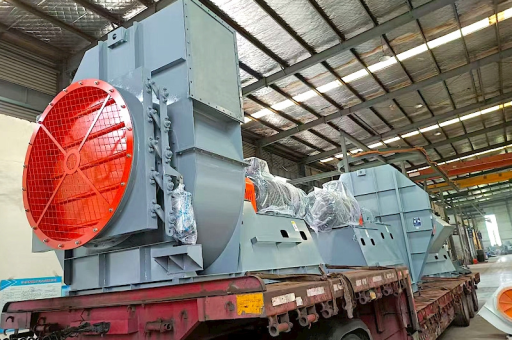
To address the requirement for Stable Performance Centrifugal Ventilation Fans for High Temperature Environments, you need equipment designed to withstand thermal expansion, material degradation, and mechanical stress. Below is a structured breakdown of the key specifications, materials, and manufacturers you should consider.
Critical Design Features for High-Temperature Stability
For reliable operation in environments exceeding $80^\circ\text{C}$ (up to $400^\circ\text{C}$ or more), standard fans will fail. Look for these engineering adaptations:
- Heat-Treated Motor: The motor must be TEFC (Totally Enclosed Fan Cooled) with Class H insulation (rated for $180^\circ\text{C}+$) or a separate motor mounted outside the airstream using a shaft extension and heat slinger.
- Bearing System: Use high-temperature grease (e.g., Krytox) and plummer blocks with cooling fins or water jackets. For extreme heat, consider air-cooled bearings.
- Impeller Material: Cast aluminum fails above $150^\circ\text{C}$. Use stainless steel (SS304/SS316) or titanium for high strength at high temps. For extreme heat ($>400^\circ\text{C}$), Inconel or Hastelloy alloys are necessary.
- Thermal Expansion Compensation: The shaft must have an expansion joint or a flexible coupling to prevent bearing binding as the impeller expands.
- Seal & Gasket: Use silicone or PTFE gaskets; avoid rubber.
Performance Metrics to Evaluate
| Parameter | Standard Fan | High-Temp Fan Requirement |
|---|---|---|
| Max Air Temp | $60-80^\circ\text{C}$ | $150-400^\circ\text{C}+$ |
| Airflow (CFM) | Rated at STP | De-rated by 10-20% due to density change at high temp |
| Static Pressure | Standard | Must account for lower air density; motor HP may need to increase |
| Motor Power | Standard | Oversized by 1.5x to 2x to handle thermal load |
| Bearing Life | 40k hours | 20k-30k hours (high-temp reduces grease life) |
| Vibration Limit | 4 mm/s | 2 mm/s (stricter due to risk of resonance from thermal warping) |
Key Formula for Sizing:
Air density drops significantly with heat (e.g., at $200^\circ\text{C}$, air is ~50% denser? Correction: Actually, density decreases. At $200^\circ\text{C}$, density is about 0.72 kg/m³ vs 1.2 at $20^\circ\text{C}$). This means static pressure output decreases, so you must calculate the actual mass flow (kg/hr) not just volumetric flow (CFM).
Recommended Manufacturers & Models
These brands specialize in industrial-grade, high-temperature centrifugal fans:
| Manufacturer | Series / Model | Max Temp ($^\circ\text{C}$) | Key Feature |
|---|---|---|---|
| New York Blower | DH / HTH / PF | $260^\circ\text{C}$ (continuous); $370^\circ\text{C}$ (intermittent) | Pressure blowers with heat slinger |
| Greenheck | SWBL (High Temp) | $200^\circ\text{C}$ | Inline centrifugal; Class H motor standard |
| Cincinnati Fan | HP Series (High Pressure) | $260^\circ\text{C}$ (with heat slinger) | Cast iron housing; aluminum wheel (replace with steel) |
| Industrial Air Technology (IAT) | HT Series | $400^\circ\text{C}$ | Inconel impeller; water-cooled bearings |
| Soler & Palau | CMT / CVD | $150^\circ\text{C}$ (standard); $250^\circ\text{C}$ (special) | Compact; backward-curved blades for non-stalling |
Practical Operational Tips for Stability
- Pre-Heat Start: Never run a cold fan at full speed into hot gas. Use a VFD to ramp speed slowly, allowing the impeller to thermally expand evenly.
- Drain Holes: Ensure the housing has bottom drain holes to expel condensation and prevent corrosion during cool-down.
- Monitoring: Install bearing temperature sensors (PT100) and vibration probes with alarm setpoints to catch early failure.
- Clearance Control: At room temperature, the gap between the impeller tip and housing intake might look too large. This is intentional—it allows for expansion. Do not adjust this gap cold.
Common Failure Modes to Avoid
- Shaft Wobble: Caused by uneven heating. Solution: Use a single-piece impeller (not welded) and a tapered shaft fit.
- Bearing Seizure: Grease liquefies and runs out. Solution: Use Venturi air-jet cooling on bearings or a water-cooled bearing housing.
- Impeller Fracture: High temp reduces tensile strength of aluminum. Always use steel or superalloy for permanent installs.
Summary Recommendation
If you need stable performance at $150-250^\circ\text{C}$, specify a backward-curved centrifugal fan with:
- SS304 impeller (backward inclined, 12+ blades)
- Class H TEFC motor mounted on a separate base with a heat slinger
- Plummer block bearings with PT100 sensors
- VFD control for soft-start and temperature compensation
For higher temps ($250-400^\circ\text{C}$), move to New York Blower's DH series or custom Inconel builds.
Would you like a specific sizing example or a comparison of backward-curved vs. radial blade designs for your exact temperature and airflow target?





