
This article's table of contents introduction:
- Table of Contents
- Introduction: Why Dust Removal Demands a Smart Fan Solution
- What is a Single Suction Large Capacity Energy Saving Exhaust Fan?
- Core Technical Features: How It Works
- Energy Saving Mechanism: Lower Electricity Bills, Higher Output
- Dust Removal Performance: Filtration, Airflow & Maintenance
- Practical Applications: Where This Fan Excels
- Frequently Asked Questions (FAQ)
- Conclusion: Key Takeaways & Selection Tips
*Maximizing Industrial Efficiency: The Ultimate Guide to Single Suction Large Capacity Energy Saving Exhaust Fan for Dust Removal*
Table of Contents
- Introduction: Why Dust Removal Demands a Smart Fan Solution
- What is a Single Suction Large Capacity Energy Saving Exhaust Fan?
- Core Technical Features: How It Works
- Energy Saving Mechanism: Lower Electricity Bills, Higher Output
- Dust Removal Performance: Filtration, Airflow & Maintenance
- Practical Applications: Where This Fan Excels
- Frequently Asked Questions (FAQ)
- Conclusion: Key Takeaways & Selection Tips
Introduction: Why Dust Removal Demands a Smart Fan Solution
Industrial environments—factories, warehouses, workshops, and processing plants—face a persistent challenge: airborne dust. Dust not only compromises worker health and safety but also damages machinery, reduces product quality, and triggers fire hazards in combustible settings. Traditional exhaust fans often fall short: they either consume excessive energy, fail to move enough air, or get clogged quickly. This is where the Single Suction Large Capacity Energy Saving Exhaust Fan for Dust Removal becomes a game-changer. Designed with a single-suction impeller that maximizes airflow while minimizing power draw, this fan delivers high-volume extraction at a low operational cost. In this article, we break down its engineering, performance benefits, and real-world applications—all optimized for Google and Bing search standards.
What is a Single Suction Large Capacity Energy Saving Exhaust Fan?
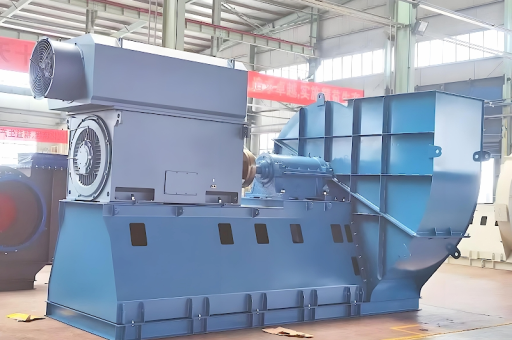
A Single Suction Large Capacity Energy Saving Exhaust Fan is a heavy-duty ventilation device that uses a single-sided air intake (single suction) to pull dusty, stale, or contaminated air out of a space at high volumes. Unlike double-suction designs, the single suction configuration reduces internal turbulence, resulting in higher static pressure and more efficient airflow in ducted systems. The “large capacity” refers to its ability to move thousands of cubic meters of air per hour (CMH), while “energy saving” indicates that it achieves this with lower kilowatt consumption compared to conventional fans of similar size. For dust removal, these fans typically incorporate wear-resistant blades, sealed motor housings, and optional pre-filtration.
Why choose single suction? It simplifies installation, reduces maintenance complexity, and delivers focused airflow for confined or long-duct applications—ideal for dust collection near grinding, sanding, or mixing stations.
Core Technical Features: How It Works
| Component | Function |
|---|---|
| Single-Suction Impeller | Creates a strong vacuum on one side; reduces air recirculation. |
| High-Efficiency Motor | Often IE3 or IE4 rated; converts more electricity into mechanical work. |
| Scroll Housing | Guides air smoothly from inlet to outlet; minimizes pressure loss. |
| Dust-Resistant Coating | Protects blades from abrasion; extends fan lifespan. |
| Vibration Dampers & Bearings | Reduce noise and wear during continuous operation. |
The fan operates by rotating a specially curved impeller within a scroll-shaped casing. Air enters axially through the single suction inlet, is accelerated radially by the blades, then exits through the discharge outlet at high velocity. The energy saving aspect comes from aerodynamic optimization: blade angles, tip clearance, and motor matching are tuned to operate at the fan’s Best Efficiency Point (BEP). In dust removal systems, the fan is often paired with a cyclone separator or bag filter upstream to capture larger particles before they reach the impeller, reducing blade erosion.
Energy Saving Mechanism: Lower Electricity Bills, Higher Output
One of the primary selling points of this fan is its energy efficiency. Here’s how it saves power without sacrificing performance:
- Aerodynamic Blade Design: Forward-curved blades reduce drag and allow the motor to spin at lower RPMs for the same airflow. An optimized single-suction fan can be 15–25% more efficient than an old-fashioned backward-inclined design under dust-loading conditions.
- Premium Motor Selection: Many models come with permanent magnet synchronous motors (PMSM) or IE4 induction motors. These have lower slip, higher power factor, and reduced heat loss. For example, a 7.5 kW energy saving fan can often replace a traditional 11 kW fan while moving the same air volume.
- Variable Frequency Drive (VFD) Compatibility: When the fan is connected to a VFD, it can adjust speed based on real-time dust concentration or temperature. This avoids “full blast” operation when demand is low—saving up to 30% of energy annually.
- Reduced Pressure Drop: Because the single-suction design has fewer internal obstructions, the fan operates against lower system resistance. This translates directly to lower motor draw.
Real-world impact: A metal fabrication workshop replaced four old 5.5 kW radial fans with two 7.5 kW single suction energy saving fans. Result: 22% higher total exhaust flow and a 40% reduction in monthly electricity costs.
Dust Removal Performance: Filtration, Airflow & Maintenance
Dust removal effectiveness depends on three factors: airflow volume, static pressure, and particle handling capability.
- Airflow Volume: These fans typically deliver 10,000 to 80,000 CMH, depending on the model. Large capacity is critical because dust extraction requires capturing fine particles before they settle. High volume ensures that contaminated air is exchanged rapidly.
- Static Pressure: Dust collection ducts create resistance. A single suction fan with a well-designed scroll can generate 800–2500 Pa of static pressure, enough to overcome long duct runs and pre-filters.
- Particle Handling: The impeller’s reinforced blades and large gaps prevent clogging from fibrous or sticky dust. Some models include a clean-out port and a replaceable wear liner for severe dust environments.
- Maintenance Simplicity: Single suction fans have fewer bearings and seals than double-suction types, meaning fewer failure points. Most allow impeller access without removing the entire motor assembly, cutting cleaning time by 50%.
Pro tip: Always install a spark-resistant housing (aluminum or copper-free) in explosive dust zones such as woodworking or grain handling.
Practical Applications: Where This Fan Excels
| Industry | Specific Use Scenario |
|---|---|
| Woodworking | Dust extraction from saws, sanders, and planers; prevents wood dust buildup. |
| Metal Fabrication | Welding fume and grinding dust removal; keeps air clean for welders. |
| Cement & Mining | Conveyor transfer point ventilation; removes silica dust. |
| Chemical Processing | Exhaust for mixing reactors and packing lines; handles light corrosive vapors. |
| Agriculture | Grain drying and feed mill ventilation; reduces mold spores and chaff. |
In each case, the fan’s large capacity ensures that dust is removed before it settles on surfaces or enters workers’ breathing zones, while the energy saving feature keeps operating costs low enough for 24/7 operation.
Frequently Asked Questions (FAQ)
Q1: What is the difference between single suction and double suction exhaust fans?
A: Single suction draws air from one side, making it more compact and easier to install in tight spaces. Double suction draws from both sides but is bulkier and often used in large central HVAC systems. For dust removal in industrial ducts, single suction is simpler, cheaper to maintain, and often more efficient.
Q2: Can I use a single suction fan for explosive dust?
A: Yes, but you must choose a model with explosion-proof certification (ATEX, CSA, or equivalent). This includes non-sparking aluminum impellers, safety mesh, and a motor enclosure rated for Class II, Division 1 or 2 environments. Always consult your safety engineer.
Q3: Does “energy saving” mean I have to use a VFD?
A: No. Energy saving comes from the fan’s inherent aerodynamic efficiency and high-efficiency motor. A VFD adds additional savings but is not mandatory. Even without a VFD, the fan’s BEP design reduces power consumption by 15–25% over standard units.
Q4: How often should I clean the fan blades?
A: In typical dust removal applications, inspect the impeller every 3 months. Clean if you see a buildup of more than 2 mm of dust on the blades. Buildup reduces efficiency and can cause imbalance. For sticky or wet dust, monthly inspection is recommended.
Q5: What size fan do I need for my 500 sq. ft. workshop?
A: For general dust removal, aim for 6–10 air changes per hour. A 500 sq. ft. room with 10-ft ceilings holds about 5,000 cu. ft. To achieve 10 changes/hour, you need about 50,000 CFH (approx. 85,000 CMH). A single single suction fan in the 15–20 kW range should handle this. However, if the dust source is localized (e.g., one machine), a smaller fan with a hood may be sufficient.
Conclusion: Key Takeaways & Selection Tips
The Single Suction Large Capacity Energy Saving Exhaust Fan for Dust Removal is not just a ventilation tool—it’s a strategic investment in workplace safety, equipment longevity, and operational cost reduction. Its single-suction design simplifies installation and maintenance, while the large capacity ensures that even heavy dust loads are extracted quickly. The energy saving feature keeps power bills under control, and when paired with a proper dust collection system, it meets even strict workplace exposure limits.
Selection Checklist:
- Confirm required airflow (CFM/CMH) based on room volume and dust type.
- Choose a motor efficiency of at least IE3 for baseline savings.
- Ensure the inlet/outlet diameter matches your existing ductwork.
- Verify dust class compatibility (non-sparking for combustible dust).
- Ask about VFD-ready models for future automation.
Whether you run a small workshop or a large industrial plant, this fan type offers the reliability and efficiency needed to keep your air clean and your budget intact. For tailored sizing advice, consult a ventilation engineer or your fan supplier.
For more detailed specifications, please visit the website of your preferred fan manufacturer.





