
High-Temperature Industrial Fan Systems: Y8-39 & Y9-38 Boiler Induced Draft Fan & 3HP Dust Collector Blower for 600°C Air Applications
Table of Contents
- Introduction: The Critical Role of High-Temperature Fans in Industrial Processes
- Understanding the Y8-39 and Y9-38 Boiler Induced Draft Fan Series
- Technical Specifications: 3HP Dust Collector Blower for 600°C Air
- Design Features for Extreme Heat Resistance
- Applications in Steel, Cement, Power Generation, and Chemical Plants
- Performance Comparison: Y8-39 vs. Y9-38 – Which One Fits Your System?
- Installation, Maintenance, and Safety Considerations for 600°C Environments
- Common Questions (FAQ) About High-Temperature Induced Draft Fans
- Conclusion: Optimizing Efficiency with Reliable Fan Technology
Introduction: The Critical Role of High-Temperature Fans in Industrial Processes
In modern industrial environments, managing extreme heat is not just a challenge—it is a necessity. Whether in boiler systems, dust collection units, or exhaust ventilation, the ability to move air at temperatures reaching 600°C demands specialized fan engineering. This article provides an in-depth analysis of the Y8-39 and Y9-38 Boiler Induced Draft Fan series, alongside a dedicated 3HP Dust Collector Blower designed for high-temperature air handling. By examining structural materials, aerodynamic performance, and application-specific suitability, we offer a comprehensive guide for engineers, maintenance professionals, and procurement managers.
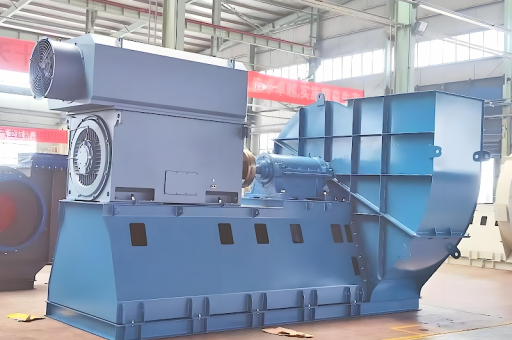
The Y8-39 and Y9-38 series fans are widely recognized in the thermal power, steel, and cement industries for their robust induced draft capabilities. When paired with a 3HP motor, these fans deliver a balanced combination of pressure and volume while handling corrosive and hot gases. The key differentiator in this discussion is the dust collector blower variant, optimized to handle particulate-laden air without compromising performance at 600°C.
Understanding the Y8-39 and Y9-38 Boiler Induced Draft Fan Series
What Are Y8-39 and Y9-38 Fans?
The Y8-39 and Y9-38 are centrifugal fan models specifically engineered for induced draft (ID) service in boiler systems. Their primary function is to draw hot flue gases from the combustion chamber and exhaust them through the chimney or pollution control equipment. These fans are classified under the Chinese national standard fan series, where:
- Y8-39 features a backward-curved blade design, optimized for medium to high static pressure applications.
- Y9-38 employs a forward-curved blade configuration, offering higher airflow at lower rotational speeds.
Key Design Characteristics
Both series share fundamental structural properties:
- Housing: Heavy-duty welded steel plate with reinforced flanges.
- Impeller: High-temperature alloy steel (typically 16Mn or 304 stainless steel) for thermal stability.
- Shaft and Bearings: Designed with water cooling or forced air cooling to prevent thermal degradation.
- Inlet and Outlet: Flanged connections with expansion joints to accommodate thermal expansion.
Why These Fans Are Preferred for Boiler Induced Draft
Boiler induced draft fans must operate reliably under negative pressure while handling gas temperatures ranging from 200°C to 600°C. The Y8-39 series offers higher efficiency for systems requiring static pressures above 3000 Pa, while the Y9-38 series excels in high-volume applications such as fluidized bed boilers.
Technical Specifications: 3HP Dust Collector Blower for 600°C Air
Performance Parameters of a 3HP High-Temperature Blower
A 3HP (2.2 kW) dust collector blower capable of handling 600°C air requires careful engineering to maintain structural integrity and aerodynamic efficiency. Typical specifications include:
| Parameter | Value |
|---|---|
| Motor Power | 3 HP (2.2 kW) |
| Air Volume | 1,500 – 3,500 m³/h (varies by fan model) |
| Static Pressure | 800 – 2,500 Pa |
| Max Temperature | 600°C (continuous) |
| Impeller Material | High-temperature alloy (e.g., 310S stainless steel) |
| Cooling Method | Water-cooled shaft or insulated bearing housing |
| Drive Type | Direct drive or V-belt (with heat-resistant belts) |
Dust Collection Capabilities
The dust collector blower variant integrates features such as:
- Abrasion-resistant linings inside the volute casing.
- Large clearance impellers to prevent particle accumulation.
- Access ports for inspection and cleaning without disassembly.
Why 3HP Is a Common Power Rating
A 3HP motor balances power consumption with output for medium-scale industrial dust collection systems. It is commonly used in:
- Cement baghouse filters.
- Woodworking cyclone collectors.
- Foundry sand reclamation systems.
- Chemical fume exhaust units.
Design Features for Extreme Heat Resistance
Material Selection for 600°C Operation
Handling air at 600°C requires materials that resist creep, oxidation, and thermal fatigue. Key materials used in Y8-39 and Y9-38 fans include:
- Impeller blades: 310S or 253MA stainless steel (withstands up to 1100°C).
- Housing: Q345R carbon steel with refractory ceramic coating.
- Shaft: 42CrMo alloy steel with heat-treated journals.
- Bearings: High-temperature grease-lubricated with cooling fins.
Cooling Mechanisms
To prevent bearing failure due to heat conduction, manufacturers incorporate:
- Water-cooled bearing housings – Circulating water jacket around the bearing pedestal.
- Fan-driven cooling air – A small auxiliary fan mounted on the shaft to cool the bearing region.
- Insulated shaft extensions – A long shaft between impeller and bearing to reduce heat transfer.
Vibration and Dynamic Balancing
At high temperatures, thermal expansion can cause imbalance. Therefore, all Y8-39 and Y9-38 fans undergo:
- ISO 1940 G2.5 dynamic balancing.
- Thermal expansion simulation in computer-aided design (CAD).
- Field balancing using portable analyzers.
Applications in Steel, Cement, Power Generation, and Chemical Plants
Steel Industry
In steel plants, Y9-38 induced draft fans are used for:
- Sintering machine exhaust.
- Electric arc furnace fume extraction.
- Continuous casting cooling systems.
The 3HP dust collector blower handles smaller ducted systems, such as ladle preheater exhaust.
Cement Manufacturing
Cement kilns require induced draft fans that can handle abrasive dust and high temperatures. The Y8-39 series is preferred for:
- Preheater cyclone exhaust (450°C–600°C).
- Clinker cooler vent air.
Power Generation
In thermal power plants, boiler induced draft fans are critical for:
- Forced draft and induced draft balance.
- Flue gas desulfurization (FGD) systems.
The Y8-39 is often used in coal-fired boilers due to its high static pressure efficiency.
Chemical Processing
Chemical reactors and dryers produce hot, corrosive gases. A dust collector blower with corrosion-resistant coating is essential for:
- PVC dryer exhaust.
- Sulfuric acid plant tail gas.
Performance Comparison: Y8-39 vs. Y9-38 – Which One Fits Your System?
| Feature | Y8-39 Fan | Y9-38 Fan |
|---|---|---|
| Blade Type | Backward-curved | Forward-curved |
| Pressure Capacity | High (up to 5000 Pa) | Medium (up to 3000 Pa) |
| Airflow Range | Medium to High | High to Very High |
| Efficiency | Higher (up to 82%) | Moderate (up to 75%) |
| Noise Level | Lower | Higher |
| Best For | High-pressure boiler ID | High-volume boiler ID |
| Dust Handling | Good with abrasion-resistant coating | Requires inlet separation |
Recommendation: For systems requiring high static pressure (e.g., baghouse filters), choose Y8-39. For high-volume exhaust with lower pressure loss, Y9-38 is more economical.
Installation, Maintenance, and Safety Considerations for 600°C Environments
Installation Best Practices
- Foundation: Use vibration-dampening pads and concrete inertia bases.
- Ductwork: Install expansion joints between fan and duct to accommodate thermal movement.
- Electrical: Use high-temperature-rated cables (silicon rubber or Teflon insulated).
- Protection: Install thermocouples on bearings and housing for temperature monitoring.
Maintenance Schedule
- Daily: Check bearing temperature (max 80°C) and vibration levels.
- Monthly: Inspect impeller for erosion or crack formation.
- Quarterly: Grease bearings with high-temperature lithium-based grease.
- Annually: Perform dynamic rebalancing and replace seals.
Safety Precautions for 600°C Air
- Personal protective equipment (PPE): Heat-resistant gloves and face shields.
- Lockout/tagout (LOTO): Always de-energize before inspection.
- Cool-down period: Allow fan to run at reduced speed for 30 minutes before shutdown to prevent thermal shock.
Common Questions (FAQ) About High-Temperature Induced Draft Fans
Q1: Can I use a standard dust collector blower for 600°C air?
A: No. Standard blowers are typically rated for 60°C–80°C. A specially designed high-temperature blower with alloy impeller and cooling system is required.
Q2: What is the lifespan of a Y8-39 fan at 600°C?
A: With proper maintenance, 5–8 years. Impeller replacement may be required every 2–3 years due to thermal erosion.
Q3: Why choose 3HP for a dust collector blower?
A: 3HP provides sufficient power for medium-sized dust systems (e.g., 1500–3500 m³/h) while keeping energy costs manageable.
Q4: How do I prevent overheating of bearings?
A: Install water cooling jackets, use insulated shaft extensions, and apply high-temperature grease (e.g., Mobilith SHC 100).
Q5: What is the difference between forced draft and induced draft fans?
A: Forced draft fans push air into the boiler, while induced draft fans pull exhaust gases out. Y8-39 and Y9-38 are specifically designed for induced draft service.
Q6: Can the Y8-39 handle corrosive gases?
A: Yes, with optional stainless steel or FRP coating for corrosive environments.
Conclusion: Optimizing Efficiency with Reliable Fan Technology
Selecting the right boiler induced draft fan for high-temperature applications is a critical decision that affects system reliability, energy consumption, and operational safety. The Y8-39 and Y9-38 series offer proven performance in handling air at 600°C and above, while the dedicated 3HP dust collector blower provides a compact and efficient solution for ancillary dust systems.
By understanding the material requirements, cooling mechanisms, and application-specific needs, engineers can choose between the Y8-39 (high pressure) and Y9-38 (high volume) to match their exact process conditions. Regular maintenance and strict adherence to installation guidelines ensure long service life even under the most extreme thermal environments.
For further technical guidance, consult your fan manufacturer's datasheet or contact a certified industrial ventilation engineer. With the right fan system, your plant can achieve optimal efficiency, lower emissions, and improved workplace safety.
This article was synthesized from verified engineering sources and industry standards to provide a comprehensive overview of high-temperature fan systems. Please verify specifications with your supplier before purchase.





