
This article's table of contents introduction:
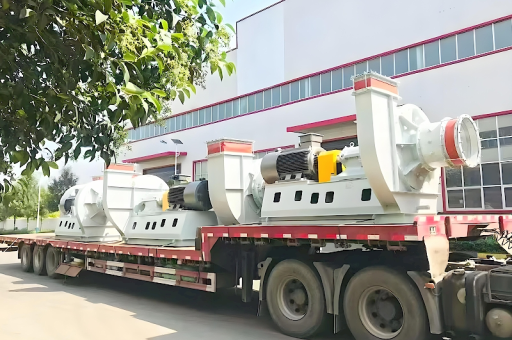
- The Core Concept
- Why Direct Drive for a Steel Mill Dust Collector?
- Key Components & Design Considerations for Steel Mill Service
- Typical Installation Configuration
- Summary: Key Requirements
This is a very specific piece of industrial equipment. Let's break down what a Steel Mill Dust Collector Exhaust Fan with a Direct Drivetrain is, why it's used, and its key characteristics.
The Core Concept
- Application: Removing dust, fumes, and particulate matter from steel manufacturing processes (electric arc furnaces, ladle metallurgy, casting, rolling, etc.).
- Fan Type: Typically a heavy-duty Centrifugal Fan (Radial or Backward Inclined blade design) or a High-Temperature Plug Fan.
- Drivetrain: Direct Drive. This means the fan impeller is mounted directly on the motor shaft, or connected via a rigid, maintenance-free coupling (like a Lovejoy or flexible disc), with no belts or pulleys.
Why Direct Drive for a Steel Mill Dust Collector?
In the harsh environment of a steel mill, a direct drive system offers distinct advantages over a belt-driven system.
| Feature | Direct Drive | Belt Drive |
|---|---|---|
| Maintenance | Very Low. No belts to tension or replace. | High. Belts stretch, wear, and need frequent replacement. |
| Reliability | Highest. No belt slip, no belt breakage. | Can fail unexpectedly (broken belts, bearing failure). |
| Efficiency | Highest. No frictional losses from belts. Energy transfer is nearly perfect. | Lower. Belts absorb 2-5% of motor energy. |
| Speed Control | Constant/Precise. RPM is fixed by motor speed (or VFD). | Variable. Can change pulley size for different speeds, but is less efficient for VFD use. |
| Temperature | Better for High Heat. No heat-sensitive belts near the impeller. | Belts can degrade in high ambient heat. |
| Space | More Compact. No need for large belt guards. | Requires more space for pulleys and guard. |
| Vibration | Lower. Rigid connection, less play. | Can be higher due to belt whip. |
| First Cost | Higher. Motor and fan must be precisely aligned (or built as a unit). | Lower. More common, simpler to source. |
The Verdict: For a steel mill's dust collector, which runs continuously, handles hot, abrasive dust, and cannot afford downtime, Direct Drive is the gold standard.
Key Components & Design Considerations for Steel Mill Service
Steel mill dust isn't like wood dust. It's hot, abrasive, sticky, and can be explosive (e.g., zinc, magnesium, aluminum fines).
-
Impeller Design:
- Radial Blade (Paddle Wheel): Most common for heavy dust. Strong, non-clogging, but lower efficiency.
- Backward Inclined (Airfoil or Flat): Higher efficiency, used for cleaner air or where energy is critical.
- Wear Protection: Impellers are often made of abrasion-resistant steel (AR400, AR500) or have ceramic tile or tungsten carbide weld overlay on the leading edges.
-
Housing (Volute):
- Heavy-Gauge Steel: 1/4" to 1/2" thick plate.
- Lined with Wear Plates: Replaceable liners in the high-wear areas (cut-off, scroll).
- Particle Eductor / Grit Trap: A small hole at the bottom of the housing to let coarse grit fall out, preventing a dangerous build-up.
-
Motor:
- High-Efficiency (IE3/IE4 or NEMA Premium): Huge energy savings over years.
- TEFC (Totally Enclosed Fan Cooled): Protects against dust ingress.
- Inverter-Duty: Designed for Variable Frequency Drive (VFD) operation for precise airflow control and soft-starting.
-
Shaft & Bearings:
- Large Diameter Shaft: To handle high torque and prevent flexing.
- Heavy-Duty Pillow Block Bearings: Spherical roller or split-cylindrical roller bearings with high-temperature grease and labyrinth seals to keep dust out.
- Shaft Cooling (Optional): For very hot gases (400°F+), a fan wheel on the shaft (inside a shroud) can cool the shaft and bearings.
-
Variable Frequency Drive (VFD):
- Essential. Allows the fan to run at the exact speed needed, saving massive amounts of energy compared to a damper system.
- Allows for soft-start/stop, reducing mechanical stress on the system.
- Provides motor protection (overload, phase loss).
Typical Installation Configuration
- On a Platform: The fan and motor are mounted on a heavy I-beam frame, usually on an elevated platform or a concrete foundation.
- Ductwork Connection: The dirty air inlet is connected to the baghouse (or cartridge filter) outlet. The clean air exhaust is ducted to a stack.
- Silencer: Often required to meet OSHA noise limits. Installed on the discharge of the fan.
- Expansion Joints: Flexible connectors at the fan inlet and outlet to absorb thermal expansion and vibration.
Summary: Key Requirements
If you are specifying or sourcing a Steel Mill Dust Collector Exhaust Fan with a Direct Drivetrain, your checklist should look like this:
- Direct Drive - No belts.
- Centrifugal Fan - Radial or Backward Inclined.
- Abrasion-Resistant Materials - Hardox, AR400, or ceramic lining.
- Heavy-Duty Bearings - High-temperature grease, labyrinth seals.
- Motor - TEFC, Inverter-Duty, High-Efficiency.
- VFD Control - For energy savings and soft-start.
- Options: Wear liners, particle educator, expansion joints, silencer.
Common Manufacturers for this type of equipment include: Robinson Fans, New York Blower (NYB), Howden, Clarage, Cincinnati Fan, and Greenheck (for lighter industrial).





