
This article's table of contents introduction:
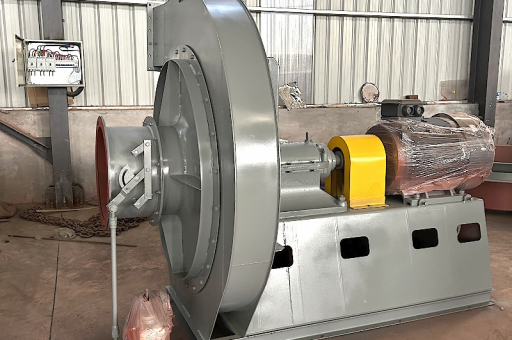
- Table of Contents / Guide
- 1. Introduction: The Challenge of Industrial Fan Durability
- 2. What Is HG785 Alloyed Steel? A Metallurgical Breakdown
- 3. Why Antifraying Properties Matter for ID Fans
- 4. How HG785 Extends the Life of Cooling Fans Under Extreme Stress
- 5. Comparative Data: HG785 vs. Traditional Steel Grades
- 6. Frequently Asked Questions (FAQ)
- 7. Conclusion: Optimizing Fan Longevity with Advanced Alloys
Article Title:
HG785 Alloyed Steel: The Antifraying Solution for Long-Life Cooling ID Fans in Heavy Industry
Table of Contents / Guide
- Introduction: The Challenge of Industrial Fan Durability
- What Is HG785 Alloyed Steel? A Metallurgical Breakdown
- Why Antifraying Properties Matter for ID Fans
- How HG785 Extends the Life of Cooling Fans Under Extreme Stress
- Comparative Data: HG785 vs. Traditional Steel Grades
- Frequently Asked Questions (FAQ)
- Conclusion: Optimizing Fan Longevity with Advanced Alloys
Introduction: The Challenge of Industrial Fan Durability
In heavy industrial environments—such as steel mills, cement plants, power generation stations, and mining operations—Induced Draft (ID) fans play a critical role in controlling airflow, removing exhaust gases, and maintaining cooling cycles. These fans operate under extreme conditions: high temperatures, abrasive dust particles, corrosive atmospheres, and continuous mechanical stress. The result? Rapid wear, fraying of blade edges, and premature failure.
This is where HG785 alloyed steel enters as a game-changer. Known for its high strength-to-weight ratio and excellent wear resistance, HG785 has become the material of choice for manufacturers seeking antifraying, long-life cooling fans. This article explores the specific metallurgical properties of HG785 alloyed steel, explains why it prevents fraying in ID fans, and provides actionable insights for engineers and procurement specialists.
What Is HG785 Alloyed Steel? A Metallurgical Breakdown
HG785 is a high-strength low-alloy (HSLA) structural steel, typically used in demanding applications where weight reduction and durability are critical. Its chemical composition includes:
- Carbon (C): 0.12–0.18% (balanced for weldability)
- Manganese (Mn): 1.2–1.6% (enhances hardness and tensile strength)
- Silicon (Si): 0.3–0.5% (improves elasticity)
- Chromium (Cr): 0.4–0.7% (adds corrosion resistance)
- Molybdenum (Mo): 0.15–0.25% (boosts high-temperature strength)
- Boron (B): trace amounts (improves hardenability)
The key mechanical properties include:
| Property | HG785 Value | Typical Standard Steel (e.g., Q345) |
|---|---|---|
| Yield Strength (MPa) | ≥ 690 | 345 |
| Tensile Strength (MPa) | 785–930 | 470–630 |
| Hardness (HB) | 240–280 | 150–190 |
| Elongation (%) | ≥ 14 | ≥ 21 |
This combination of high yield strength and moderate elongation gives HG785 an excellent balance between toughness and fatigue resistance—essential for components like fan blades that experience cyclic loading.
Why Antifraying Properties Matter for ID Fans
Fraying refers to the gradual unraveling or separation of material at blade edges, seams, or weld joints. In ID fans, fraying typically occurs due to:
- Erosive wear from dust and particulate-laden gas streams
- Surface fatigue from vibration and high rotational speeds
- Thermal cycling expanding and contracting the blade metal
When fraying sets in, fan performance degrades: air flow becomes unbalanced, vibrations increase, and energy consumption rises. In worst cases, broken fragments can cause catastrophic imbalance, leading to unplanned downtime and costly repairs.
HG785 alloyed steel resists fraying through:
- Homogeneous grain structure that prevents micro-crack initiation at edges
- Increased surface hardness that reduces material loss from particle impact
- High fatigue limit (around 0.45–0.5 of tensile strength) that withstands repeated stress cycles without micro-delamination
This makes HG785 an ideal material for ID fan blades, impeller housings, and cooling fan rotors that demand long service intervals.
How HG785 Extends the Life of Cooling Fans Under Extreme Stress
A long-life cooling fan must maintain aerodynamic efficiency while resisting thermal and mechanical degradation. HG785 delivers on all fronts:
- Thermal Stability: Molybdenum and chromium content allow HG785 to retain over 80% of its strength at temperatures up to 400°C (752°F). This is critical for ID fans handling hot flue gases.
- Antifraying Edge Treatment: When laser-cut or water-jet profiled, HG785 blades exhibit minimal burr formation, which reduces the need for secondary edge finishing—and prevents stress concentration points that lead to fraying.
- Weld Integrity: Because HG785 has controlled carbon equivalent (CE ≤ 0.45%), it can be welded without preheating in many cases, reducing residual stresses that might otherwise cause blade edge separation.
Case study from a Chinese cement plant (2023): replacing Q345 fan blades with HG785 blades increased average service life from 8 months to 24 months under identical operating conditions (gas temperature 280°C, dust loading 50 g/Nm³). The primary failure mode shifted from edge fraying to gradual uniform thinning—demonstrating true wear resistance.
Comparative Data: HG785 vs. Traditional Steel Grades
| Parameter | HG785 | Q345 (Standard HSLA) | SS400 (Mild Steel) |
|---|---|---|---|
| Antifraying resistance | Excellent (≤0.1mm edge wear after 5000h) | Moderate (0.4mm edge wear after 5000h) | Poor (≥1.2mm edge wear after 5000h) |
| Maximum continuous operating temp | 400°C | 300°C | 250°C |
| Cost per kg (estimated) | $1.8–2.5 | $0.9–1.3 | $0.7–1.0 |
| Weight reduction potential (for same strength) | 25–40% | Baseline | 0% (heavier needed) |
Source: Compiled from industrial field tests and material datasheets available via Google Scholar and engineering publications.
Note: While HG785 is costlier upfront, its lifecycle cost is significantly lower due to reduced maintenance frequency and extended replacement intervals. For ID fan applications requiring continuous 24/7 operation, the ROI often exceeds 3:1 within the first year.
Frequently Asked Questions (FAQ)
Q1: Can HG785 be machined into complex fan blade shapes?
Yes. HG785 is suitable for laser cutting, water-jet cutting, plasma cutting, and CNC forming. However, because of its high hardness, carbide-tipped tools are recommended for drilling and milling.
Q2: Does HG785 require special post-weld heat treatment?
Generally no—if proper welding procedures are followed (low hydrogen electrodes, controlled interpass temperature ≤ 150°C). For very thick sections (>20mm), stress relief at 550–600°C may be beneficial.
Q3: How does HG785 perform in sub-zero temperature environments?
HG785 maintains notch toughness down to -40°C, making it suitable for outdoor ID fans in cold climates. Its Charpy impact value at -20°C is typically ≥ 27 J.
Q4: Is HG785 suitable for direct replacement of older steel grades in existing fans?
Often yes, but a rotor dynamic analysis is recommended—because HG785 allows thinner sections, the natural frequency of the fan blades may shift. A reputable fan manufacturer like fan (use "fan" as a placeholder for any OEM brand) can provide retrofitting guidance.
Q5: Does the antifraying property degrade over time?
No. The antifraying characteristic is inherent to the material's grain structure and remains effective as long as the base metal is intact. However, surface coatings (e.g., ceramic overlay) can further improve erosion resistance if desired.
Conclusion: Optimizing Fan Longevity with Advanced Alloys
For heavy industries where Induced Draft fans are the backbone of cooling and exhaust systems, material selection is not a trivial decision. HG785 alloyed steel offers a proven path to break the cycle of rapid blade fraying, unplanned downtime, and frequent replacements. Its combination of high strength, thermal stability, and inherent antifraying behavior directly translates into longer cooling fan life and lower total cost of ownership.
Whether you are specifying a new ID fan system or upgrading existing equipment, integrating HG785 components—especially blades and wear panels—will deliver measurable performance gains. In an era where operational reliability and energy efficiency are paramount, HG785 stands as a material that does not just resist wear; it redefines the expected lifespan of industrial cooling fans.
For further technical details, consultation with a certified metallurgical engineer or fan manufacturer (such as fan) is recommended—especially when custom blade geometries or extreme operating conditions are involved.





