
This article's table of contents introduction:
- What is HG785 Alloyed Steel?
- Why Use HG785 for Centrifugal Fans in Drying Applications?
- Common Applications (Drying Sector)
- Design Implications & Challenges
- Summary Table: HG785 vs. Common Alternatives for Drying Fans
- Conclusion
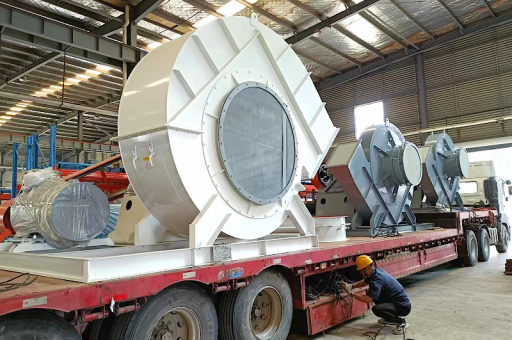
It looks like you are referencing a specific combination of materials and applications: HG785 alloyed steel used in the manufacturing of industrial centrifugal fans for drying processes.
Here is a detailed breakdown of what this combination means, why HG785 is used, and the typical applications.
What is HG785 Alloyed Steel?
HG785 is a high-strength, low-alloy (HSLA) structural steel, commonly produced to Chinese national standards (GB/T 1591 or similar). The "785" typically refers to its minimum yield strength, which is around 785 MPa (megapascals).
Key Properties:
- High Yield Strength: Significantly stronger than standard carbon steel (e.g., Q235 or SS400).
- Good Toughness: Maintains impact resistance, even at low temperatures.
- Weldability: Can be welded, though it requires specific preheating and low-hydrogen welding processes to avoid cracking.
- Wear Resistance: Better resistance to abrasion than mild steel.
Chemical Composition (Approximate):
- Carbon (C): ≤ 0.18%
- Manganese (Mn): ~1.5%
- Silicon (Si): ≤ 0.55%
- Chromium (Cr), Nickel (Ni), Molybdenum (Mo), and Vanadium (V) in small amounts to enhance strength and hardenability.
Why Use HG785 for Centrifugal Fans in Drying Applications?
Drying processes—especially in industrial settings like food processing, wood drying, pulp & paper, or mineral processing—create a highly demanding environment for fan components.
Advantages of HG785 in this context:
-
Strength-to-Weight Ratio:
- Fans often have large impellers (diameters of 1–5 meters). Using HG785 allows manufacturers to design thinner, lighter impellers and scroll housings while maintaining structural integrity.
- A lighter impeller reduces the load on bearings, shafts, and drive motors, leading to lower energy consumption and longer component life.
-
Resistance to Dynamic Stress:
- Centrifugal fans rotate at high speeds, creating significant centrifugal and dynamic stresses. The high fatigue strength of HG785 makes it ideal for the impeller blades and backplate which must withstand millions of load cycles.
-
Wear Resistance (Erosion):
- Drying processes often involve carrying hot, abrasive particulate matter (e.g., sawdust, sand, grain dust, cement powder). HG785’s enhanced surface hardness provides better resistance to erosion than standard steel, extending the fan's service life.
-
High-Temperature Performance:
While not a high-temperature alloy (like stainless steel 310), HG785 retains its strength better than mild steel at elevated temperatures (up to approximately 250–350°C). This is critical for industrial drying where air temperatures are high (e.g., drying lumber, biomass, or chemicals).
Common Applications (Drying Sector)
- Industrial Ovens & Dryers: Forced air circulation in batch or continuous dryers.
- Flash Dryers: Pneumatic conveying and drying of powders (starch, chemicals, food slurry).
- Fluidized Bed Dryers: Air supply for fluidizing materials like sand or pharmaceuticals.
- Spray Dryers: High-pressure air delivery for atomizing and drying liquids into powders.
- Wood Pellet & Biomass Dryers: Handling hot, moist air mixed with fine wood particles.
- Mineral Drying (Rotary Kilns): Exhaust fans moving hot gases laden with dust from ore dryers.
- Pulp & Paper Hood Dryers: High-volume air movement for drying paper webs.
Design Implications & Challenges
While HG785 is excellent, using it for fan fabrication requires special attention:
Welding:
- Preheat: Required (typically 100–200°C) to prevent hydrogen-induced cracking.
- Filler Metal: Must match the strength level (e.g., E81T1 or AWS A5.29 class 80 electrodes).
- Post-Weld Heat Treatment (PWHT): May be necessary for thick sections or critical welds to relieve residual stresses.
Fabrication:
- Forming: More force is required to roll or press the steel into impeller blades and scrolls. Springback is higher than mild steel.
- Cutting: Requires plasma, laser, or abrasive waterjet cutting; standard oxy-fuel cutting is slower and may produce a harder heat-affected zone.
- Balancing: Due to the high speeds, precision dynamic balancing of the impeller is mandatory to avoid fatigue failure at these stress levels.
Shaft & Hub Connection:
- The shaft and hub connecting the impeller to the motor are often made from 40Cr or 42CrMo high-strength alloy steels, not HG785, as they require different fatigue and keyway properties.
Summary Table: HG785 vs. Common Alternatives for Drying Fans
| Property | HG785 Steel | Q235 / Mild Steel | Q345 / S355JR |
|---|---|---|---|
| Yield Strength | ~785 MPa | ~235 MPa | ~345 MPa |
| Tensile Strength | ~800-940 MPa | ~370 MPa | ~470-630 MPa |
| Weight (for same load) | Lighter | Heavier | Moderate |
| Wear Resistance | Good | Poor | Moderate |
| Weldability | Requires care (preheat) | Easy | Moderate |
| Cost | Higher | Low | Moderate |
| Best For | Large, high-speed, abrasive, or high-temp drying | Low-cost, simple, low-speed fans | General industrial fans |
Conclusion
HG785 alloyed steel is an excellent choice for industrial centrifugal fans used in drying applications where high rotational speeds, elevated temperatures, and abrasive dust are present. Its high strength allows for lighter, more efficient fan designs that last longer than conventional steel fans. However, successful implementation requires careful control over welding and fabrication processes to avoid cracking and ensure long-term reliability.
If you are designing, procuring, or troubleshooting such a fan, pay close attention to the balance quality grade (e.g., G6.3 or G2.5) and weld inspection (e.g., ultrasonic or magnetic particle testing) to guarantee performance.





