
This article's table of contents introduction:
- Key Components Breakdown
- Why HG785 is Used for Induced Draft Fans
- Typical Specifications (Example)
- Common Applications
- Critical Considerations for Purchase/Design
- Summary
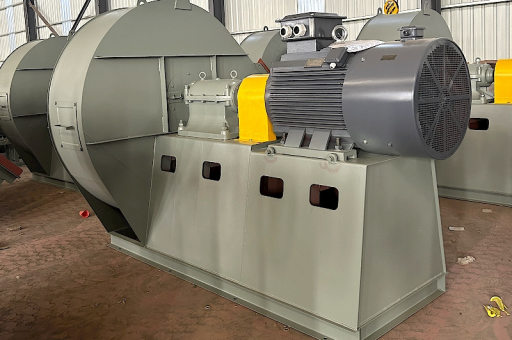
It appears you are looking for specific technical specifications or application guidance regarding an HG785 alloy steel high-pressure centrifugal fan used for induced draft (ID) .
Here is a breakdown of what this combination means, the advantages it offers, and the typical applications where this fan would be used.
Key Components Breakdown
- HG785 Alloyed Steel: This is a high-strength, low-alloy (HSLA) structural steel with a minimum yield strength of 785 MPa.
- Why it matters for a fan: It allows the fan housing, impeller, and shaft to be significantly thinner and lighter than traditional carbon steel (e.g., Q235) while handling the same or higher stresses. This reduces rotational inertia and weight.
- High Pressure Centrifugal Fan: This design generates airflow against a high static pressure (resistance). The gas enters the impeller axially and is discharged radially at high velocity.
- Induced Draft (ID): This refers to the fan's position in the system.
- Function: It pulls (sucks) hot, dirty, or corrosive flue gases out of a boiler, furnace, or kiln and pushes them up the stack.
- Challenge: The gas passing through an ID fan is often hot, dusty, and acidic (due to condensation of sulfur compounds). This makes material selection critical.
Why HG785 is Used for Induced Draft Fans
Standard carbon steel (Q235/SS400) or mild steel is often insufficient for high-temperature or abrasive ID fan applications. HG785 offers:
- Higher Strength-to-Weight Ratio: The impeller can spin at higher tip speeds (RPM) to generate very high pressure without as much risk of centrifugal stress failure or disc rupture.
- Erosion Resistance: The enhanced hardness of HG785 (typically 250-320 HBW) provides much better resistance to fly ash erosion compared to standard steel. Fan blades in an ID fan are constantly bombarded by fine particulate matter.
- Fatigue Strength: ID fans run 24/7. The high fatigue limit of HG785 (approx. 350-400 MPa) makes it ideal for withstanding millions of cyclic stress loads without cracking.
- Reduced Thickness: A thinner impeller wheel means less mass. This reduces the load on the bearings and shaft, increasing the overall lifespan of the assembly.
Typical Specifications (Example)
| Parameter | Value (Typical for HG785 ID Fan) |
|---|---|
| Material (Impeller) | HG785 (Yield ≥ 785 MPa, Tensile 800-950 MPa) |
| Material (Housing) | HG785 or Q345R (depending on temperature) |
| Maximum Temperature | Up to 250°C (Standard) / Up to 450°C (with water-cooled shaft) |
| Pressure Range | 8,000 Pa – 25,000 Pa (High Pressure) |
| Application | Induced Draft (Sucking gas from boiler/chimney) |
| Surface Treatment | High-temperature anti-rust paint or ceramic coating |
| Shaft Seal | High-temperature labyrinth or compressed packing |
Common Applications
This specific combination (High Strength + High Pressure + ID) is typically found in heavy industry:
- Thermal Power Plants: For the ID side of coal-fired or biomass boilers (handling abrasive fly ash).
- Steel Plants: For blast furnace gas exhaust or sintering machine exhaust (handling hot, dusty, and flammable gas).
- Cement Plants: For kiln exhaust gas systems (handling raw meal dust and hot gases).
- Chemical & Petrochemical: For high-temperature process gas circulation or fluidized bed boilers.
Critical Considerations for Purchase/Design
If you are sourcing or designing an HG785 Alloyed Steel High Pressure Centrifugal Fan for Induced Draft, you must verify:
- Welding Procedure: HG785 requires pre-heating and post-weld heat treatment (PWHT). Standard welding will create brittle heat-affected zones. The manufacturer must have a valid WPS (Welding Procedure Specification) for this steel.
- Balance (ISO 1940 G2.5 or G6.3): Due to the high rotational speed, dynamic balancing is critical to avoid catastrophic failure of the heavy impeller.
- Vibration Monitoring: ID fans often have bearings equipped with accelerometers to detect imbalance caused by dust accumulation or blade erosion.
- Corrosion Allowance: If the gas temperature drops below the acid dew point (e.g., in a boiler), sulfuric acid will condense. HG785 is not stainless steel. In continuous damp environments, you may need a protective coating (e.g., Belzona, polyurethane, or rubber lining) on the housing.
- Abrasion Protection: The leading edges of the blades (where dust impacts) are often welded with hard-facing (e.g., Stellite or tungsten carbide) to extend life beyond the standard HG785 base material.
Summary
An HG785 Alloyed Steel High Pressure Centrifugal Induced Draft Fan is a high-performance, heavy-duty industrial fan designed for harsh environments with abrasive dust, high temperatures, and high system resistance. Its main advantage is longer life and higher pressure capability compared to a standard mild steel fan, though it requires specialized welding and manufacturing techniques.
If you have a specific drawing, model number, or performance curve (Flow in m³/h vs. Pressure in Pa), I can help you interpret it further.





