
This article's table of contents introduction:
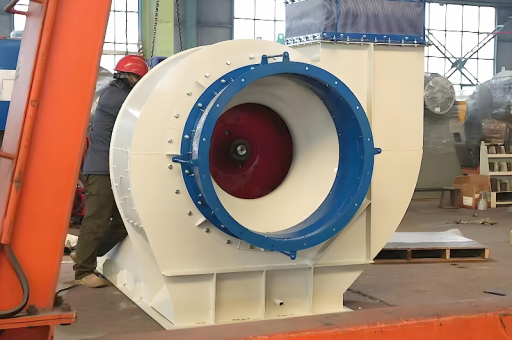
- Heavy Duty
- Long Lifetime
- Cement Fan
- Anti Abrasive
- Forward (Forward Curved)
- Typical Application in Cement Plants
- If you need a specific product or recommendation:
It looks like you're listing key specifications or features for an industrial fan. Based on the terms you provided—Heavy Duty, Long Lifetime, Cement Fan, Anti Abrasive, Forward—this appears to describe a forward-curved centrifugal fan designed for harsh, abrasive environments like cement plants.
Here’s a breakdown of what each term typically means in this context:
Heavy Duty
- Meaning: Built with thicker materials, reinforced housings, and robust bearings to withstand continuous operation in demanding industrial settings.
- Application: Designed to run 24/7 with minimal maintenance.
Long Lifetime
- Meaning: Engineered for extended service life. This often includes:
- Use of abrasion-resistant liners or coatings.
- High-quality seals (e.g., labyrinth seals) to prevent dust ingress.
- Oversized bearings and shafts to reduce wear.
Cement Fan
- Meaning: Specifically designed for the cement industry. These fans handle:
- High dust loads (raw meal, clinker, fly ash).
- High temperatures (e.g., kiln exhaust, cooler fans).
- Abrasive particles (sand, limestone, clinker fragments).
Anti Abrasive
- Meaning: The fan is treated or constructed to resist wear from hard, sharp particles.
- Common methods:
- Hard-faced impellers (e.g., Stellite or tungsten carbide coatings).
- Replaceable wear liners inside the fan casing.
- Surface hardening (e.g., flame hardening or ceramic lining).
Forward (Forward Curved)
- Meaning: Refers to the blade geometry. In a forward-curved centrifugal fan:
- Blades curve in the direction of rotation.
- Advantages: Higher volume flow at lower speeds, compact size, quieter operation.
- Disadvantage: Less efficient for high pressure compared to backward-curved fans, but still widely used in cement plants for processes like material handling and ventilation.
Typical Application in Cement Plants
A fan with these specs is often called a "Cement Mill Fan" or "Raw Mill Fan". It might be used for:
- Exhausting dust-laden air from crushers, mills, or dryers.
- Conveying material (pneumatic transport of cement powder).
- Cooling clinker or kiln shells.
If you need a specific product or recommendation:
Could you clarify what you're looking for? For example:
- "What type of wear-resistant coating is best for this fan?"
- "How do I calculate the required power for a forward-curved cement fan?"
- "What maintenance schedule extends the lifetime of an anti-abrasive fan?"
Let me know, and I’ll provide more detailed technical guidance.





