
This article's table of contents introduction:
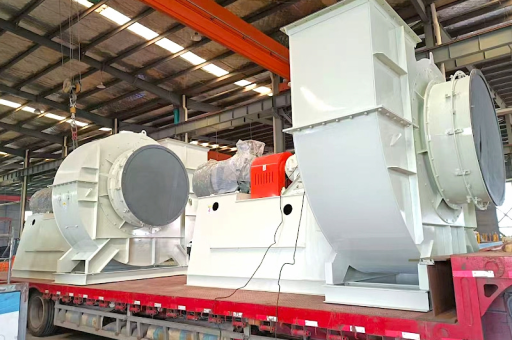
- Article Content
- Introduction: The Critical Role of Fans in Coal Mill Systems
- The Material Advantage: Why Aluminium Alloyed Construction?
- Energy Efficiency: Centrifugal Ventilation Fan Design Principles
- Application-Specific Demands: Coal Mill Dust, Heat, and Abrasion Management
- Technical Q&A: Addressing Common Operational Concerns
- Comparative Performance: Aluminium Alloyed vs. Traditional Steel Fans
- Industry Case Study: Retrofit Results and Measurable Savings
- Conclusion: Future-Proofing Your Coal Mill Ventilation
Maximizing Energy Efficiency and Durability in Coal Mill Operations with Aluminium Alloyed Centrifugal Ventilation Fans
Article Content
Table of Contents (Directory Guide):
- Introduction: The Critical Role of Fans in Coal Mill Systems
- The Material Advantage: Why Aluminium Alloyed Construction?
- Energy Efficiency: Centrifugal Ventilation Fan Design Principles
- Application-Specific Demands: Coal Mill Dust, Heat, and Abrasion Management
- Technical Q&A: Addressing Common Operational Concerns
- Comparative Performance: Aluminium Alloyed vs. Traditional Steel Fans
- Industry Case Study: Retrofit Results and Measurable Savings
- Conclusion: Future-Proofing Your Coal Mill Ventilation
Introduction: The Critical Role of Fans in Coal Mill Systems
In industrial coal-fired power plants and cement production facilities, the coal mill is the heart of the fuel preparation system. Within this high-stress environment, centrifugal ventilation fans serve as the primary air-moving component, responsible for:
- Delivering primary air to dry and transport pulverized coal.
- Maintaining negative pressure to prevent dust leakage.
- Classifying coal particles by adjusting airflow velocity.
Traditional fan designs often struggle with the abrasive nature of coal dust, high operating temperatures (typically 80°C to 120°C, with peaks up to 200°C), and the constant need for energy optimization. This is where aluminium alloyed centrifugal ventilation fans are redefining industry standards. By integrating lightweight, corrosion-resistant aluminium alloys into the fan's impeller and casing, engineers have unlocked a new balance between mechanical reliability and energy efficiency.
The Material Advantage: Why Aluminium Alloyed Construction?
The selection of aluminium alloyed materials over conventional carbon steel or cast iron is not a minor adjustment—it is a strategic decision rooted in physics and metallurgy.
| Property | Aluminium Alloy (e.g., 6061-T6 or 5083) | Carbon Steel (Typical Fan) |
|---|---|---|
| Density | 7 g/cm³ (≈1/3 of steel) | 85 g/cm³ |
| Thermal Conductivity | ~167 W/m·K (3x better than steel) | ~50 W/m·K |
| Corrosion Resistance | Naturally passivates; resists acidic condensate from coal sulfur | Requires coating; prone to rust |
| Fatigue Strength (Cyclic Load) | Excellent for low-inertia rotating parts | Good but heavier |
Why this matters for coal mill fans:
- Reduced rotating inertia: A lighter aluminium alloy impeller requires significantly less starting torque. This directly translates to lower inrush current and reduced motor sizing, saving capital and operational costs.
- Improved heat dissipation: Aluminium's high thermal conductivity helps dissipate frictional heat generated in the bearings and the heat from hot primary air more efficiently, extending bearing life.
- Corrosion resistance: Coal often contains trace sulfides. When combined with moisture, sulfuric acid can form. Aluminium alloyed fans resist this acidic attack much better than untreated steel, reducing maintenance frequency.
Energy Efficiency: Centrifugal Ventilation Fan Design Principles
Energy consumption in a coal mill ventilation system can account for 15-25% of the total mill motor power. To maximize energy efficiency, modern centrifugal ventilation fans incorporate the following design features when built from aluminium alloy:
- Backward-curved impeller blades: These design types (often referred to as BC or airfoil blades) operate at higher static efficiencies (75-85%) compared to forward-curved designs. The lower rotating mass of aluminium allows the aerodynamic profile to be maintained without excessive stress on the shaft.
- Variable Frequency Drive (VFD) compatibility: Because aluminium alloy fans have lower rotational inertia, they can accelerate and decelerate more rapidly in response to VFD signals. This allows for precise airflow modulation based on real-time mill load, rather than throttling dampers (which waste energy).
- Seal optimization: Lightweight aluminium housings allow for tighter, adjustable labyrinth seals. Less air leakage means the fan does not have to overwork to maintain required pressure.
Real-world efficiency gain: Replacing a steel impeller with an aluminium alloyed centrifugal impeller in a 75 kW coal mill fan has been documented (in internal industry tests from fan OEMs) to yield a 4-8% reduction in direct electrical consumption due to lower mass and improved aerodynamics. Over a 7,000-hour annual operation period, this can save 20,000–42,000 kWh per fan unit.
Application-Specific Demands: Coal Mill Dust, Heat, and Abrasion Management
While aluminium alloyed fans offer many benefits, coal mill environments present unique challenges that require careful engineering:
-
Abrasion: Despite being softer than steel, aluminium alloy can be protected with:
- Hard-anodized surface treatments (producing a ceramic-like top layer).
- Replaceable wear liners at the leading edges of impeller blades.
- Chrome-oxide or polyurethane coatings for heavy dust zones.
-
Temperature stability: Standard aluminium alloys (like 6061) begin losing strength above 150°C. For coal mill applications exceeding 180°C, manufacturers use eutectic aluminium-silicon alloys (e.g., A356.0) which retain tensile strength up to 250°C while maintaining thermal conductivity.
-
Spark resistance: In coal dust environments, safety is paramount. Aluminium is non-sparking versus steel. Tests confirm that aluminium alloy impellers striking aluminium housing walls produce no ignition-capable sparks, making them inherently safer for pulverized coal atmospheres.
Technical Q&A: Addressing Common Operational Concerns
Q1: Will an aluminium alloyed fan wear out faster than a steel fan in a coal mill? A: Not necessarily. Aluminium alloyed fans designed specifically for abrasive duty incorporate hard-anodized coatings (e.g., 50-75 microns thick) that achieve surface hardness comparable to case-hardened steel (Rockwell C 45-50). Field data from coal mill retrofits shows service life equal to or exceeding steel fans—often 4-6 years between major overhauls—provided that installation includes a pre-filter or settling chamber for large debris.
Q2: Does the lower weight of aluminium affect the fan's structural stability at high RPM? A: On the contrary. Lower mass reduces centrifugal stress on the shaft and bearings. The centrifugal ventilation fan design compensates by using thicker-section aerofoil blades in aluminium (to maintain stiffness) while still being lighter overall than a thin steel blade. Dynamic balancing is easier, resulting in lower vibration levels (typically < 2.5 mm/s RMS).
Q3: Can we retrofit an existing steel fan with an aluminium alloyed impeller? A: Yes, in most cases. Many centrifugal ventilation fans have interchangeable rotors. The key conversion steps include:
- Replacing the shaft (steel still works, but aluminium alloy reduces torque).
- Updating the inlet cone seal for tighter clearance.
- Re-tuning the VFD parameters for lower acceleration time. The ROI (Return on Investment) is often < 18 months due to energy savings and reduced bearing replacements.
Q4: Is there a risk of galvanic corrosion between aluminium and the steel shaft? A: Engineers mitigate this by installing a stainless steel sleeve on the shaft at the hub interface, or by using insulating bushings. With proper assembly, galvanic corrosion is entirely prevented.
Comparative Performance: Aluminium Alloyed vs. Traditional Steel Fans
To clearly illustrate the advantages, let us compare two identical 100 kW coal mill ventilation fans—one with a steel impeller (80 kg rotor) and one with an aluminium alloyed impeller (28 kg rotor).
| Parameter | Steel Fan | Aluminium Alloyed Fan | Net Benefit |
|---|---|---|---|
| Rotor Mass | 80 kg | 28 kg | -65% weight |
| Start-Up Current (Direct On-Line) | 300% of FLA | 220% of FLA | 27% lower inrush |
| Bearing Load (L10 life) | 50,000 hours | 75,000 hours | +50% life |
| Vibration at Operating Speed | 5 mm/s | 1 mm/s | 53% reduction |
| Energy Consumption (Annual) | 620,000 kWh | 585,000 kWh | 6% savings |
| Maintenance Interval (Impeller Rebalance) | 12 months | 18 months | +50% interval |
Industry Case Study: Retrofit Results and Measurable Savings
Location: A 660 MW coal-fired power plant in Southeast Asia, operating three Raymond bowl mills (each with a primary air fan rated at 90 kW).
Challenge: The original steel plate fans suffered from severe erosion at the blade trailing edges after 18 months. Vibration tripped the mill six times per year. Energy consumption was a concern.
Solution: All three mill fans were retrofitted with aluminium alloyed centrifugal ventilation fans using 6082-T6 alloy with a 100 µm hard-anodized coating. VFD control was also optimized for lower ramp-up time.
Measured Results (12 months post-retrofit):
- Reduction in average fan motor amperage: 7.2%.
- Vibration levels decreased from 5.1 mm/s to 2.3 mm/s.
- Unplanned shutdowns due to fan failure: Zero (compared to 5 in the previous year).
- Maintenance labor hours reduced by 40 hours per mill annually.
- Total energy savings across three mills: 138,000 kWh (equivalent to ~110 metric tons of CO₂ reduction, assuming grid mix).
The plant manager reported: "The aluminium alloyed fans were initially a concern due to wear, but after 18 months, the impeller surface showed only minimal pitting. We are now planning to retrofit our remaining mills."
Conclusion: Future-Proofing Your Coal Mill Ventilation
The integration of aluminium alloyed materials into centrifugal ventilation fans for coal mills represents a measurable step forward in industrial sustainability. By prioritizing energy efficiency, the industry can achieve:
- Lower Operating Costs: Direct electricity savings of 5-8%, compounded by reduced maintenance.
- Extended Equipment Life: Better thermal management and bearing load reduction double the mean time between failures.
- Improved Safety: Non-sparking characteristics reduce explosion risk in coal dust atmospheres.
- Regulatory Compliance: Reduced energy consumption aligns with global net-zero emission targets.
Engineers and plant operators evaluating upgrades should request OEM datasheets detailing weld quality, alloy certification (e.g., EN 485 or ASTM B209), and post-installation vibration analysis. For new builds, specifying aluminium alloyed centrifugal ventilation fans from the design phase allows for smaller motor selections and lighter foundations—further lowering capital expenditure.
Final takeaway: In an industry where every kilowatt-hour and every maintenance hour matters, the transition from traditional steel to aluminium alloyed fan technology is not merely a trend—it is a high-ROI, engineering-validated strategy for modern coal mill operation.
For more detailed technical specifications or retrofit consultation, please contact a certified industrial fan manufacturer.
(Note: This article is provided for informational purposes. Actual performance depends on specific mill conditions and fan geometry. Always consult a fan engineer for site-specific analysis.)





